


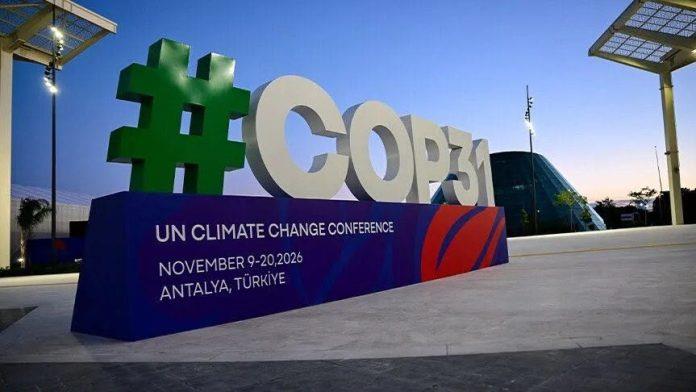
COP31 Draft Drops Fossil Fuel Phase-Out Commitments


Agence France-Presse (AFP) reported on Friday that talks in the Turkish city of Antalya were expected to continue beyond their scheduled deadline as representatives of nearly 200 countries remained divided over the proposed agreement.
The latest draft, released on Thursday, dropped all references to fossil fuels, including proposals in an earlier version calling for accelerated action to phase out their use. The removal has drawn criticism from environmental campaigners and countries seeking stronger commitments to reduce dependence on polluting energy sources.
Reuters also reported that the revised document had weakened provisions on electrification and removed a proposed target of $120 billion in annual climate adaptation financing by 2035, an issue of particular concern to developing countries.
Instead, the latest draft retains a proposal to increase electricity's share of global final energy consumption to 35 percent by 2035. However, the revised language provides weaker direction for individual countries and does not establish that the additional electricity must come from renewable sources.
The proposal is part of a broader effort to expand electrification across the global economy, including transport and industry, while improving energy security and reducing greenhouse gas emissions.
Australian Climate Minister Chris Bowen, who is leading the negotiations, has defended electrification as a central part of the transition away from fossil fuels. However, critics argue that without a clear commitment to phase out coal, oil and gas, the proposed target could fall short of delivering the necessary emissions reductions.
According to the Associated Press, the absence of fossil fuel commitments has prompted strong criticism from climate activists and some national representatives. Panama has threatened to oppose an agreement unless it addresses fossil fuel production, climate financing and other outstanding climate commitments.
Financing remains another major point of disagreement. Developing countries have repeatedly called on wealthier nations to provide greater financial support to help vulnerable communities adapt to rising temperatures, extreme weather and other climate-related impacts.
The revised draft also expresses concern about the prospect of exceeding the 1.5-degree Celsius warming threshold established under the 2015 Paris Agreement, highlighting the growing gap between international climate commitments and the action needed to limit global warming.
The two-week COP31 summit, hosted in Antalya with Turkey holding the presidency and Australia leading negotiations, has brought together representatives from nearly 200 countries to discuss climate action, energy security, emissions reductions and financial support for vulnerable nations.
Under the UN climate process, a final agreement requires consensus among participating countries, leaving negotiators with the difficult task of bridging their differences before the summit can conclude.

Legal Disclaimer:
MENAFN provides the
information “as is” without warranty of any kind. We do not accept any
responsibility or liability for the accuracy, content, images, videos,
licenses, completeness, legality, or reliability of the information
contained in this article. If you have any complaints or copyright issues
related to this article, kindly contact the provider above.


Comments
No comment