


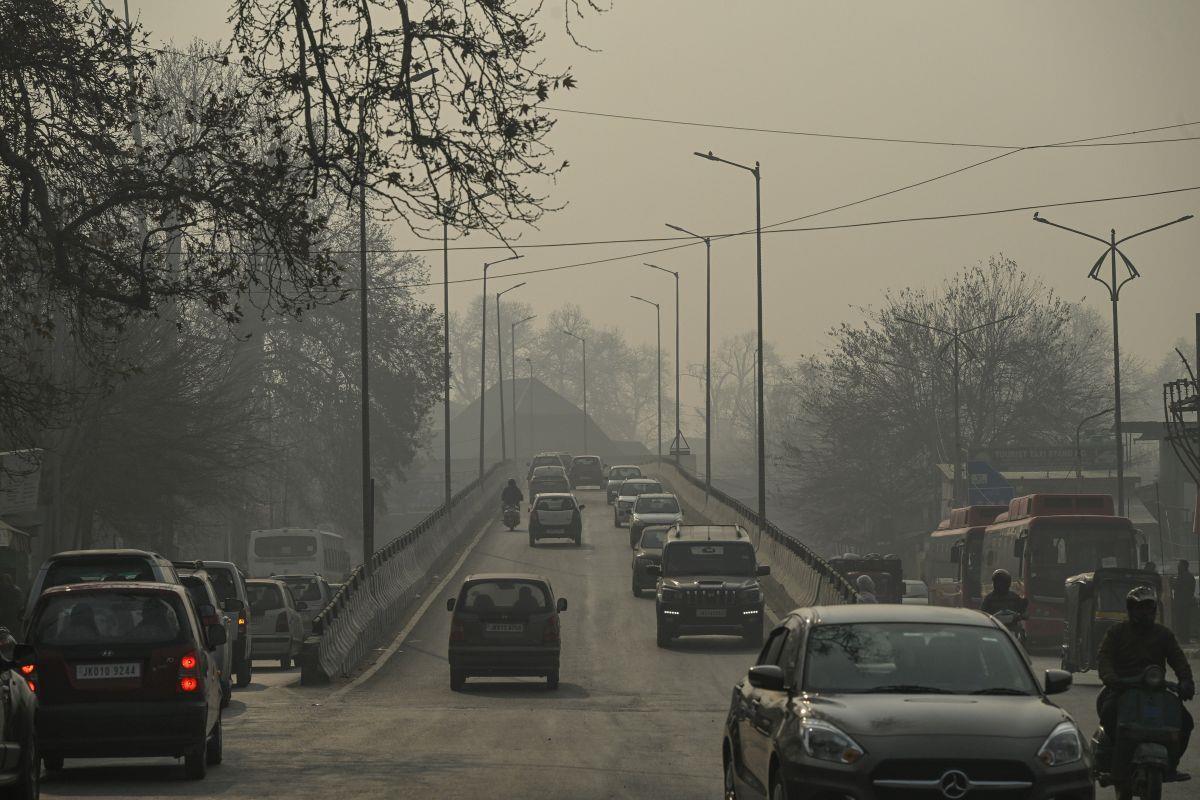
AQI 354 Vs 59: Contrasting Air Quality Readings Put Srinagar In Spotlight - Kashmir Observer


According to AQI, Srinagar recorded an AQI of 354 at around 2:51 pm, placing it in the severe category and ahead of several Indian cities reporting elevated pollution levels.
The platform's rankings placed Hisar in Haryana second with an AQI of 328, followed by Ludhiana at 309 and Amritsar at 302. Delhi, which frequently records high pollution levels during winter, stood ninth with an AQI of 277, while Gurugram recorded 240.
However, data from the Central Pollution Control Board (CPCB) presented a contrasting picture, placing Srinagar's AQI at 59, categorised as satisfactory.
The wide disparity between the readings reported by the two platforms highlights the variations in air quality measurements and underscores the need to distinguish between third-party real-time estimates and official monitoring data.
Read Also Delhi Pollution: Doctors Advise N95 Masks, Air Purifiers Apple Orchard Residue Burning Adds To Kashmir's Pollution WoesAQI's dashboard also showed elevated concentrations of particulate matter, with PM2.5 recorded at 191 micrograms per cubic metre and PM10 at 248 micrograms per cubic metre.
ADVERTISEMENTPM2.5 particles are particularly concerning because their small size allows them to penetrate deep into the respiratory system and potentially enter the bloodstream, increasing the risk of respiratory and cardiovascular illnesses.
The reported deterioration in air quality comes as Kashmir enters the winter season, when low temperatures, weaker winds and atmospheric conditions can contribute to the accumulation of pollutants.
Srinagar's geographical setting, surrounded by mountains, can also restrict air circulation under certain weather conditions. Temperature inversion, a phenomenon in which warmer air above prevents cooler air near the ground from rising, can further trap pollutants close to the surface.
The CPCB's revised action plan for Srinagar identifies vehicular emissions as a major contributor to the city's pollution burden. Road dust, construction activities, traffic congestion, biomass and municipal waste burning, diesel generators and fuel combustion are among the other sources of pollution.
Winter heating also contributes to the pollution load as households increasingly depend on fuel-based heating arrangements during the colder months.
According to historical readings displayed by AQI, Srinagar's AQI was recorded at 29 on November 13 before rising sharply to 402 on November 19. It stood at 354 on Friday.
The India Meteorological Department has forecast largely dry weather in Kashmir between November 19 and 28. The absence of rainfall or snowfall during this period could mean fewer opportunities for precipitation to wash pollutants out of the atmosphere.
The CPCB monitors air quality at eight locations in the Srinagar region, while PM2.5 monitoring is undertaken at five locations.
The contrasting readings notwithstanding, the reported spike in particulate pollution highlights the importance of sustained monitoring and emission-control measures as winter sets in across the Valley. (inputs from KNO)

Legal Disclaimer:
MENAFN provides the
information “as is” without warranty of any kind. We do not accept any
responsibility or liability for the accuracy, content, images, videos,
licenses, completeness, legality, or reliability of the information
contained in this article. If you have any complaints or copyright issues
related to this article, kindly contact the provider above.


Comments
No comment