


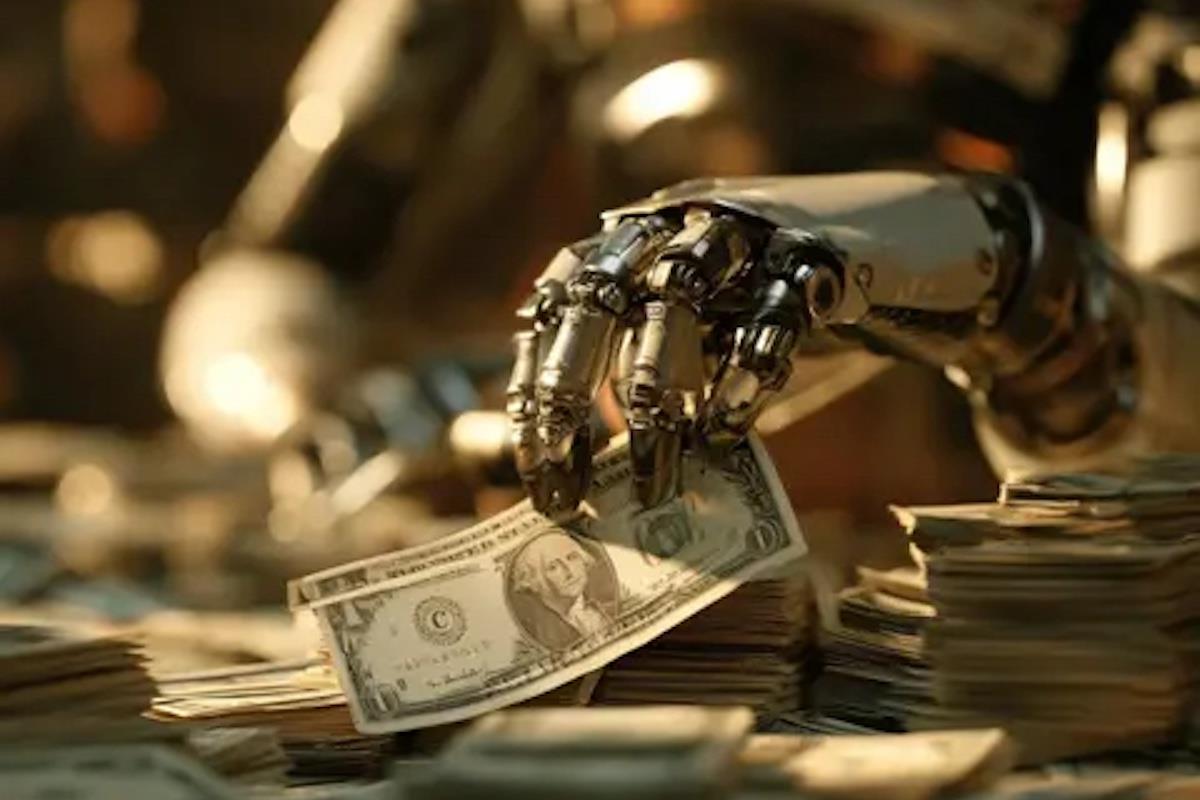
Behold The Rise Of The AI Dollar


Under Warsh, artificial intelligence has quickly gone from a science-fiction fascination to one of the defining variables in the global economic outlook for 2027. The past week alone underscored the shift.
Rather than focusing on inflation or the economy's potential growth rate, Warsh devoted much of his attention to a new question: how AI could reshape both the US economy and the dollar's global dominance.
The Fed is now actively mapping out scenarios for how AI could transform the world's largest economy.
“What might set AI apart, as an economic influence, is that it could supercharge idea generation,” Warsh said in a November 16 speech.“It appears to be changing the method, and, at least as important, the speed of innovation. If idea generation broadens, growth could be sustained at a level substantially higher than the long-run average.”
Wall Street is increasingly reaching similar conclusions. In a recent note, Goldman Sachs argued that part of the dollar's resilience reflects investor enthusiasm for companies expected to benefit most from the AI boom.
“We have found that dollar performance looks linked to AI-related equity performance, in both good times and bad,” Goldman wrote.
Deutsche Bank's global head of FX research, George Saravelos, has gone so far as to label it the“AI dollar.” The boom surrounding AI-related investments, he argues, helps explain why widespread forecasts for a weaker greenback failed to materialize this year.
“Our expectations for a weaker dollar this year did not play out,” Saravelos noted. Looking ahead, he warned that a meaningful downgrade in AI-related capital expenditure expectations would likely push US real yields lower, curb foreign equity inflows and undermine two of the dollar's most important pillars of support.
What's striking is that Warsh spent much of his latest speech emphasizing the risks rather than the rewards of AI. Earlier this year, he frequently highlighted AI's potential to lift productivity and raise the economy's speed limit, allowing the Fed greater flexibility even during periods of strong growth. Now the tone has become more cautious.
“No technological transformation is risk-free,” Warsh said.“And the risks in this case, if overlooked, can be highly disruptive and economically costly.”

Legal Disclaimer:
MENAFN provides the
information “as is” without warranty of any kind. We do not accept any
responsibility or liability for the accuracy, content, images, videos,
licenses, completeness, legality, or reliability of the information
contained in this article. If you have any complaints or copyright issues
related to this article, kindly contact the provider above.


Comments
No comment