


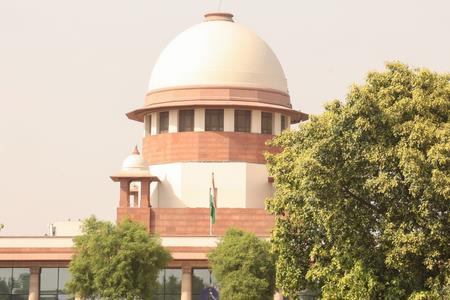
SC Dismisses Tamil Nadu Pleas Seeking Additional Cauvery Water From Karnataka


A Bench of Justices Vikram Nath and Aparesh Kumar Singh passed the order, declining to direct Karnataka to make further releases of Cauvery water.
“We have dismissed (the application),” the Justice Nath-led Bench said while pronouncing the order.
Tamil Nadu had approached the apex court seeking directions for the immediate release of its due share of Cauvery water, claiming that the shortfall in water supply was adversely affecting farmers and crops in the state.
The applications were filed amid a continuing dispute between Tamil Nadu and Karnataka over the sharing of Cauvery River water, particularly in view of concerns over rainfall and water availability in the river basin.
Karnataka had opposed Tamil Nadu's demand, maintaining that it was complying with the directions issued by the Cauvery Water Management Authority (CWMA).
The neighbouring state had also highlighted drought-like conditions in several districts, reduced inflows into its reservoirs and the need to prioritise drinking water requirements.
Karnataka had further contended that the CWMA and the Cauvery Water Regulation Committee (CWRC) were already monitoring the release and distribution of water between the two states.
Earlier, the Supreme Court had permitted Tamil Nadu to approach the CWMA with its grievance that Karnataka was not releasing the state's proportionate share of Cauvery water and posted the matter for further hearing on August 31.
Tamil Nadu had sought directions for Karnataka to release 26.954 thousand million cubic feet (tmcft) of water, claiming that the quantity being released was inadequate despite the availability of water in the neighbouring state's reservoirs.
The state government had contended that it was not receiving its proportionate share in accordance with the prescribed water-sharing arrangement.
The dispute concerns the sharing of Cauvery River water between the two states, with Tamil Nadu repeatedly alleging inadequate releases and Karnataka citing constraints arising from prevailing hydrological conditions and drinking water requirements.

Legal Disclaimer:
MENAFN provides the
information “as is” without warranty of any kind. We do not accept any
responsibility or liability for the accuracy, content, images, videos,
licenses, completeness, legality, or reliability of the information
contained in this article. If you have any complaints or copyright issues
related to this article, kindly contact the provider above.


Comments
No comment