


Euro Rotelli:“I Have Learned To Write With A Camera”


For photographer Euro Rotelli, photography is far more than capturing a moment. It is a language through which he interprets the world, explores human nature, and gives shape to ideas that cannot always be expressed through words. Throughout his artistic journey, he has moved between painting, experimental photographic techniques, literature, dance, and social observation, constantly searching for new ways to communicate his vision.
From transforming Polaroid images in the darkroom to finding inspiration in Paul Auster's literary universe, Rotelli approaches every project as an independent exploration. His work reflects a belief that artistic expression should remain free, personal, and open to change. In this conversation, he discusses the experiences that shaped his creative language, the relationship between photography and literature, the stories behind some of his most significant projects, and why he continues to trust human imagination over artificial intelligence.
Your artistic journey began with painting before you discovered photography. What made you realize that photography could become your main form of artistic expression?
I discovered photography quite by chance, and I was immediately fascinated by the possibility of capturing images and situations, then developing and printing them myself in the darkroom. This allowed me to control every stage of the process while experimenting with different techniques and possibilities.
For me, it was like discovering a universe – a magical universe in which I could intervene and interpret reality according to my personal vision. The camera became a kind of magic wand in my hands, allowing me to tell stories about the world, painting it with my own colors and shades.
I became so passionate about photography that it eventually became my preferred language and my profession.
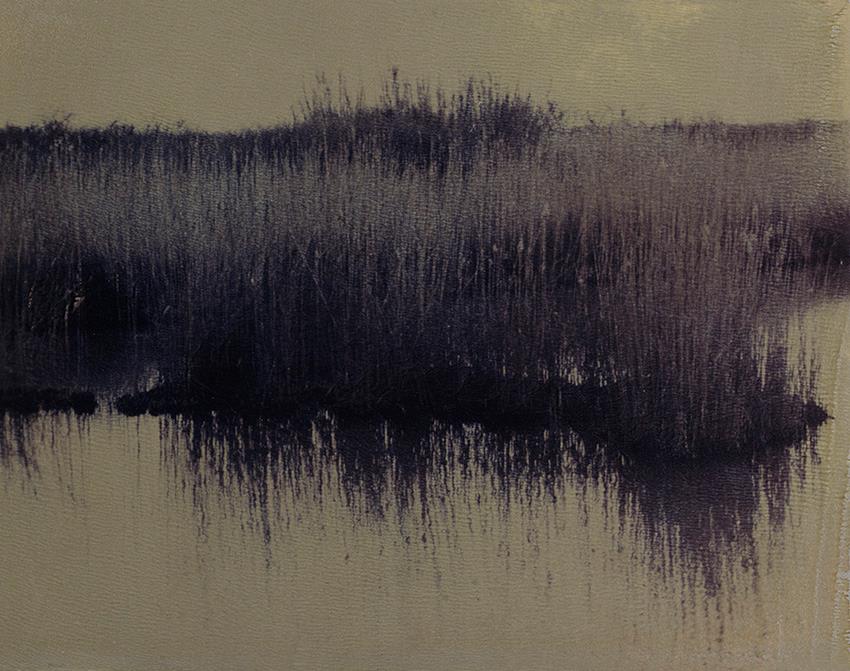
LAGUNA
Euro Rotelli
You have experimented with Polaroid, different films, darkroom processes, transfer, emulsion lift, painting, and collage. What attracts you most to changing and transforming the photographic image rather than leaving it untouched?
Over the years, I have experimented with various techniques, processes, films, and cameras, always searching for the most appropriate way to communicate my thoughts and ideas at a particular moment.
I have never stopped this exploration because the world and the people within it are constantly changing, just as forms of artistic expression evolve. I do not follow styles or models that happen to be fashionable at any given time. Instead, I move through contemporary society, paying attention to its nuances and transformations and interpreting them according to how I perceive them.
The photographic image that emerges from my hands may therefore be the result of experimentation, or it may remain completely untouched after the shot. It all depends on the purpose of the project. The creative act can take place at the final stage of a process, but it can also happen at the very moment the photograph is taken – through a particular angle, perspective, or quality of light – with no subsequent retouching or manipulation.
I have no particular preference. Everything depends on what I want to achieve.
PACKAGING
Euro Rotelli
Your work moves between landscapes, people, cities, and more intimate subjects. What usually comes first for you – the place, the person, an emotion, or an idea you want to explore?
None of these necessarily comes first. Or rather, everything depends on the idea that emerges at a particular moment and gives life to a project.
Sometimes it is a place that inspires me, as in Laguna, My Country, Sleepy Places, and Ri-creatio.
In these projects, the atmosphere and inspiration are so powerful that they apparently exclude the human presence (sometimes it is hidden, or you can perceived it in some tracks) allowing me to focus entirely on the enchantment, melancholy, and magic of those places, all permeated with poetry.
In other projects, the human body becomes the central subject. In Vibrazioni, I explore it through a metaphysical, archaic, and sculptural perspective. In Packaging and No-Body, the body is approached through anthropological, social, and even dreamlike dimensions. L'Amour et Psyché explores a mythological perspective, while Visioni takes a dystopian approach. Then there is The Body The Soul, a celebration of dance in all its forms.
Sometimes, the starting point is an abstract idea carrying a deeper message, as in Beyond the Rust. Other projects bring together different subjects and themes, including my use of cyanotype or animal metaphors in Silentium and Il Cantico delle Creature.
Each of these explorations occupies my entire mind until it reaches completion. Then I begin again, moving toward another project with a different nature and purpose.
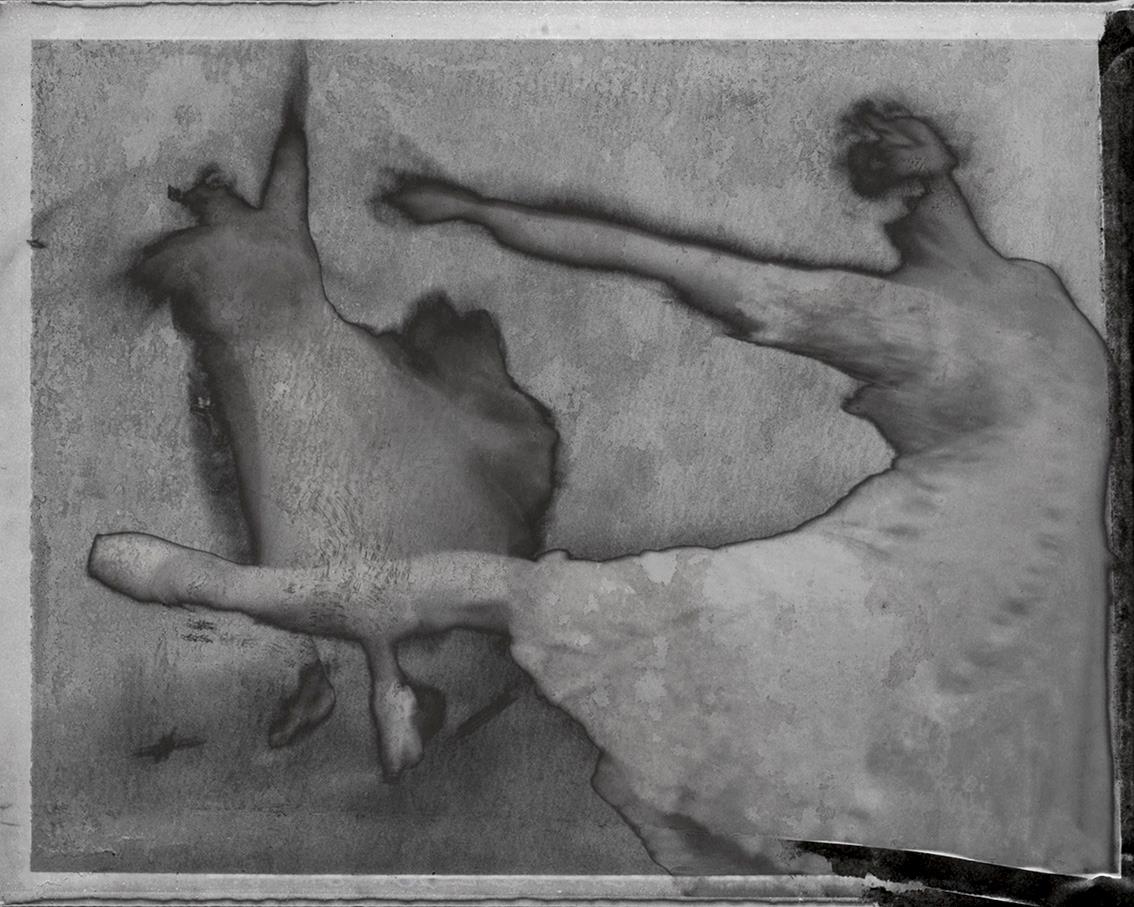
THE BODY THE SOUL
Euro Rotelli
Your project The Body The Soul explores dance through photography. What did working with dancers teach you about movement, the body, and the possibilities of a still image?
The project was originally commissioned by a New York publisher who had invited several internationally renowned photographers, each assigned to portray ballet stars and principal dancers from around the world through their own artistic style. The publisher had been impressed by my Vibrazioni photographs, which had appeared in an international magazine.
However, when the project was already well underway, it fell through. By that point, I had become so deeply involved that I decided to continue it independently. I simply could not give up on such an exciting project.
Through this experience, I discovered a world I had never known before – one in which sacrifice, dedication, perseverance, and passion come together in a sublime pursuit of perfection.
I identified with the dancers themselves, repeatedly experimenting and trying to represent movement despite the stillness of photography, which is its exact opposite. By experimenting with numerous types of Polaroid film, many of which are no longer manufactured, I believe I managed to capture something beyond the body itself: its soul. I wanted to make the dancers' bodies appear ethereal and convey the fluidity of their movements.
It was my tribute to Polaroid and to those extraordinary creatures.
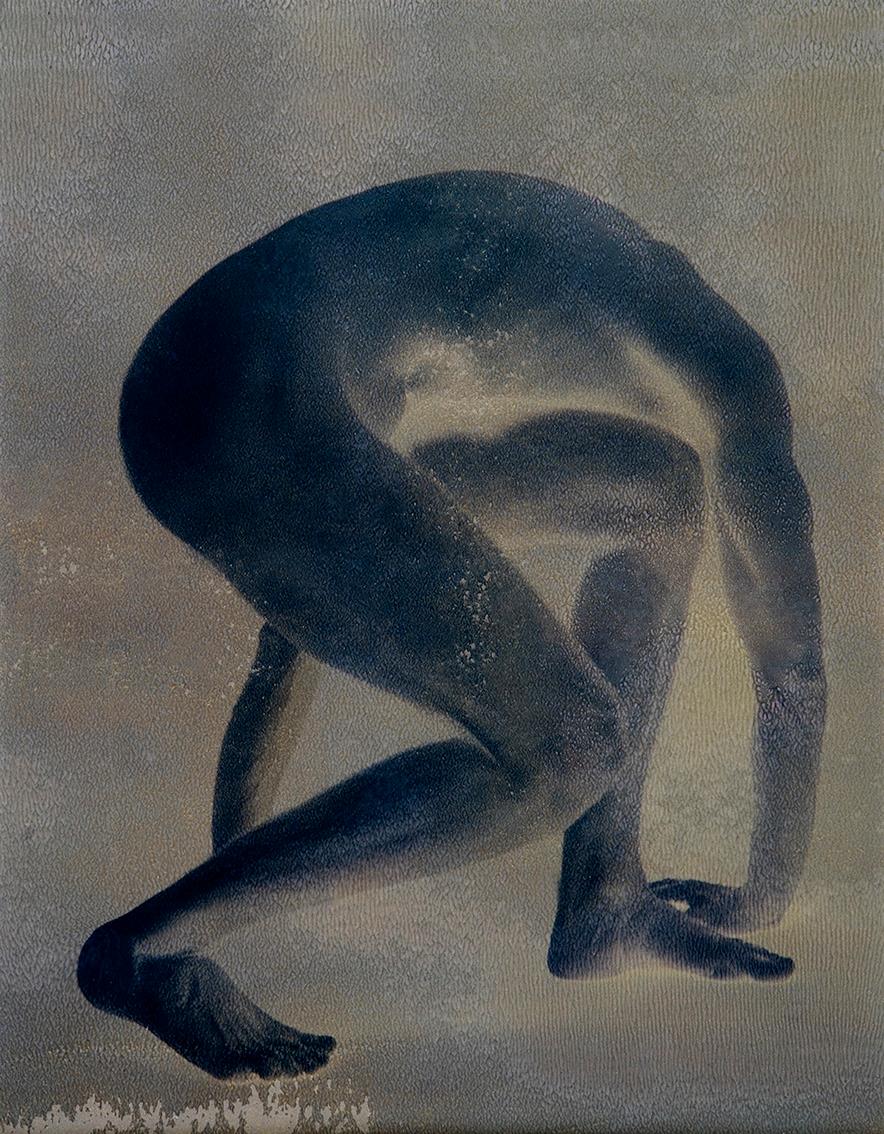
VIBRAZIONI
Euro Rotelli
Your project New York, Paul Auster and Me connects your photographs of New York with the writing of Paul Auster. How did literature change the way you looked at and photographed the city?
I have visited New York many times – as a tourist, for artistic projects such as The Body The Soul, and for one of my exhibitions – and I always took photographs. The city has fascinated me with its uniqueness: its contrasts, cultural diversity, situations, urban landscape, and architecture.
New York overwhelms me and pushes me away at the same time. I was always searching for a connection, something that could inspire me to tell its story. Fragmented images taken here and there were not enough. I wanted something more: a meaning, a coherent project. I was missing the connecting thread.
I am a passionate reader, and one evening I took Paul Auster's The New York Trilogy from my bookshelf. That was my moment of revelation. I recognized myself in Quinn, the protagonist, but also in Stillman and the other characters wandering through the city and the pages of Auster's book, guided by the author's extraordinary imagination.
I finally understood how I needed to tell the story of New York because I felt in harmony with both the characters and the author himself. I thought as they did, and, just like them, I struggled to understand things and find answers. All I had to do was walk through the city with my camera instead of Quinn's red notebook. And that is exactly what I did. Paul Auster became my Virgil, showing me the way through that“dark forest.”
Literature changed me in this sense, helping me see the world differently, through the eyes of writing. I learned to write with a camera.
This discovery opened the way for other photographic-literary projects, such as Permis de démolir, created in the Parisian suburbs of Saint-Denis and Aubervilliers. I wanted to document their rapid and radical urban transformation and its resulting anthropological and social consequences.
After discovering and reading the books of poet and writer Atiq Rahimi, I realized he was the perfect person to accompany my photographic reportage. I invited him to comment on my images through a series of short texts. The result, which I hope will soon be published as a book, became another extraordinary symbiosis, expressed in a different way: a poetry that dances between images and words, going far beyond my expectations.
My message extends beyond the suburbs of Paris and carries a much broader meaning that can be applied to many contemporary realities.
My connection with literature is very strong, and I believe I will continue bringing it together with my visions of the world and of life itself.
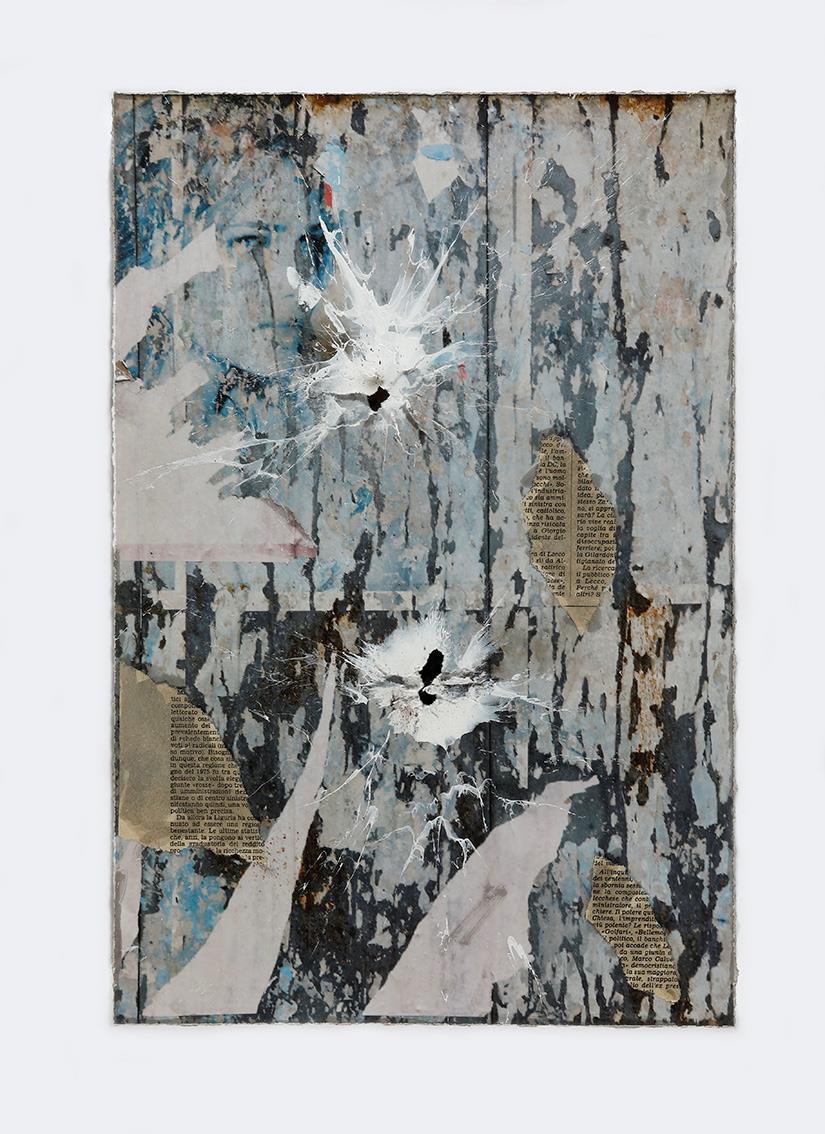
BEYOND THE RUST
Euro Rotelli
Art can sometimes become a way of responding to the world beyond the gallery or exhibition space. How do you feel about artists using their work to support charitable or humanitarian causes?
Art cannot be confined to definitions, rules, or dogmas. I believe that an artist – if they are truly an artist, and even that is difficult to determine today – should be free to dedicate themselves and their work to whatever they believe in, in whatever way they choose.
Sometimes artistic projects emerge precisely from such convictions. Artists can also support particular causes by donating their works or organizing exhibitions that help promote and advance them.
I believe I have done both. I donated one of my works to support a hospital during the COVID-19 pandemic, and I also created Permis de démolir, the project I mentioned earlier. It seeks to describe a phenomenon taking place not only in the outskirts of Paris but throughout the world.
I would like this project to draw attention to the issue from a humanitarian perspective, encouraging people to reflect on what these changes mean for those who experience them. The transformation is not merely urban or architectural; it is also deeply internal. It is a demolition and, at the same time, a reconstruction.
I believe every artist contributes, in some way, to making the world more beautiful, if not saving it, as Dostoevsky suggested. That, to me, should be one of the purposes of art. If a work manages to provoke an emotion, it has fulfilled its purpose. Experiencing emotion in front of a work of art can often provide unexpected comfort and support.
After many years of working with photography, what still surprises or challenges you about the medium?
New innovations and technologies appear every day, and each represents a new challenge for me to explore.
When production of the Polaroid film I had used for years came to an end, many people asked me what I would do, since it had become my primary medium. But, as I have already mentioned, the idea and the project are what matter to me, not the medium itself.
Polaroid had given me so much, and I had explored it extensively in every possible way. But the time had come to change my language, and I still had so many ideas to express. So I continued creating through other techniques.
At present, however, rather than relying on tools such as artificial intelligence, I prefer to trust human intelligence, the originality of my thoughts, my imagination, and my own hands.
I want to use the tools I know to develop new projects, perhaps imperfect ones, but certainly original and never standardized. This is my current challenge: to continue creating art without feeling the need to rely on easy shortcuts such as artificial intelligence.
I believe that human beings, in their uniqueness, are still the perfect machines for generating dreams, emotions, and beauty.
Explore more of Euro Rotelli's work on his official website.

Legal Disclaimer:
MENAFN provides the
information “as is” without warranty of any kind. We do not accept any
responsibility or liability for the accuracy, content, images, videos,
licenses, completeness, legality, or reliability of the information
contained in this article. If you have any complaints or copyright issues
related to this article, kindly contact the provider above.


Comments
No comment