


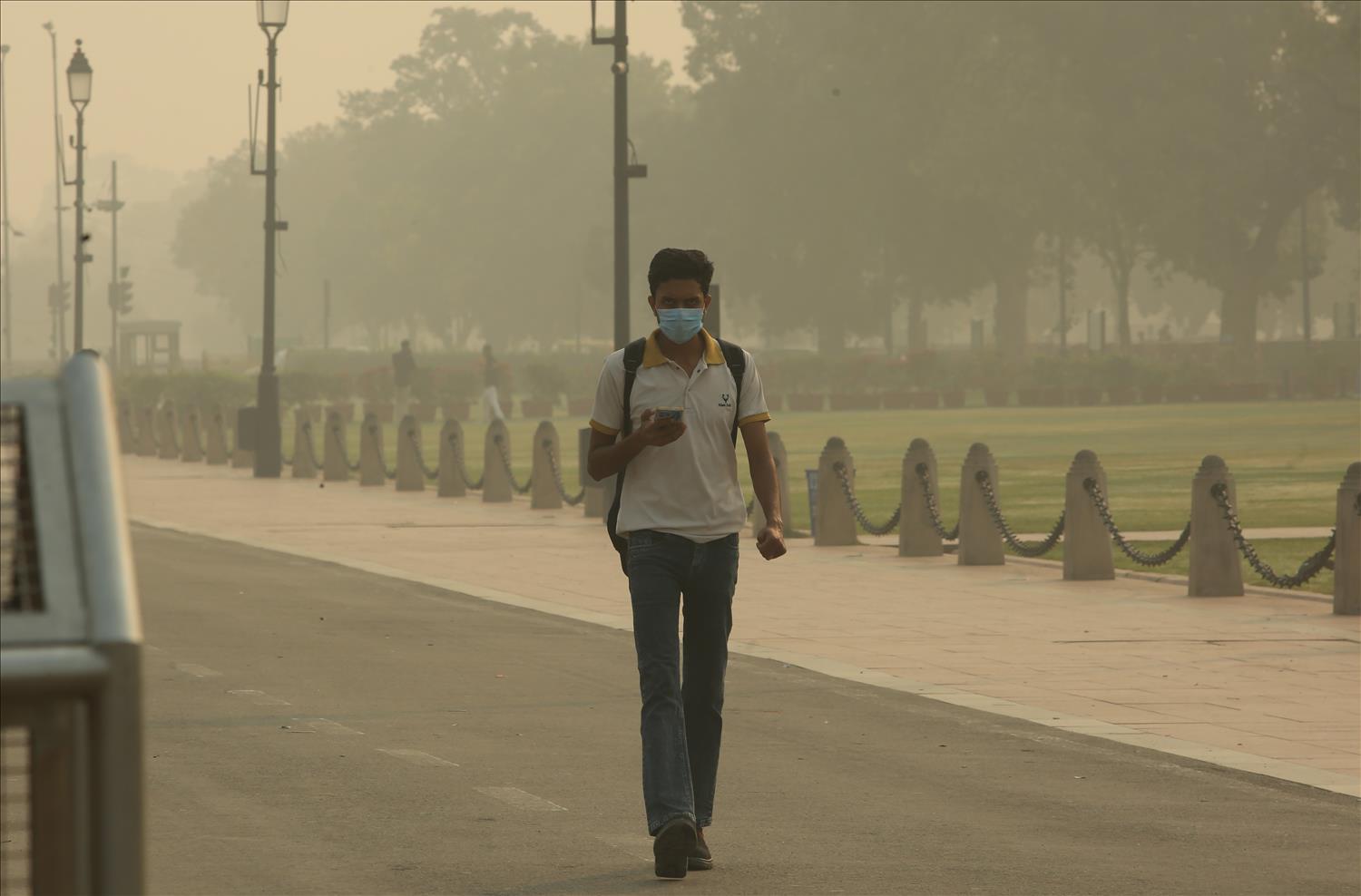
Delhi's AQI Remains 'Poor' At 267 Amid Chilly Morning Several Areas Record 'Very Poor' Air Quality


Several monitoring stations across the city reported elevated pollution levels, with some locations recording air quality in the 'very poor' category. Sirifort recorded an AQI of 348, followed by Pusa at 335, JNU at 336, Burari Crossing at 333, Ghoga at 321, ITO at 321, NSUT Jaffarpur at 329, DTU at 319, Talkatora Garden at 316, Punjabi Bagh at 310 and Jahangirpuri at 307.
Other monitoring stations also reported poor air quality. These included Karala (259), Tikri Kalan (214), Chhawla (262), NIH Narela (278), Shadipur (280), Pusa (208), Chandni Chowk (330), IIT Delhi (295), Anand Vihar (267), Rohini (276), Vivek Vihar (277), Bawana (293) and Burari (290).
The deterioration follows a significant rise in pollution levels on Thursday, when Delhi's average AQI increased by 48 points to 280 from 232 recorded a day earlier. Unfavourable meteorological conditions, which hampered the dispersion of pollutants, contributed to the worsening air quality.
According to the Central Pollution Control Board (CPCB), 16 monitoring stations had recorded air quality in the 'very poor' category when the official daily reading was taken at 4 p.m. on Thursday. Three stations were in the 'moderate' category, while most of the remaining monitoring locations reported 'poor' air quality.
According to AQI data, Delhi's AQI touched 502 at 8.30 a.m. and stood at 485 at 9.31 a.m. PM10 concentration was also recorded at 484, nearly 10 times the World Health Organisation's recommended safe limit.
The sudden deterioration came just two days after the Commission for Air Quality Management (CAQM) revoked restrictions under Stage III of the Graded Response Action Plan (GRAP) following an improvement in air quality. However, preventive measures under GRAP Stages I and II continue to remain in force.
Delhi's average daily AQI, as reported by AQI, stood at 276 on November 17, the day Stage III restrictions were withdrawn. It subsequently increased to 340 on November 18 before approaching the 500 mark on Thursday morning.
Meanwhile, the national capital recorded its lowest minimum temperature of the season so far on Thursday.
The minimum temperature at Safdarjung fell to 10.6 degrees Celsius, which was 1.7 degrees below the seasonal average and 0.4 degrees lower than Wednesday's 11 degrees Celsius, according to the India Meteorological Department (IMD).

Legal Disclaimer:
MENAFN provides the
information “as is” without warranty of any kind. We do not accept any
responsibility or liability for the accuracy, content, images, videos,
licenses, completeness, legality, or reliability of the information
contained in this article. If you have any complaints or copyright issues
related to this article, kindly contact the provider above.


Comments
No comment