


'Media's Bermuda Triangle': UAE Official Warns Against Content That Stirs Fear, Anger


- By: Ruqayya Al Qaydi
Digital platforms must rethink incentives that make fear, anger and misleading content profitable, while advertisers and media organisations must take greater responsibility for protecting public trust, a senior UAE media official said on Thursday.
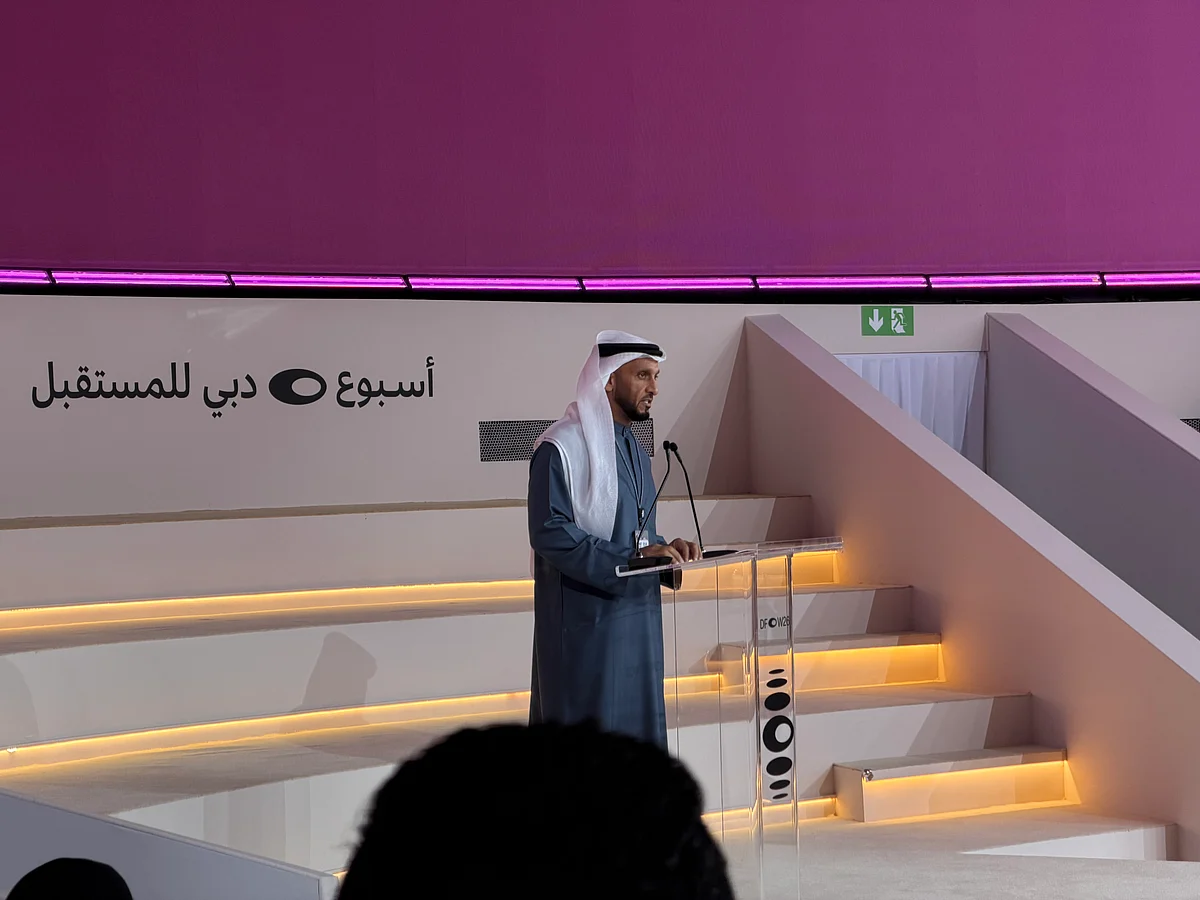
Abdulla Bin Mohamed Bin Butti Al Hamed, Chairman of the National Media Authority, warned that creators can earn money from content targeting sensitive issues in another country while leaving its people to deal with the consequences.
Recommended For You“We have built a system in which profit travels in one direction, while consequences travel in another,” he said during an address titled 'The Bermuda Triangle of Media' at Dubai Future Week.
Stay up to date with the latest news. Follow KT on WhatsApp Channels.
He called for a shift towards rewarding content for the understanding, reliable information and connections it leaves audiences with, rather than simply the number of people it reaches.
A 'Bermuda Triangle' of mediaAl Hamed identified three forces reshaping the media landscape: the growing accessibility of content creation through artificial intelligence, the difficulty of determining which information deserves trust, and business models that turn attention into revenue.
AI now allows people to produce footage, recreate locations and construct convincing human performances without recording anything real, he said. At the same time, audiences face competing accounts of events, making it harder to distinguish what happened from what people believe happened.
The third force is the financial value attached to attention, particularly when content provokes strong emotional reactions.
“When fear, anger, and outrage attract attention, they become valuable to monetize,” he said.
None of the three forces is inherently dangerous, Al Hamed stressed. The risk lies in how they interact and what that interaction rewards.
“And in our Bermuda Triangle, something very important is going missing: trust.”
Profit across bordersTo illustrate the problem, Al Hamed cited a 2025 investigation that, he said, uncovered a network of 128 Facebook pages and groups with a combined audience of more than 1.6 million people.
The network produced content about immigration, politics and social issues in one country while operating from another. Despite the political nature of the posts, he said the investigation pointed primarily to commercial motives.
The example showed how someone thousands of kilometres away could profit from another society's most sensitive issues, while families and communities bore the impact, he said.
“It is easy to blame the individual creating misleading content, but we cannot condemn the behaviour while ignoring the system that makes it profitable.”
Responsibility beyond governmentsAl Hamed said the UAE had made a deliberate choice to place responsibility at the centre of its media environment. However, that responsibility could not rest with governments alone; it extended to those who create, distribute, finance and govern media.
He urged platforms to address incentives that reward deception and advertisers to examine the content their spending supports.
“Advertisers must consider what their spending supports, and media institutions must make verification central to their work,” he said.
The risks were not inevitable, he added, because both the technology and its business models were shaped by people.
“An algorithm is not a force of nature, it is a product of human choices.”
Looking ahead, he said future generations would have unprecedented power to create, making it essential that they could also distinguish fact from fabrication and have confidence in the information they rely on.
“The future of media will be determined by what we choose to reward,” he said.
ALSO READ- UAE media must combat misinformation with speed, reliability, says NMA chairman Why UAE does not respond to every controversy, rumour or dispute online: Official UAE used AI to identify misleading social media posts during recent attacks Dubai Police warn AI deepfakes could make it harder to trust real photos, videos

Legal Disclaimer:
MENAFN provides the
information “as is” without warranty of any kind. We do not accept any
responsibility or liability for the accuracy, content, images, videos,
licenses, completeness, legality, or reliability of the information
contained in this article. If you have any complaints or copyright issues
related to this article, kindly contact the provider above.


Comments
No comment