


Why Beverage Companies Participate In BIER: The Value Of Collaboration


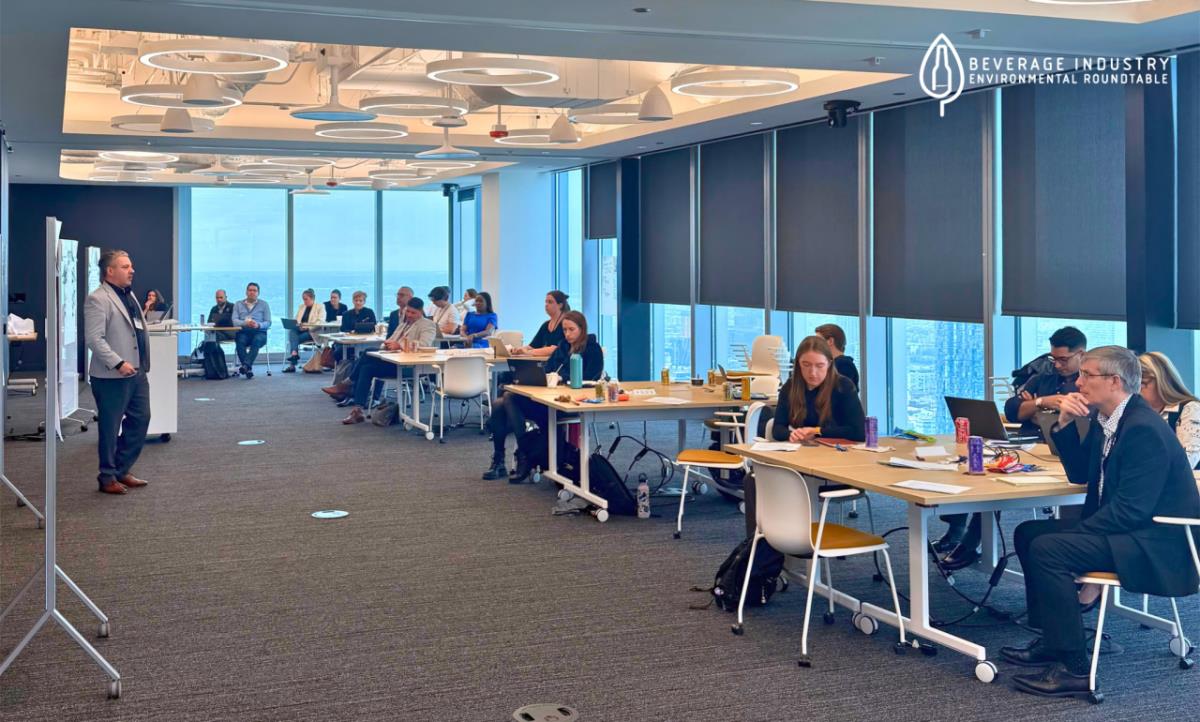
Across the beverage industry, professionals are working through questions that reach beyond their own facilities and organizations: how to interpret changing reporting expectations, compare environmental performance, engage suppliers, and address water challenges in the places where they operate. Decisions involve different production processes, markets, methodologies, and local conditions. Experience matters, and some of the most useful experience sits with people working through similar challenges elsewhere in the industry.
For 20 years, the Beverage Industry Environmental Roundtable has brought those people together.
Founded in 2006, BIER began with a shared focus on water stewardship, recognizing water's importance as an ingredient and a resource throughout beverage production. Its work has expanded alongside the industry's environmental priorities, encompassing climate, agriculture, packaging, reporting, and the connections among them.
Throughout that evolution, members have built something that takes time to establish: a trusted, pre-competitive setting where they can examine difficult questions, contribute technical knowledge, and learn from one another's experience.
The confidence to bring an unfinished question to the tableMuch of the work behind environmental commitments happens before there is a result to report. It involves testing assumptions, weighing approaches, and deciding how to proceed when the answer is not straightforward.
For beverage professionals, the opportunity to discuss that work openly with knowledgeable peers is a significant part of BIER's value.
That trust gives the discussions substance. Members bring experience from breweries, distilleries, bottling operations, agricultural sourcing regions, and global supply chains. They understand the work involved in translating a corporate commitment into something that can be implemented, measured, and explained.
A question about emissions accounting may expose differences in calculation methods. A discussion about water stewardship may reveal why an approach needs to change from one basin to another. Hearing how a peer reached a decision and what they considered along the way adds context that a final report alone may not provide.
David Grant, Sustainability Director: Global Water Stewardship at PepsiCo and 2026 BIER Chair, describes the continuing value of that exchange:
These relationships remain useful as responsibilities change and new challenges emerge. Members have people they can return to, questions they can revisit and a broader base of experience to draw upon.
Shared expertise that becomes part of the workThe conversations also feed a substantial body of technical work.
Beverage companies need reliable ways to understand environmental performance and evaluate opportunities for improvement. Comparing water or energy use requires context about facilities and production. Reporting emissions requires decisions about boundaries, methods, and factors. Assessing a water investment means understanding costs that extend beyond the incoming water bill.
BIER's technical resource have developed around these practical needs. They include Greenhouse Gas Guidance: Emissions Sector Guidance, Version 4.3, water circularity resources, the True Cost of Water Toolkit, and benchmarking studies.
Their value is visible in how members use them. At Suntory Global Spirits, BIER's greenhouse gas emissions guidance is referenced in the company's annual reporting methodology. LION's Justin Merrell found BIER emission factors already incorporated into New Belgium's Scope 3 model when he reviewed it following the acquisition. These are practical examples of how expertise developed through BIER becomes part of the work inside member companies.
BIER's Water, Energy, and Emissions Benchmarking Stud provides another example. Drawing on data contributed by participating facilities, it offers normalized analysis to help members examine their performance and investigate potential areas for improvement. The comparisons reflect study participants, rather than the entire global beverage industry.
These resources depend on members contributing expertise and using the outputs. Technical workstreams create opportunities to examine common problems in detail, challenge an approach, and help shape guidance that reflects different business and operational settings.
A place to work through complexity togetherEnvironmental reporting and implementation expectations continue to develop, while teams must keep existing programs moving.
For beverage businesses, the questions can be highly specific: how a framework applies to agricultural ingredients or paper-based packaging, how to describe monitoring and implementation, or how to approach a climate transition plan using lessons from organizations further along in the process.
BIER's quarterly Regulatory Roundups provide curated updates and opportunities for discussion. Its technical workstreams and focused member sessions allow closer examination of particular issues.
The SBTi No-Deforestation Disclosure Best Practices Workstrea, for example, brings members together around public disclosures associated with the Science Based Targets initiative's Forest, Land and Agriculture framework. The work addresses consistency in how commitments, relevant commodities, monitoring, and implementation are communicated, while recognizing that company circumstances differ.
Member experiences also reveal the importance of timing. Access to peers who have already worked through a planning or reporting process can be especially useful when another team is beginning its own. Members can ask detailed questions, understand the reasoning behind an approach and identify people with whom to continue the conversation.
The benefit is a connection between technical information and the experience of applying it.
Relationships that open possibilities for collective actionSome shared challenges require companies to look beyond their individual programs.
In water stewardship, a company may understand its own priorities but have limited visibility into where other organizations are working, what initiatives need support, or whether their timelines align. In commercial refrigeration, beverage companies and equipment suppliers bring different technical capabilities and implementation considerations to the same challenge.
BIER's collective-action wor creates settings where those interests can meet. The Sustainable Coolers Coolition connects beverage companies with refrigeration manufacturers and component suppliers around commercial cooling challenges.
A HEINEKEN colleague described working with a Carlsberg colleague to select companies for the 2025 Cool Challenge. Bringing procurement and sustainability experience to the discussion, she valued the opportunity to exchange non-confidential insights and examine refrigeration challenges with an industry peer, within competition-law boundaries.
In watershed discussions, members have used BIER's network to explore partnership opportunities and identify where geographic priorities and project interests overlap.
These connections depend on the willingness to discuss what is difficult as well as what is progressing.
The developing Collective Action Hu builds on that experience. Starting with water stewardship, the workstream is building and testing a database and interactive dashboard intended to help members explore initiatives, relevant risks and partnership needs across geographies.
The Hub supports the identification of opportunities; it does not create or manage projects. Its development addresses a practical challenge members have identified: finding where shared interests could become a basis for working together.
Twenty years of experience to draw on and contribute toBIER's history lives in the resources members reference, the relationships they maintain, and the experience they share with one another.
Over two decades, that work has grown from a shared focus on water into a broader forum for addressing the environmental questions facing beverage businesses.
For an organization considering membership, the opportunity is to join that exchange: to bring questions that would benefit from a wider perspective, contribute experience that others could use, and take part in work relevant to its own environmental priorities.
For existing members, the value continues to develop as relationships deepen, shared resources inform their work, and new challenges bring fresh opportunities to learn and collaborate. Each contribution adds to a body of knowledge that members can draw upon-and that BIER's published guidance and resources make available to the broader beverage industry.
Together, these exchanges connect individual experience with shared technical understanding, giving beverage companies a stronger foundation for addressing environmental challenges across the sector.
Explore BIER's work and connect with the team to learn more about membership and opportunities to contribute.
Legal Disclaimer:
MENAFN provides the
information “as is” without warranty of any kind. We do not accept any
responsibility or liability for the accuracy, content, images, videos,
licenses, completeness, legality, or reliability of the information
contained in this article. If you have any complaints or copyright issues
related to this article, kindly contact the provider above.


Comments
No comment