


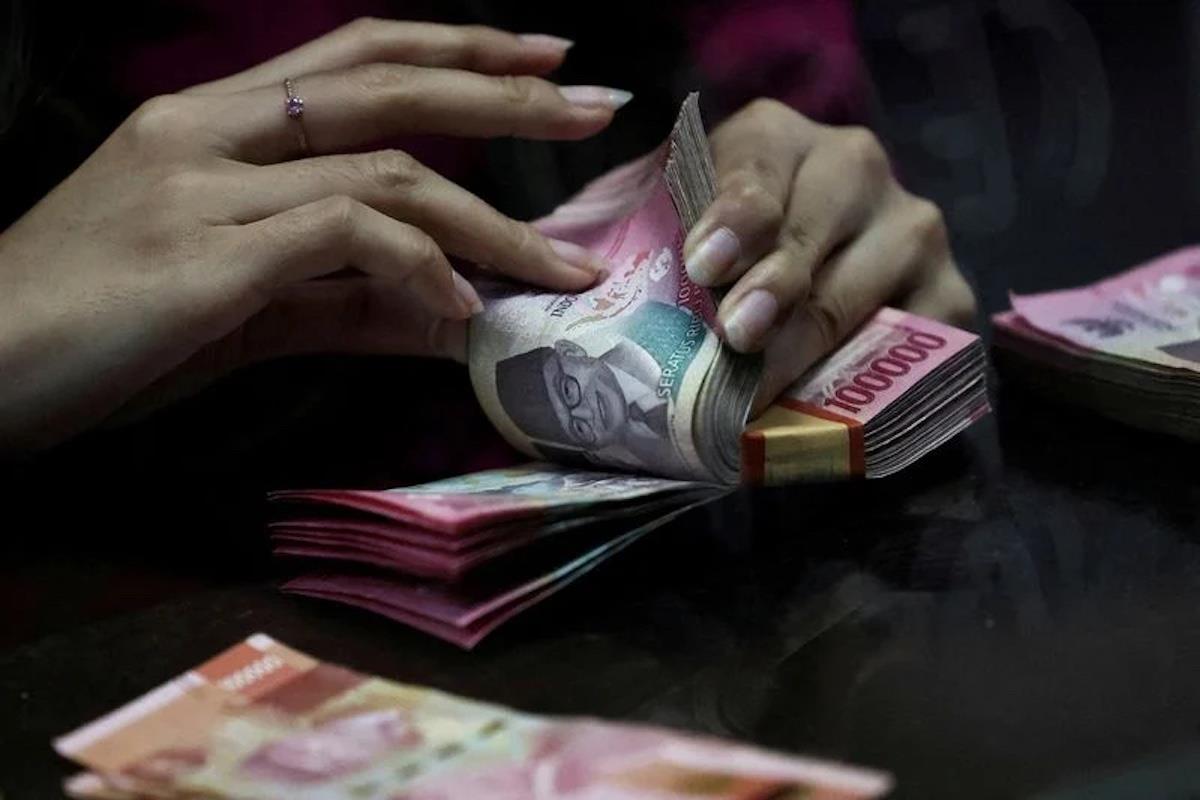
ASEAN's Local-Currency Pact Is Not A Revolt Against The Dollar


Foreign commentary on the deal was swift and predictable. Whenever Southeast Asian central banks widen local-currency settlement, it is read as a revolt against the US dollar. That reading misses the point.
None of the four central banks harbors any ambition to dethrone the greenback. Their objective is more practical, and arguably more urgent: they want to fix a flaw in the region's payment system that quietly taxes regional trade, drains foreign exchange reserves and exposes local firms to monetary decisions taken at the US Federal Reserve.
For decades, intra-ASEAN trade has rested on an odd contradiction. A textile mill in West Java imports synthetic yarn from Thailand. A Malaysian electronics distributor settles an invoice with a partner in Manila. Neither shipment comes near the United States, yet the payment almost always detours through the dollar.
This detour amounts to a hidden double-conversion tax. Rupiah is first exchanged for dollars, and those dollars are then converted into baht or pesos. Each leg widens spreads, adds bank fees and introduces exchange-rate risk that the underlying trade never required.
Large multinationals with dedicated treasury desks can absorb the cost. Small and medium-sized enterprises, the backbone of ASEAN supply chains, cannot. For them, the fees come out of already thin margins.
The new four-country framework targets that cost. It supersedes the bilateral memoranda that Indonesia, Malaysia and Thailand signed in August 2023, brings the Philippines on board and extends local-currency settlement across trade, direct investment and other eligible cross-border transactions.
Exporters and importers can now price and settle directly in rupiah, ringgit, baht and pesos, which makes them less exposed to every swing in market expectations about US interest rates.
Latest stories China's arms exports in the Indo-Pacific: a viable alternative In Shenzhen, great-power pageantry masks a hardening tech divide Awami League's violent comeback bid affirms its 'terrorist' labelThe momentum is already visible. Bank Indonesia's local-currency transactions with seven partner countries reached US$52.6 billion in January–September 2026, more than double the $25.7 billion recorded for all of 2025.
Yet the regional share remains modest. In the first five months of the year, China alone accounted for $27.93 billion of $32.89 billion, while Malaysia and Thailand contributed only $1.48 billion and $505 million, respectively. Intra-ASEAN settlement, in other words, still has ample room to grow.
A regional shock absorberThe agreement also has a broader macroeconomic purpose. Emerging Asian currencies remain vulnerable whenever the Us Federal Reserve tightens. The Fed raised its policy rate by 25 basis points to 3.75–4.00% in September, and hotter-than-expected US inflation data this month has revived bets on further tightening. When American inflation proves sticky or global liquidity tightens, capital retreats to dollar safe havens.
Regional central banks then face an uncomfortable choice: let their currencies weaken and import inflation, or spend scarce reserves to stabilize markets.
Indonesia offers a live example. On November 18, Bank Indonesia raised the BI-Rate by 25 basis points to 6% to shore up the rupiah, which had slipped to 18,245 rupiah per dollar. It also stepped up intervention in offshore and domestic forward markets.
Reserves of $146.8 billion are still ample, but every dollar spent defending the currency is one less buffer for the next shock. Tellingly, the same policy package retained incentives for local currency transactions alongside its hedging tools.
Moving trade and investment within ASEAN to local currencies reduces routine corporate demand for dollars. Every regional invoice settled without the greenback eases pressure on domestic foreign exchange markets and leaves more reserves for genuine external obligations.
The framework will not prevent the next episode of capital outflows. But it can insulate regional commerce from outside shocks without resorting to capital controls.
The timing is also instructive. Under the Regional Payment Connectivity initiative, linked QR payment systems already let tourists and small merchants across much of the region pay one another in their home currencies.
Indonesia's QRIS, for instance, is now linked with Thailand, Malaysia, Singapore, Japan and South Korea. Extending that model to corporate invoices and cross-border investment would carry ASEAN integration beyond consumer convenience and into institutional depth.
From signature to adoptionTo be sure, a signed MoU does not guarantee adoption. Experience across developing economies shows that currency habits change slowly. Three operational gaps deserve early attention.
The first is market depth. Direct currency pairs such as rupiah-peso or baht-rupiah still lack the liquidity and tight spreads that make the dollar so convenient. The appointed cross-currency dealer banks will need clear regulatory backing and workable hedging instruments to keep quoting these pairs. This matters most during periods of global volatility, when lenders instinctively retreat to the dollar.
The second lies within corporate treasuries. Many regional exporters invoice in dollars out of habit or because their raw materials are priced in dollars. Consider a factory that earns ringgit from regional buyers while paying for inputs in dollars. For such a firm, local-currency settlement does not eliminate currency risk; it merely shifts the mismatch onto its own balance sheet.
Sign up for one of our free newsletters-
The Daily Report
Start your day right with Asia Times' top stories
AT Weekly Report
A weekly roundup of Asia Times' most-read stories
Central bank announcements alone cannot change this. Commercial banks must offer competitive trade financing for local currency transactions, supported by deeper local-currency bond and money markets.
The third is coverage. Singapore and Vietnam are among Southeast Asia's busiest trading economies, yet both remain outside the framework, though both already take part in regional payment connectivity. Bringing them into a multilateral LCT network will determine whether a promising four-country corridor becomes a genuine regional financial architecture.
The US dollar is not about to disappear from Southeast Asian commerce, and the region's central bankers do not expect it to. Their aim is more grounded: to give local firms a credible alternative and to reduce the region's concentration risk in a single currency.
In an increasingly fragmented global financial system, that is a strategic choice, not an ideological one. Ultimately, ASEAN's monetary resilience will not be won through declarations of de-dollarization. It will be built, invoice by invoice, through regional trade conducted in regional currencies.
Rabiul Misa is a junior analyst at Bank Indonesia. His work focuses on monetary economics, payment systems, financial inclusion, MSME development and public policy. His commentary has appeared in Asia Times, Modern Diplomacy, Eurasia Review, Kompas, Kompas, Tribun News, ANTARA News and Kumparan. The views expressed here are solely his own and do not represent Bank Indonesia's official position.
Sign up here to comment on Asia Times stories OrThank you for registering!
-
Share on X (Opens in new window)
Share on LinkedIn (Opens in new window)
LinkedI
Share on Facebook (Opens in new window)
Faceboo
Share on WhatsApp (Opens in new window)
WhatsAp
Share on Reddit (Opens in new window)
Reddi
Email a link to a friend (Opens in new window)
Emai
Print (Opens in new window)
Prin

Legal Disclaimer:
MENAFN provides the
information “as is” without warranty of any kind. We do not accept any
responsibility or liability for the accuracy, content, images, videos,
licenses, completeness, legality, or reliability of the information
contained in this article. If you have any complaints or copyright issues
related to this article, kindly contact the provider above.


Comments
No comment