


Yukon Metals Identifies New Copper-Gold Zones At AZ Project With Surface Samples Grading Up To 10.41% Copper And Up To 6.27 G/T Gold


| Hole | From (m) | To (m) | Length (m) | Cu % | Au g/t | Mo ppm |
| AZ26-007 | 412.5 | 413.0 | 0.5 | 0.05 | 0.02 | 759 |
| and | 426.5 | 434.7 | 8.2 | 0.11 | 0.10 | 10 |
| including | 429.3 | 430.1 | 0.9 | 0.33 | 0.37 | 4 |
| and | 465.9 | 466.5 | 0.6 | 0.20 | 0.16 | 231 |
| and | 471.4 | 472.0 | 0.6 | 0.01 | 0.00 | 423 |
| and | 476.8 | 477.3 | 0.6 | 0.42 | 0.39 | 13 |
| and | 515.0 | 516.5 | 1.5 | 0.09 | 0.10 | 376 |
| and | 587.1 | 587.9 | 0.8 | 0.03 | 0.12 | 685 |
| and | 590.3 | 594.7 | 4.4 | 0.11 | 0.24 | 68 |
| including | 590.3 | 591.2 | 0.9 | 0.16 | 0.92 | 215 |
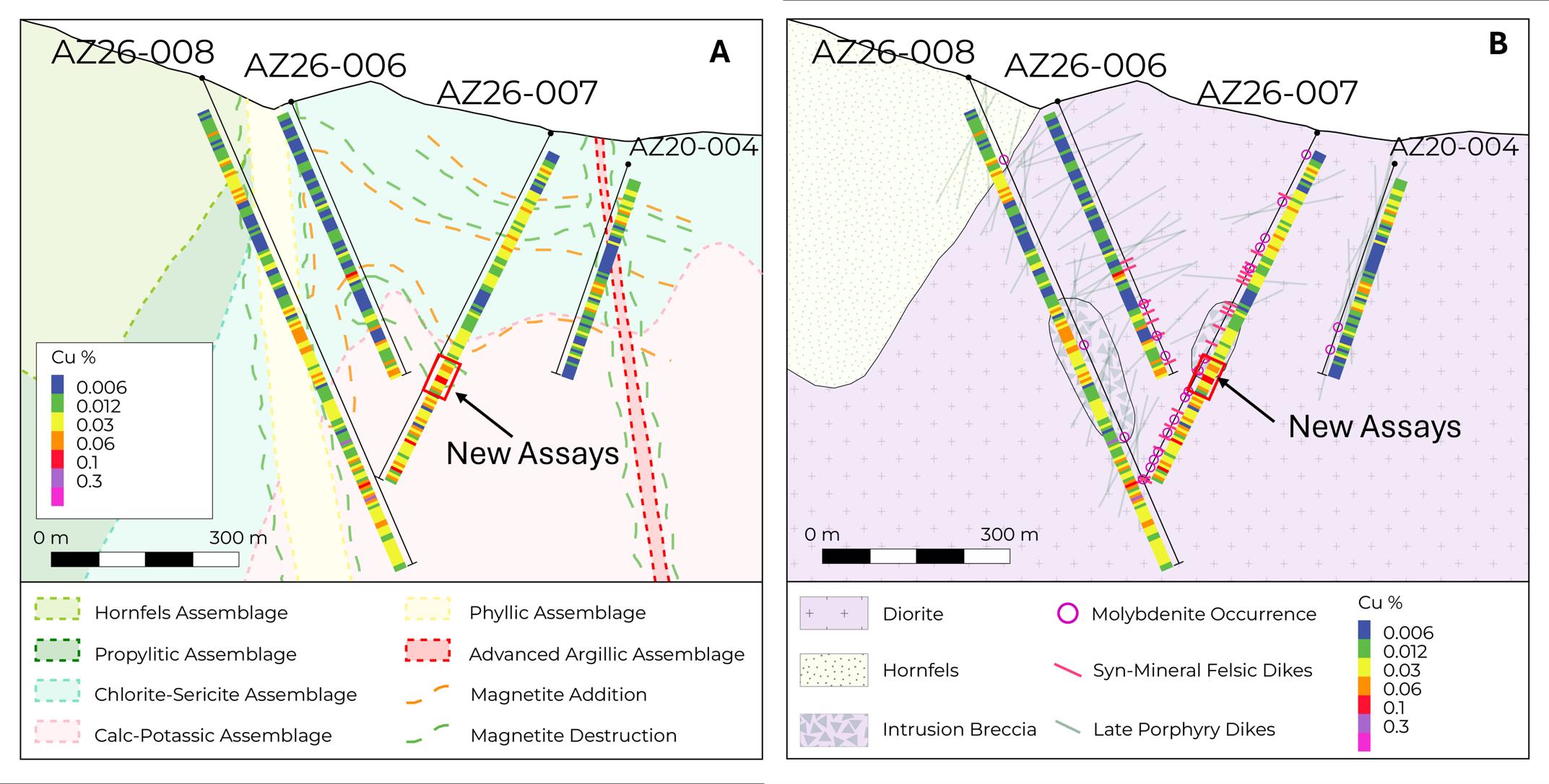
Notes: Reported intervals are down-hole lengths; true widths are unknown. Cu=copper; Au=gold, Mo=molybdenum; ppm=parts per million. Includes previously unreleased results for AZ26-007 from 396.5 to 462.3 m, highlighted in grey. Composite interval grades are length-weighted averages
Saddle Skarn Zone
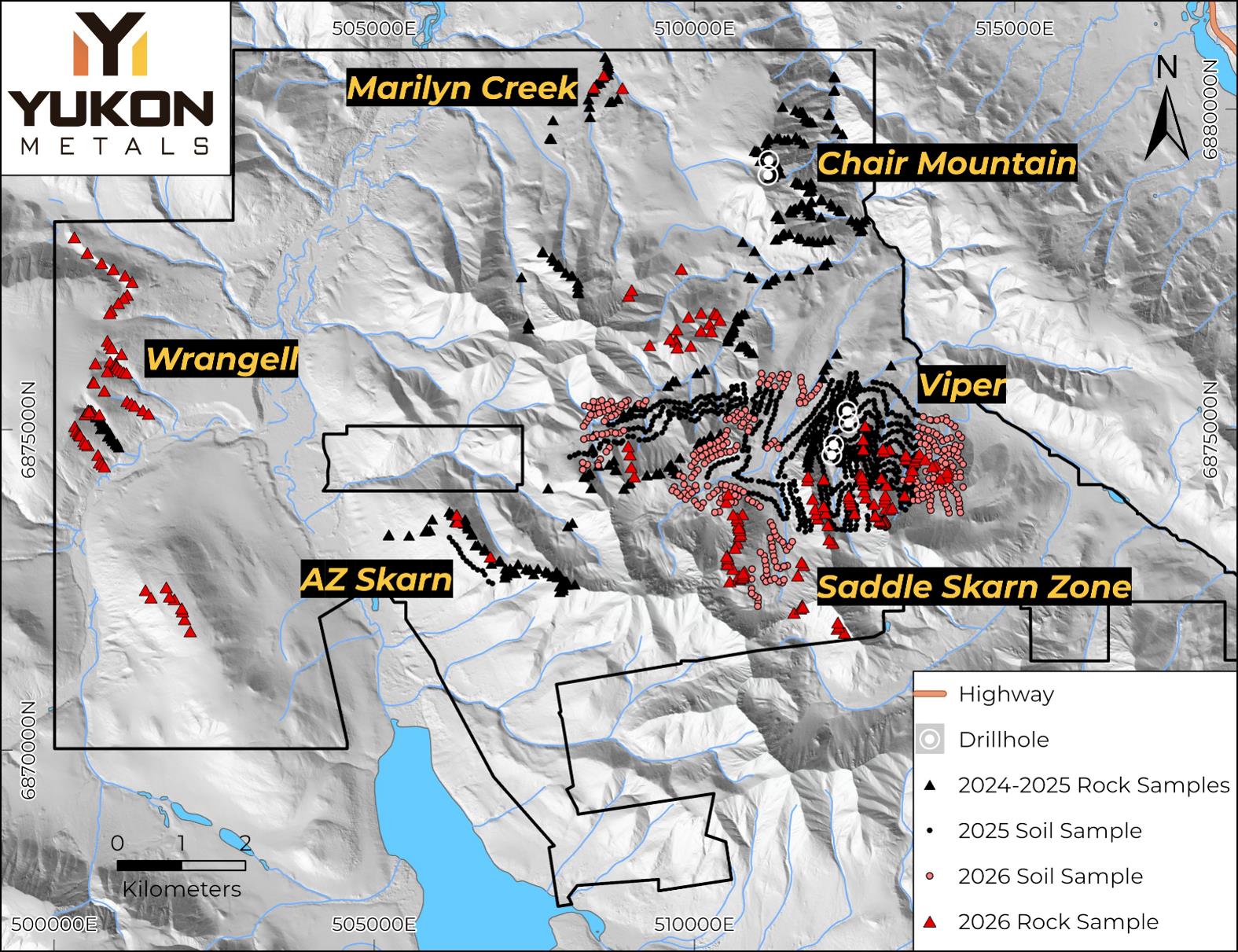
A new skarn system was identified at the Saddle Zone during geological mapping and prospecting near the southern extent of the AZ claims in late 2026. The showing comprises a well-exposed band of limestone and marble that is locally strongly skarn-altered and mineralized along contacts with hornfelsed metasedimentary rocks above, basaltic volcanic rocks below, and crosscutting intrusive dikes.
Rock sampling at Saddle identified several styles of skarn alteration and mineralization, including garnet-epidote, epidote-rich and magnetite-rich skarn assemblages. Outcrop exposures exhibit variable silicification, sericite alteration and iron oxide staining, with fine-grained disseminated chalcopyrite and pyrite accompanied by localized malachite and azurite staining. A strongly oxidized, magnetite-rich skarn was also identified along a limestone-mafic dike contact, containing minor chalcopyrite and pyrite with associated secondary copper minerals. These observations highlight the variability of skarn alteration and copper mineralization associated with intrusive contacts at Saddle.
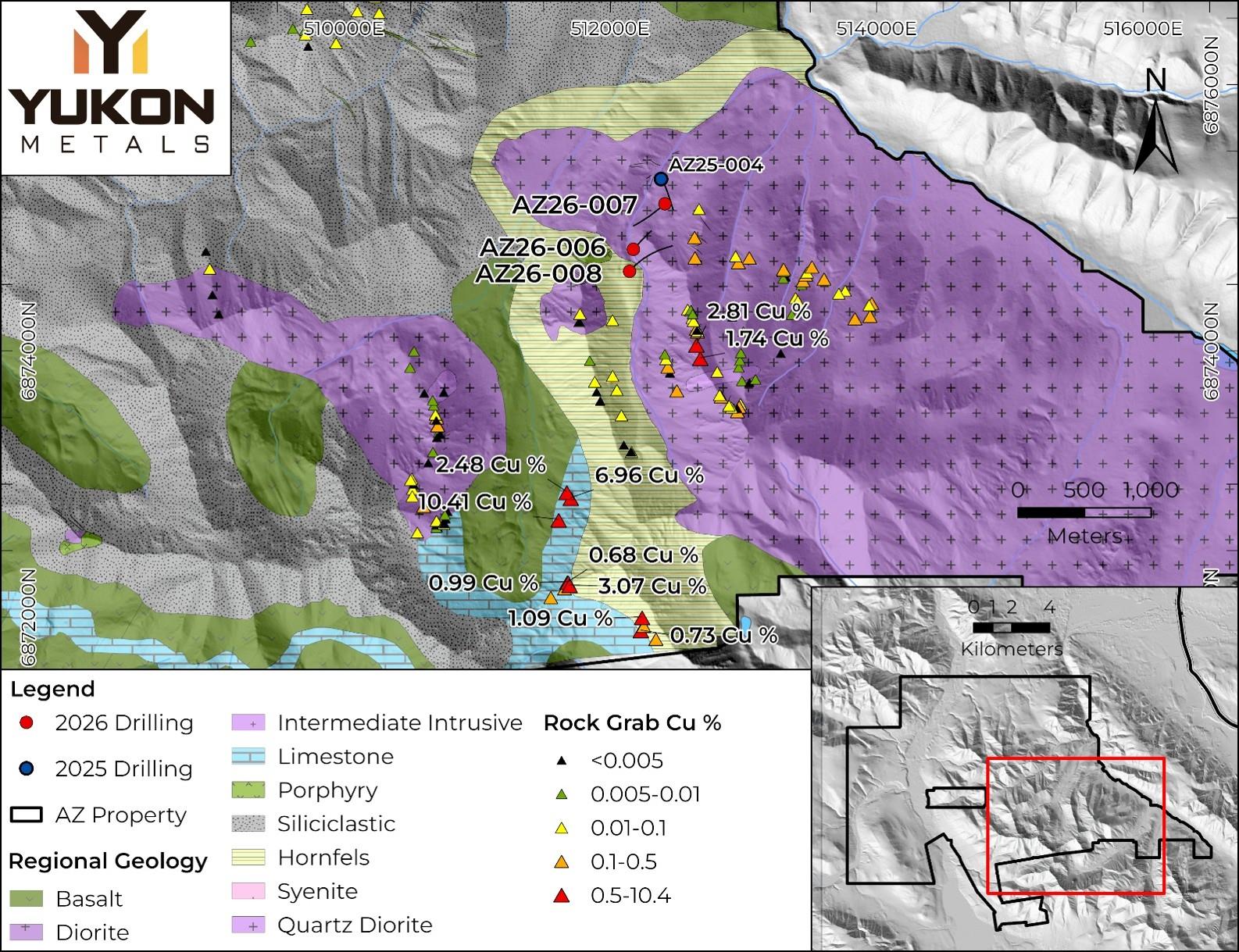
Rock sampling returned values up to 10.41% copper and 6.27 g/t gold (Table 2, Figure 5), highlighting the potential for copper-gold mineralization associated with intrusive contacts and reactive carbonate-bearing host rocks.
The proximity of the Saddle skarn system to identified porphyry-style mineralization and intrusive bodies may further support the potential for a larger intrusion-related hydrothermal system at AZ. Skarn mineralization commonly develops along the margins of porphyry systems and can form significant copper-gold deposits, highlighting the potential scale and broader mineral endowment of the AZ porphyry system.
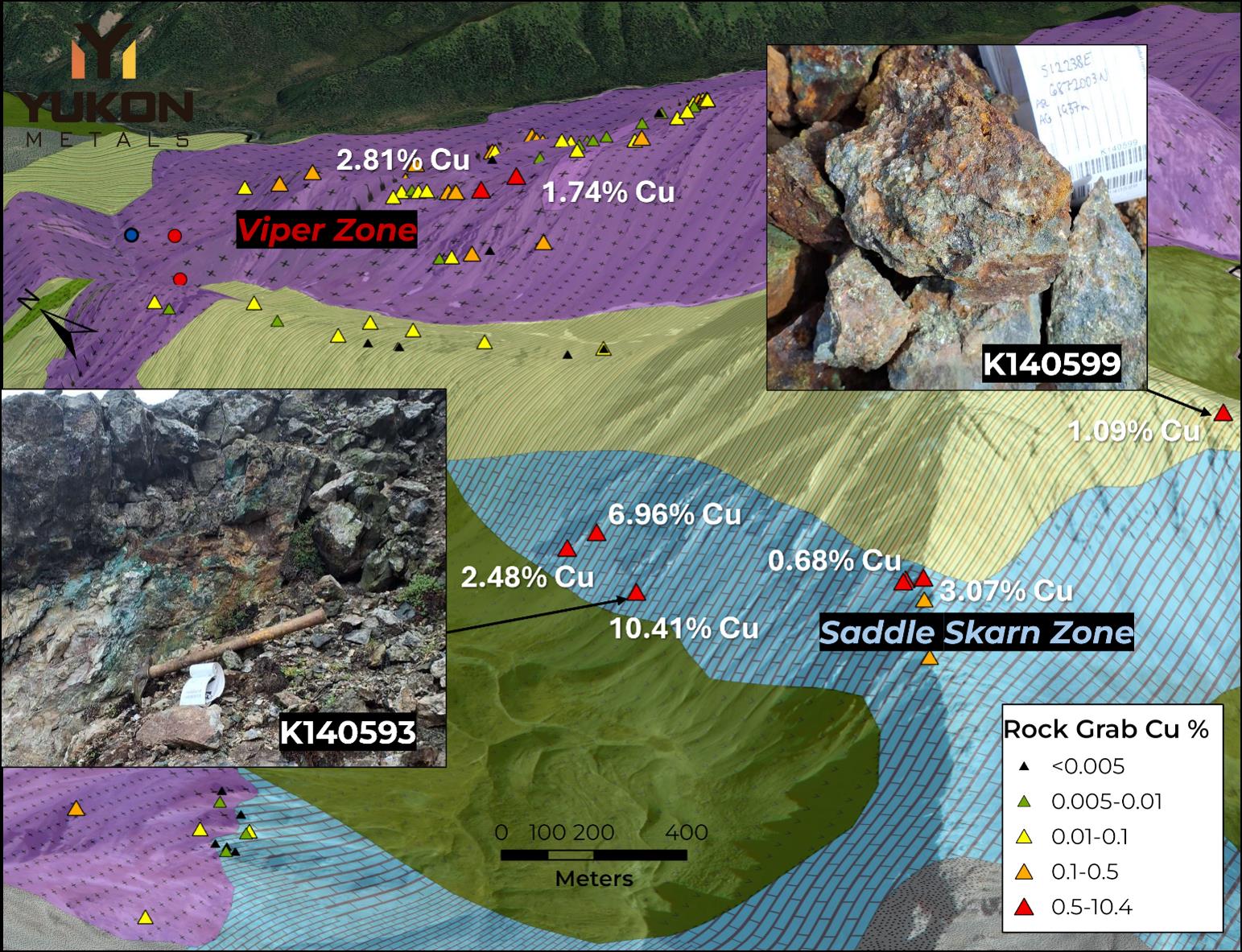
Figure 5 – Oblique view looking North-East of surface rock sample locations and copper percent assay results from the new skarn zone and Viper.
Wrangell Zone
Regional geological mapping and prospecting at the Wrangell Zone identified additional evidence of porphyry-style copper-molybdenum mineralization associated with a large granitic intrusive body. The intrusion comprises medium- to coarse-grained granite crosscut by a quartz-feldspar porphyry phase, with intrusion breccia developed along its margins. Rock sampling returned values up to 0.99% copper, 1.23 g/t gold and 658 ppm molybdenum (Table 2, Figure 6).
Mineralization occurs as disseminated and vein-hosted chalcopyrite and molybdenite within potassic-altered granite adjacent to the quartz-feldspar porphyry intrusion. Alteration includes secondary biotite and broad zones of phyllic alteration, locally accompanied by extensive gossan development associated with oxidized pyrite. These geological features, including multiple intrusive phases, potassic alteration, phyllic overprinting and associated copper-molybdenum mineralization, are consistent with those observed in porphyry-style hydrothermal systems.
The combination of copper-molybdenum-gold mineralization, multiple intrusive phases, intrusion brecciation and associated hydrothermal alteration suggests the potential for a separate porphyry-style mineralizing centre at Wrangell. Further exploration will focus on evaluating the extent of alteration and mineralization and refining the geological interpretation of this prospective area.
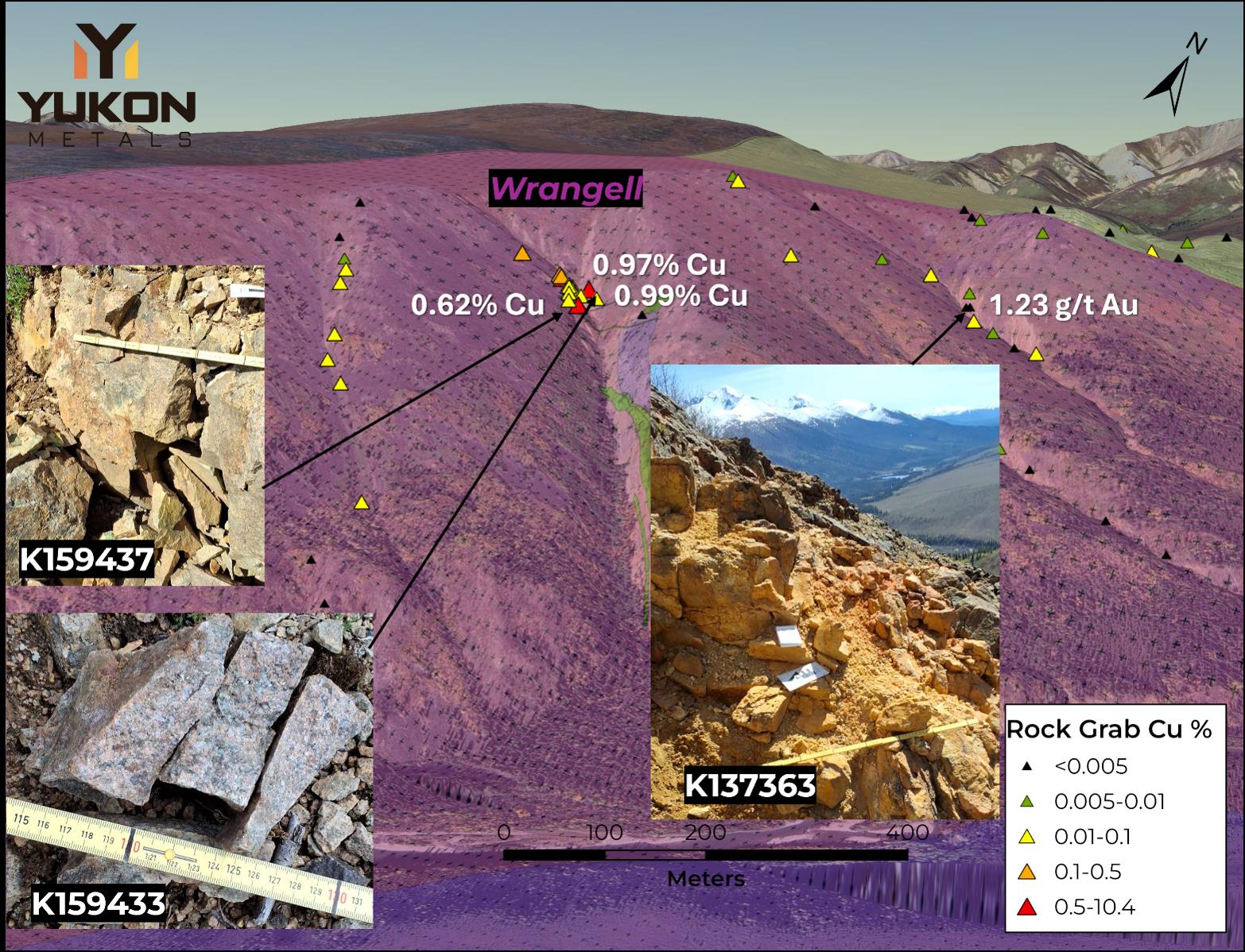
Figure 6 – Oblique view looking North-West of surface rock sample locations and copper percent assay results from the Wrangell Zone.
Table 2 – Selected 2026 AZ Project Rock Sample Results. Samples containing over 0.2% Copper, 1 g/t Au, or 200 ppm Mo shown.
| Area | Sample | Type | Lithology | Cu % | Au g/t | Mo ppm |
| Viper | J653113 | Subcrop | Diorite | 1.74 | 1.33 | 2 |
| Viper | K140575 | Outcrop | Diorite | 0.24 | 0.17 | 9 |
| Viper | K159419 | Outcrop | Veins | 2.81 | 1.74 | 335 |
| Viper- East | K137407 | Outcrop | Diorite | 0.46 | 0.25 | 151 |
| Viper- East | K159461 | Subcrop | Granodiorite | 0.22 | 0.10 | 78 |
| Saddle | J653144 | Outcrop | Skarn | 0.73 | 6.27 | 1 |
| Saddle | K140590 | Outcrop | Skarn | 0.99 | 1.16 | 2 |
| Saddle | K140591 | Outcrop | Skarn | 0.68 | 0.52 | 0 |
| Saddle | K140592 | Subcrop | Skarn | 3.07 | 3.19 | 1 |
| Saddle | K140593 | Outcrop | Skarn | 10.41 | 2.21 | 2 |
| Saddle | K140594 | Outcrop | Skarn | 6.96 | 2.75 | 1 |
| Saddle | K140595 | Outcrop | Skarn | 2.48 | 0.66 | 4 |
| Saddle | K140596 | Outcrop | Skarn | 0.32 | 1.03 | 3 |
| Saddle | K140597 | Outcrop | Breccia | 0.27 | 0.95 | 14 |
| Saddle | K140598 | Outcrop | Skarn | 0.49 | 0.22 | 3 |
| Saddle | K140599 | Outcrop | Skarn | 1.09 | 0.85 | 0 |
| Wrangell | K137363 | Outcrop | Gossan | 0.00 | 1.23 | 1 |
| Wrangell | K159425 | Outcrop | Granite | 0.25 | 0.09 | 7 |
| Wrangell | K159432 | Outcrop | Granite | 0.31 | 0.21 | 33 |
| Wrangell | K159433 | Outcrop | Granite | 0.99 | 0.51 | 33 |
| Wrangell | K159437 | Outcrop | Veins | 0.62 | 0.38 | 183 |
| Wrangell | K159438 | Outcrop | Granite | 0.03 | 0.04 | 297 |
| Wrangell | K159468 | Outcrop | Granite | 0.00 | 0.01 | 658 |
| Wrangell | K159476 | Outcrop | Granite | 0.50 | 0.16 | 7 |
| Wrangell | K159477 | Outcrop | Granite | 0.97 | 0.26 | 15 |
Rock samples are selective in nature and may not be representative of the overall grade or continuity of mineralization. Sample type and lithology reflect field observations. Rock samples returned average grades of 0.19% copper, 0.14 g/t gold, 12 ppm molybdenum.
QA/QC
All diamond drill core from the 2026 program at AZ was logged, photographed, and sawn in half using a diamond blade core saw. One half of the core was submitted for geochemical analysis, while the other half was retained in secure storage for reference. Sampling intervals were determined based on geological boundaries and typically ranged 0.3-1.5 metres. Control samples comprised approximately 10% of all samples submitted, including certified reference standards, analytical blanks, field duplicates, and preparation duplicates.
Drill core and surface rock samples were sent to SGS Canada Inc. (“SGS”) for sample preparation and analysis in Burnaby, British Columbia. Samples were prepared by crush to 75% passing 2mm, 250g split pulverised better than 85% passing 75 microns (PRP89). Pulp samples were analysed for 40 elements by four acid digestion and ICP-AES/ICP-MS (GE_ICP40Q12). All samples were analyzed for gold by fire assay and Atomic Absorption Spectroscopy with a 50g nominal sample weight (GE_FAA50V5). Overlimit gold values, >10 g/t Au, were analyzed with fire assay with gravimetric finish (GO_FAG50V). Samples were then sent to SGS's Lakefield facility for portable near-infrared scanning of the coarse crush split to characterize alteration mineralogy.
Soil samples were collected with a handheld soil auger with a minimum sample weight of 0.25 kg. Samples were sent to ALS Minerals Ltd. for analysis with sample preparation in Whitehorse, Yukon and analysis in North Vancouver, British Columbia. Samples were dried and sieved to 180 um (Prep-41A) and analysed for 51 elements by aqua regia digestion and ICP-MS (AuME-TL43).
QA/QC results were reviewed in real time, and all data has been verified as meeting acceptable thresholds for accuracy, precision, and contamination before inclusion in this news release.
About Yukon Metals Corp.
Yukon Metals is well financed and represents a property portfolio built on over 30 years of prospecting by the Berdahl family, the prospecting team behind Snowline Gold Corp.'s portfolio of primary gold assets. The Yukon Metals portfolio consists primarily of copper-gold and silver-lead-zinc assets, with a substantial tungsten, gold and silver component. The Company is led by an experienced Board of Directors and Management team across technical and finance disciplines.
Yukon Metals is focused on fostering sustainable growth and prosperity within Yukon's local communities, while simultaneously enhancing stakeholder value. The Company's strategy centers around inclusivity and shared prosperity, offering both community members and investors the chance to contribute to, and benefit from, its ventures.
The Yukon
The Yukon Territory is an underexplored and minerally endowed district with a mining history dating back to the Klondike Gold Rush of 1898. With a progressive permitting regime, geopolitical stability and supportive government, it is well positioned to foster the next generation of mines. The Yukon is host to a highly experienced and conscientious local workforce, fostered by a long culture of exploration coupled with deep respect for the land. Recent major discoveries with local roots such as Snowline Gold Corp.'s Rogue Project - Valley Discovery, demonstrate the Yukon's potential to generate fresh district-scale mining opportunities.
Qualified Person
The technical content of this news release has been reviewed and approved by Helena Kuikka, P.Geo., VP Exploration for Yukon Metals and a Qualified Person (as defined by National Instrument 43-101 – Standards of Disclosure for Mineral Projects).
ON BEHALF OF THE BOARD OF YUKON METALS CORP.
“Jim Coates”
Jim Coates, CEO
Email: ...
For additional information, please contact:
Lindsay Wilson
VP, Investor Relations & Communications
Email: ...
Phone: 1 (778) 996-2192
CAUTIONARY NOTE REGARDING FORWARD-LOOKING INFORMATION
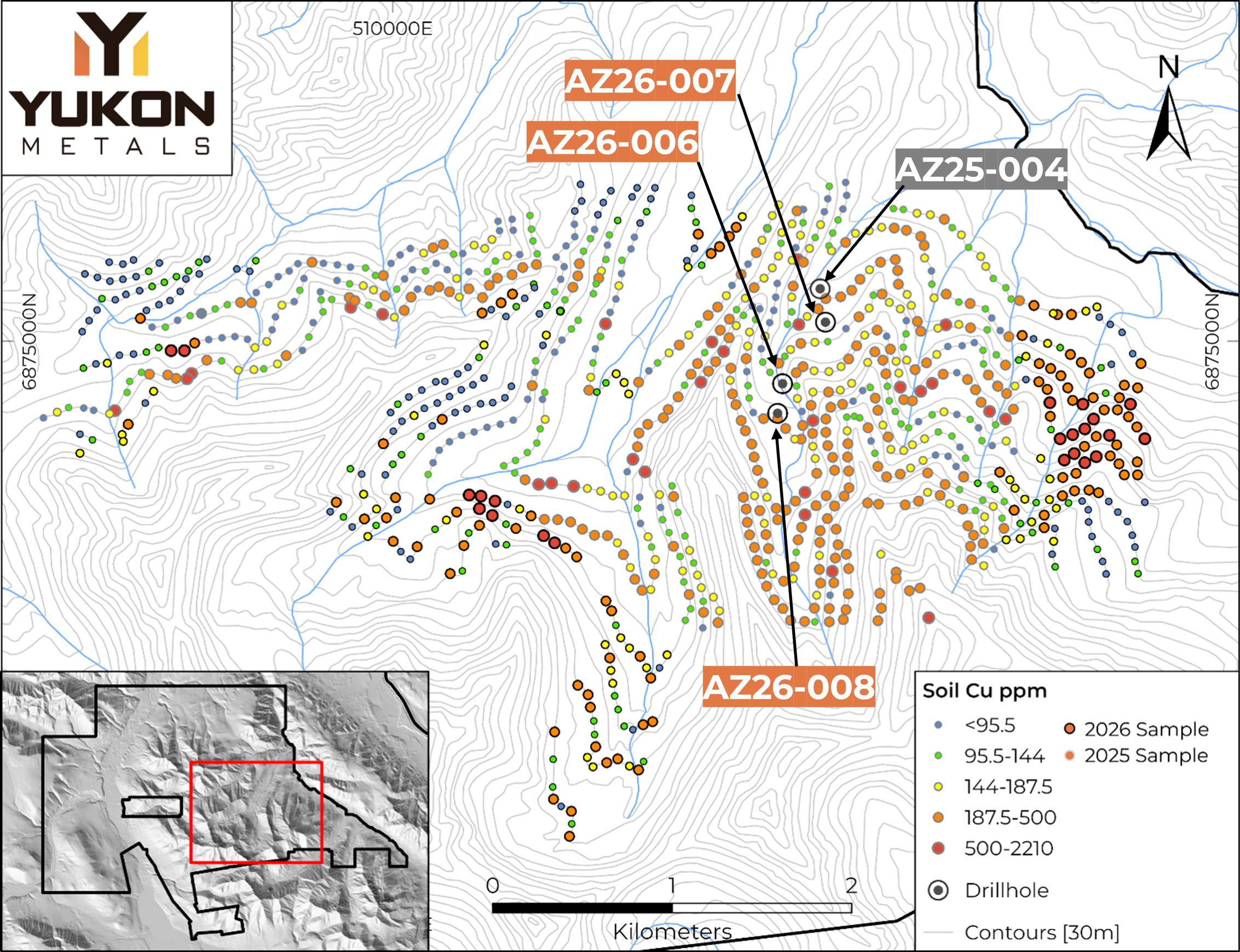
This news release contains certain forward-looking information, including information regarding the interpretation and geological significance of the 2026 surface sampling and drilling results at the AZ property; the interpretation of copper-gold-molybdenum mineralization, hydrothermal alteration and associated intrusive systems; the potential extent and continuity of mineralization beyond the 2026 Viper drill area; the significance of copper-gold-molybdenum soil and rock geochemical anomalies and their spatial relationships with interpreted structural trends and geophysical features; the potential for additional porphyry-style mineralization along the east-southeast-trending prospective corridor at Viper; the geological significance of the newly identified Saddle skarn system and its potential relationship to broader intrusion-related mineralization at AZ; the potential for a separate porphyry-style mineralizing centre at Wrangell; the interpretation and significance of additional assay results from drill hole AZ26-007 following internal QA/QC verification; the integration of geological mapping, surface geochemistry, drilling results and geophysical datasets to refine exploration targets; and the Company's future exploration plans and intentions across the AZ property, including at Viper, Saddle and Wrangell. Wherever possible, words such as“may”,“will”,“should”,“could”,“expect”,“plan”,“intend”,“target”,“anticipate”,“believe”,“estimate”,“predict” or“potential”, or the negative or other variations of these words, or similar words or phrases, have been used to identify the forward-looking information. These statements reflect management's current beliefs and are based on information currently available to management as of the date hereof.
Forward-looking information involves significant risks, uncertainties and assumptions. Many factors could cause actual results, performance or achievements to differ materially from those discussed or implied in the forward-looking information. Such factors include, among other things: risks and uncertainties relating to Viper, the AZ Project and other properties not being prospective copper-rich, gold-rich or silver-rich geological systems; rock samples analysed not being representative of overall mineralization; the required geological interpretations and assumptions of completed mapping, prospecting, geochemistry and drilling programs; not having significant scale and a lack of economic grade minerals; the Yukon not having the potential to generate fresh district-scale mining opportunities; and other risks and uncertainties. See the section entitled“Risk Factors” in the Company's listing statement dated May 30, 2024, available under the Company's profile on SEDAR+ at for additional risk factors. These factors should be considered carefully, and readers should not place undue reliance on the forward-looking information. Although the forward-looking information contained in this news release is based upon what management believes to be reasonable assumptions, the Company cannot assure readers that actual results will be consistent with the forward-looking information. The forward-looking information is made as of the date of this news release, and the Company assumes no obligation to update or revise the information to reflect new events or circumstances, except as required by law.
Photos accompanying this announcement are available at


Legal Disclaimer:
MENAFN provides the
information “as is” without warranty of any kind. We do not accept any
responsibility or liability for the accuracy, content, images, videos,
licenses, completeness, legality, or reliability of the information
contained in this article. If you have any complaints or copyright issues
related to this article, kindly contact the provider above.


Comments
No comment