


Missing Minefield Maps: Armenia's Unfinished Responsibility To Azerbaijan's Returning Families


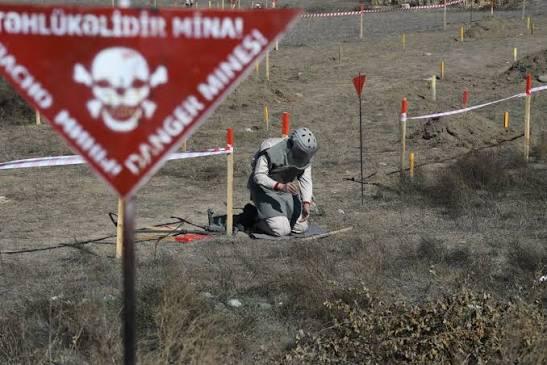
The return of displaced Azerbaijanis to their homes is a defining test of the post-war settlement. Across Karabakh and East Zangezur, families are rebuilding houses, schools and livelihoods. Yet beneath fields, roads, orchards and village outskirts lies a danger shaping the pace of return: landmines. A central question is urgent: why has Armenia shown so little activity in providing minefield records for the contact line established between 2020 and 2023?
According to Azerbaijan's National Agency of Mine Action (ANAMA), the former contact line before the 2020 war extended for about 254 kilometres. Following the war, the line expanded to approximately 480 kilometres until September 2023. Armenia has provided zero minefield forms for this later 480-kilometre line, according to the agency's account. That gap is at the heart of the dispute: detailed records could help deminers identify dangerous areas and plan clearance operations.
The contrast with earlier documentation is striking. Maps associated with the pre-2020 period were assessed by ANAMA as having only around 25 per cent accuracy and reliability. Even partial records can offer clues about suspected minefields, but low-quality information forces clearance teams to verify ground conditions through painstaking fieldwork. For the 2020–2023 contact line, the lack of submitted forms leaves deminers with an even more difficult task. The issue is both the quantity of information and its practical quality.
The consequences are measured in lives. Between November 10, 2020, and November 18, 2026, ANAMA recorded 279 mine incidents involving 444 people: 73 were killed and 371 injured. Of those incidents, 112 occurred along the former contact line, while 167 took place beyond it. The latter figure is troubling because it shows how the danger reaches into the wider civilian landscape, including areas where people work, travel, cultivate land and resume ordinary routines.
Every casualty represents a family whose recovery has been interrupted. A farmer who steps onto a contaminated field risks losing a limb or a life. A child walking near a village, a shepherd moving livestock, or a returning resident clearing the grounds around a home may encounter an explosive device buried years earlier. For families preparing to return, the mine threat turns homecoming into a process requiring constant caution, technical surveys and clearance.
The scale of the clearance effort is significant. From November 2020 to November 18, 2026, Azerbaijani teams cleared 312,218 hectares and neutralised 271,505 explosive items. These included 44,880 anti-personnel mines, 24,436 anti-tank mines and 202,189 unexploded ordnance items. Each hectare cleared represents progress towards safer villages, usable farmland, functioning roads and renewed economic activity. Each item removed reflects hours of specialised work, equipment, planning and public resources.
Clearance is slower and more hazardous when accurate records are missing. Minefield forms can provide coordinates, boundaries, layout information and details about the types of devices placed. Such records help teams prioritise areas, organise technical surveys and reduce risks to deminers and civilians. Their value is high where the contact line shifted, and new positions were established between 2020 and 2023. The provision of those records would be a practical humanitarian contribution with immediate consequences for civilian safety.
Armenia's limited engagement on this specific issue deserves sustained attention from international partners. Peace in the South Caucasus will be judged through tangible improvements in people's lives: families returning safely, children attending school, farmers cultivating their land and communities reconnecting with roads and services. Mine clearance is central to each of these goals. The transfer of accurate minefield documentation should form part of the region's confidence-building agenda.
The international community can help by supporting demining capacity, modern equipment, training and victim assistance, while urging the timely exchange of relevant records. Azerbaijan's clearance figures demonstrate a major national effort; the scale of the remaining danger calls for cooperation matching the humanitarian stakes.
Such practical cooperation would carry weight beyond diplomatic statements and summit communiqués.
A safe return begins with a cleared path home. For the people of Azerbaijan's liberated territories, that path depends on painstaking work on the ground and meaningful access to information about where mines were laid. Armenia's delivery of the 2020–2023 minefield forms would be a concrete step towards saving lives, accelerating reconstruction and giving displaced families a safer future in the places they call home.

Legal Disclaimer:
MENAFN provides the
information “as is” without warranty of any kind. We do not accept any
responsibility or liability for the accuracy, content, images, videos,
licenses, completeness, legality, or reliability of the information
contained in this article. If you have any complaints or copyright issues
related to this article, kindly contact the provider above.


Comments
No comment