


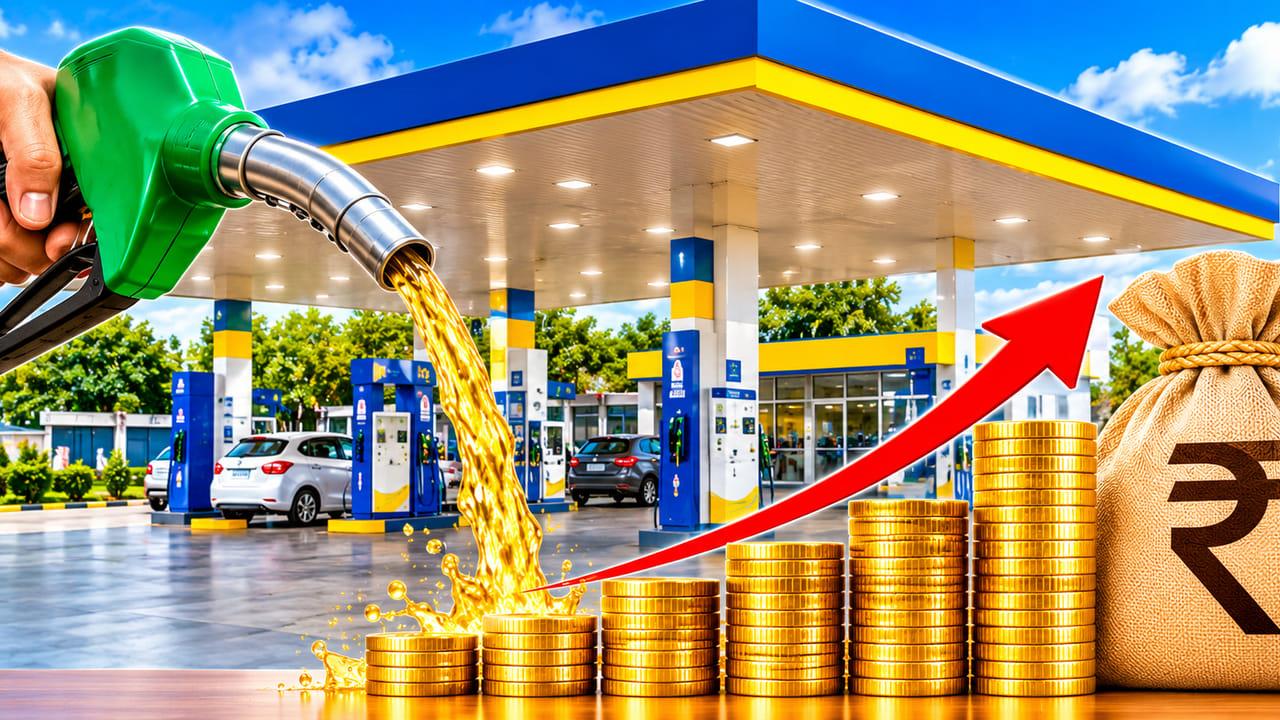
Petrol Pump Business: How Much Do Owners Really Earn Every Month? Are Crore-Worth Profits A Myth?


Opening a petrol pump requires significant investment, but does it guarantee huge profits? Here's a look at dealership costs, monthly earnings, expenses and ways customers can avoid being cheated.
- Setting up a petrol pump can require an investment of around Rs 1 crore to Rs 3 crore, depending on the location, land and infrastructure. Applicants can approach oil marketing companies such as Indian Oil, BPCL and HPCL for dealership opportunities. Apart from land and construction costs, owners need working capital to purchase fuel and manage daily operations. The actual investment varies depending on whether the land is owned or leased and the type of outlet.
- Petrol pump owners earn through a fixed dealer commission on every litre of fuel sold, rather than the entire sale value. For example, an outlet selling 1.7 lakh litres a month could generate an estimated commission of Rs 6.07 lakh, assuming an illustrative average commission of Rs 3.57 per litre. After estimated monthly expenses of Rs 3.22 lakh, around Rs 2.85 lakh would remain before loan repayments and taxes. If the owner pays an EMI of around Rs 1.48 lakh on a Rs 1.12 crore loan, the amount left would be approximately Rs 1.37 lakh. Actual earnings depend on sales volume, location, operating costs, commission rates and loan commitments. Highway outlets with higher sales may earn more, while additional services such as convenience stores, cafes and car washes can provide extra revenue.
Short delivery can happen if a dispensing machine is tampered with or does not deliver the quantity displayed.
Customers may also face fuel adulteration, where petrol or diesel is mixed with other substances.
Some outlets may use misleading practices involving the meter or fail to maintain properly calibrated dispensing equipment.
Customers should remain alert and report suspected irregularities to the concerned authorities.
- Check that the fuel meter is reset to zero before refuelling begins. Keep an eye on the displayed quantity and amount while fuel is being dispensed. If you suspect short delivery, ask for a quantity check using an authorised, calibrated five-litre measure. Check the density reading displayed at the pump and compare it with the prescribed range for the fuel. Always collect the bill and report suspected short delivery, adulteration or meter manipulation to the oil company or the Legal Metrology Department.

Legal Disclaimer:
MENAFN provides the
information “as is” without warranty of any kind. We do not accept any
responsibility or liability for the accuracy, content, images, videos,
licenses, completeness, legality, or reliability of the information
contained in this article. If you have any complaints or copyright issues
related to this article, kindly contact the provider above.


Comments
No comment