


Thousands Visit Vcuarts Qatar's Exhibition At Venice Biennale


DOHA: Virginia Commonwealth University School of the Arts in Qatar (VCUarts Qatar), a Qatar Foundation partner university, reached a milestone when it brought the work of its creative research community to the 61st International Art Exhibition of La Biennale di Venezia.
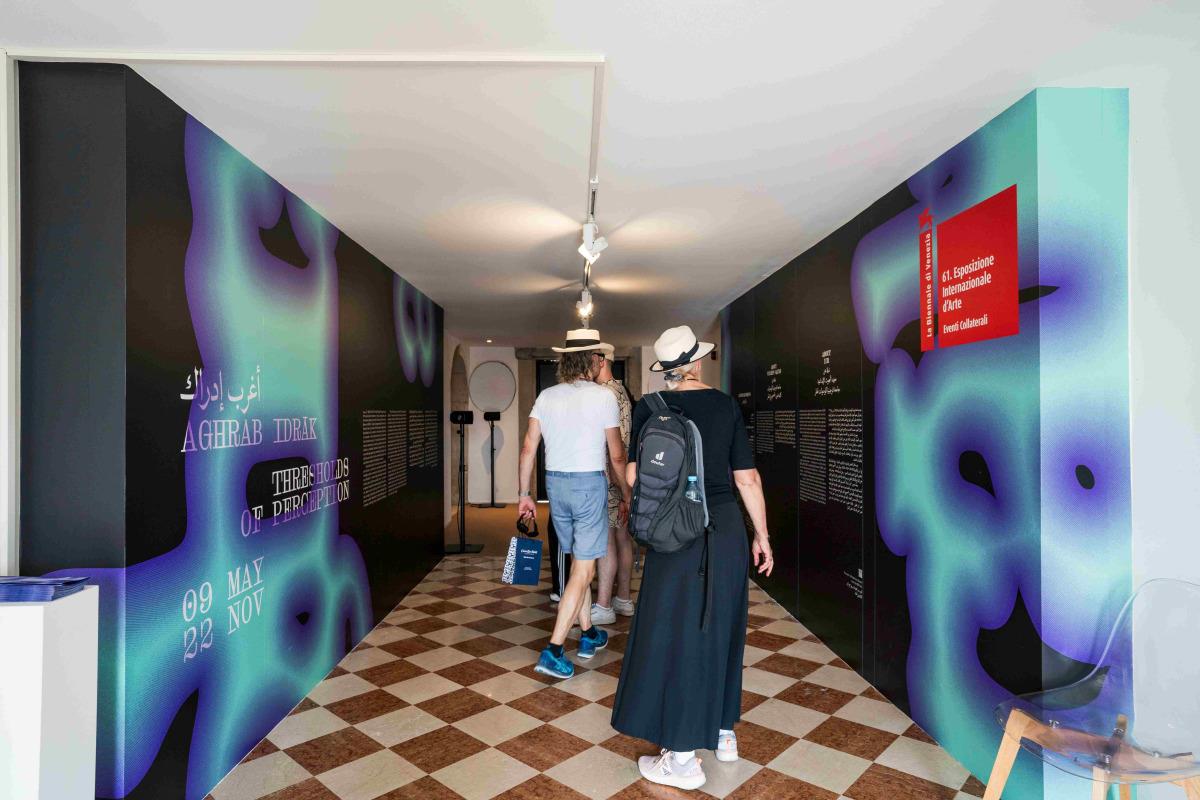
Presented as an official Collateral Event, "Aghrab Idrāk: Thresholds of Perception" introduced research developed in Doha to audiences at one of the world's leading platforms for contemporary art. As the exhibition enters its final week, it has welcomed more than 26,000 visitors to Palazzo Cavanis on Venice's Zattere waterfront.
VCUarts Qatar brought together work from ten labs within its Institute for Creative Research for the exhibition. Faculty, alumni and students collaborated on projects spanning kinetic sculpture, film, sound, artificial intelligence, Arabic typography, textiles and experimental publishing. The exhibition gave international audiences a view of how research at the university develops through collaboration and experimentation across disciplines.
“What made this exhibition especially meaningful was that it grew out of the collective research taking place across our university,” said Dean of VCUarts Qatar, Amir Berbić.“It is rare for an educational institution to be invited to present an official Collateral Event at the Venice Biennale, and that recognition speaks to the originality and ambition of the work being developed at VCUarts Qatar.” Co-curators Dr. Hesperia Iliadou and Chase Westfall developed the exhibition by tracing connections among projects already underway in the research labs. The works explored subjects including migration, ecology, cultural resilience, language and the changing relationship between people and technology. Across those subjects, the curators found a shared interest in how surroundings, movement, memory and relationships shape what people perceive.
“Often, you start with a thematic or a material throughline,” said Westfall, Head of Gallery at VCUarts Qatar.“In this case, what the projects share is a methodology.” The exhibition's Arabic title can be understood as“strange knowledge” or“unusual perception.” It reflected an interest in forms of understanding that are difficult to define or measure, from knowledge passed down through oral histories to insights gained by listening, moving through a space or working with a material. At Palazzo Cavanis, those ideas shaped the visitor experience. As audiences moved through the building's rooms and passageways, changes in light, sound and material invited them to find their own connections among the works.
The exhibition grew out of the Institute for Creative Research's faculty-led lab model, which brings people with different forms of expertise together to pursue shared questions. Field recordings, archival research and experiments with sound and materials helped determine the form of the works visitors encountered in Venice.
For Associate Dean for Research and Development at VCUarts Qatar, Dr. Diane Derr the model gives participants room to shape a project through the perspectives and experiences they bring to it.“It's really about celebrating a diversity of perspectives and creating a non-hierarchical structure, which lends itself to a new educational paradigm,” Derr said.

Legal Disclaimer:
MENAFN provides the
information “as is” without warranty of any kind. We do not accept any
responsibility or liability for the accuracy, content, images, videos,
licenses, completeness, legality, or reliability of the information
contained in this article. If you have any complaints or copyright issues
related to this article, kindly contact the provider above.


Comments
No comment