


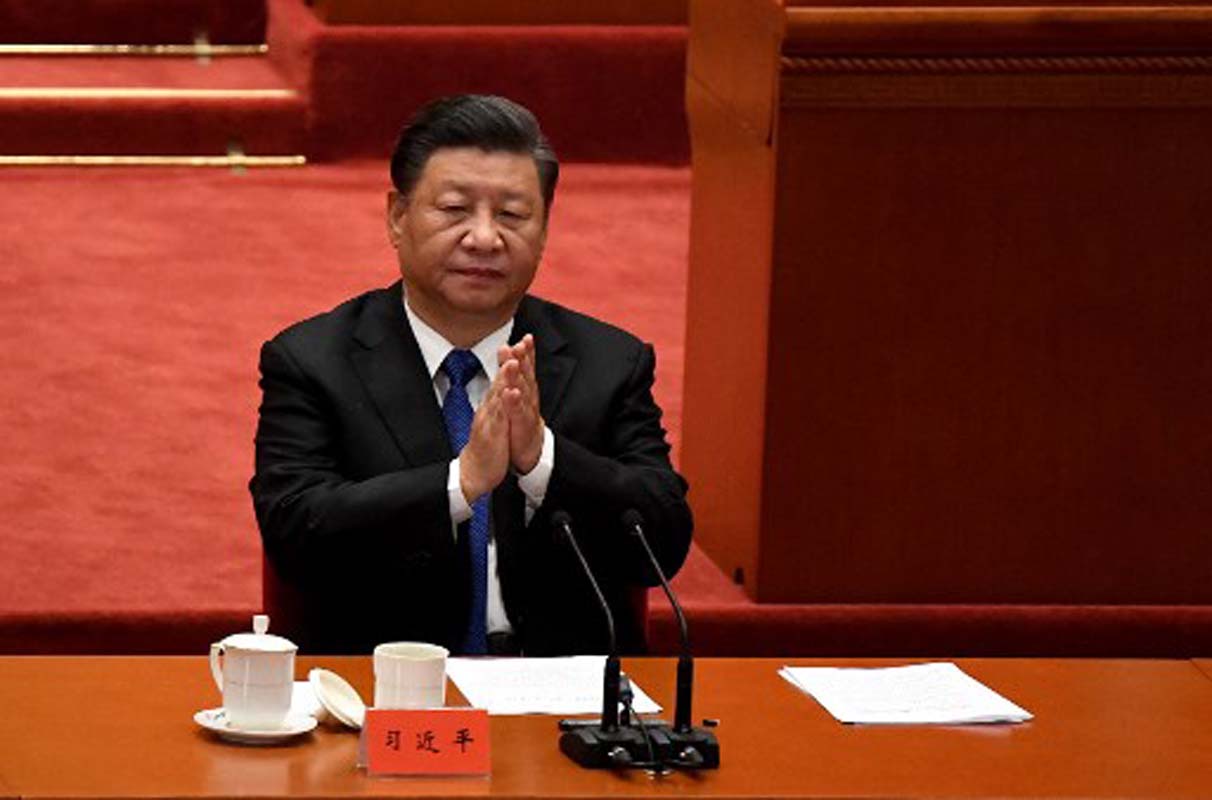
Xi Urges Asia-Pacific Free Trade Area, Pledges USD20M at APEC


(MENAFN) Chinese President Xi Jinping pressed Asia-Pacific leaders on Thursday to advance a regional free trade area and build the conditions for deeper cooperation. He spoke at the 33rd Asia-Pacific Economic Cooperation (APEC) Economic Leaders’ Meeting in Shenzhen.
Countries in the region have different development needs, Xi noted, and that shapes how a regional community can be built. “Building an Asia-Pacific community requires inclusive development,” Xi said.
He urged members to cooperate wherever conditions allow, to make sure the benefits of development are shared by all, and to respect the comfort levels of every party. Together, he said, these steps would help turn the vision of an Asia-Pacific community into reality.
Xi set out four priorities: strengthening economic and trade ties, upgrading connectivity, fostering innovation and enhancing development.
On trade, he described a free trade area as common ground among APEC members. “The free trade area of the Asia-Pacific is a shared vision of APEC members. It is important to make steady progress in realizing this vision and setting a higher standard for openness,” Xi said. He called for aligning regional economic and trade agreements, boosting trade and investment facilitation and digitalization, and reducing barriers to trade and investment.
On connectivity, he pressed for better infrastructure networks, including smart customs and smart transportation. He also urged institutional links through harmonized policies and regulations and cross-border payment cooperation, along with “stable and unimpeded” industrial and supply chains.
Xi singled out the digital economy and artificial intelligence as “engines” of innovation-driven growth. He called for stronger digital infrastructure, better data governance and closer regional collaboration, and for “efficient, convenient and secure” cross-border data flows.
He also addressed global pressures. “To respond to constantly emerging global challenges, we should strengthen capacity building, promote regional cooperation on energy and food security, and deepen anti-corruption governance across borders. We should coordinate the development of resources, the environment and population,” Xi said.
Xi announced that China will provide $20 million to support practical cooperation within APEC. China will also set up a Center for Asia-Pacific Community Studies in Shenzhen to carry out policy research and exchanges and to provide intellectual support.
Founded in 1989, APEC has 21 member economies, including China, the United States, Russia, Japan, South Korea, Australia, Canada, Indonesia, Malaysia and Vietnam. Together they account for more than 60% of global GDP and around 40% of the world’s population.

Legal Disclaimer:
MENAFN provides the
information “as is” without warranty of any kind. We do not accept any
responsibility or liability for the accuracy, content, images, videos,
licenses, completeness, legality, or reliability of the information
contained in this article. If you have any complaints or copyright issues
related to this article, kindly contact the provider above.


Comments
No comment