


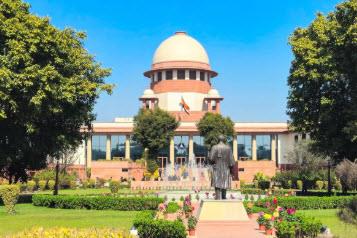
Erosion Of Institutional Authority Threatens Foundations Of Indian Democracy Arabian Post


By K Raveendran
The extraordinary scenes unfolding within and outside the Supreme Court of India are disturbing manifestations of a deeper malaise afflicting the country's democratic institutions. The spectacle of a lawyer being escorted out of a courtroom after making offensive remarks against Chief Justice of India Surya Kant represents more than an isolated breach of judicial decorum. Coming against the backdrop of contempt proceedings involving the leadership of the ruling party in Kerala, it raises uncomfortable questions about the declining respect for constitutional authority and the circumstances contributing to this erosion.
The November 16 incident, when an advocate reportedly questioned the Chief Justice's integrity and fitness to occupy his position, crossed the boundaries of legitimate professional disagreement. The Supreme Court Bar Association subsequently sought contempt action, while the Attorney General consented to the initiation of proceedings. Earlier, the Supreme Court had issued contempt notices to office-bearers of the Kerala Pradesh Congress Committee over a social media post targeting the Chief Justice. The party maintained that the message had been published without the leadership's authorisation and subsequently tendered an apology. These circumstances deserve consideration, particularly because allegations of contempt must be distinguished from findings of guilt.
There was a time when even minor departures from courtroom etiquette were regarded as affronts to judicial dignity. Lawyers approached the Bench with considerable deference, and differences over judicial decisions were generally expressed through established legal procedures. The courtroom was understood to be a place where arguments carried greater weight than personalities. That convention has weakened in an increasingly confrontational public culture in which institutional authority is frequently challenged through political rhetoric, personal accusations and social media campaigns.
Yet it would be simplistic to attribute the deterioration entirely to irresponsible lawyers, politicians or an unruly public. Respect for an institution cannot be sustained indefinitely through ceremonial conventions, disciplinary powers or constitutional status alone. It must also be earned through consistent conduct, transparency, impartiality and an unmistakable commitment to the principles that justify its existence. This applies as much to Parliament and the executive as to constitutional bodies and the judiciary.
The judiciary occupies a particularly sensitive position because it is entrusted with protecting fundamental rights, interpreting the Constitution and restraining excesses by other branches of government. Its independence is indispensable to democratic survival. Equally important is the public perception that justice is administered without regard to political influence, economic power or social standing. Even where that perception is unfair or exaggerated, institutions cannot afford to disregard the consequences of diminishing public confidence.
See also Protests Against CEC, Scheming Government, And The JudiciaryThis does not mean that judicial authority should be subjected to intimidation whenever a judgment disappoints a political party or an individual litigant. Courts cannot function under threats, organised pressure or personal vilification. Judicial independence requires protection against precisely such behaviour. At the same time, reasoned criticism of judgments, administrative practices and institutional arrangements is an essential component of constitutional democracy. The distinction between criticism and intimidation must remain clear, particularly when the judiciary itself is called upon to determine whether contempt has occurred.
India's judicial system faces challenges extending well beyond courtroom behaviour. Enormous case backlogs, prolonged litigation, vacancies, uneven access to legal representation and the financial burden of pursuing justice have contributed to public frustration. For an ordinary citizen, institutional credibility is measured less by constitutional rhetoric than by the possibility of obtaining timely and affordable justice. A system capable of protecting fundamental liberties at the highest level must also remain accessible to those struggling through years of proceedings in subordinate courts.
Questions surrounding judicial appointments, administrative transparency and the relationship between the executive and judiciary have similarly generated legitimate public debate. Such discussions need not undermine judicial independence. Indeed, institutional accountability and independence are complementary rather than competing principles, provided reforms respect the constitutional separation of powers.
The larger problem, however, is that institutional depreciation has become a feature of India's political and administrative culture. Parliament, once regarded as the principal arena of national deliberation, increasingly witnesses confrontation that can overshadow substantive scrutiny of legislation. Disruptions, hurried legislative processes and partisan exchanges have weakened the public perception of its deliberative role. Responsibility cannot be assigned exclusively to either the government or the Opposition. Both have obligations to preserve parliamentary conventions, accommodate meaningful debate and recognise that legislative accountability is not a concession granted by the majority.
The functioning of investigative agencies has also become a contentious element of the institutional debate. Allegations of selective enforcement, politically motivated investigations and differential treatment have been raised under governments of different political persuasions. Such allegations do not establish wrongdoing in every investigation, nor should they become grounds for shielding public figures from legitimate scrutiny. Nevertheless, investigative credibility depends upon procedures and standards that appear consistent, irrespective of the political affiliations of those under examination.
Similar concerns surround the Election Commission, autonomous regulators, universities and sections of the civil administration. These bodies derive their legitimacy from professional independence and public trust. When appointments, decisions or interventions are interpreted primarily through partisan calculations, their authority becomes vulnerable. Political disagreement over institutional decisions is unavoidable, but persistent doubts about impartiality can prove corrosive even when individual allegations remain unsubstantiated.
See also India's National Capital Being Turned Into No Protest ZoneSuccessive governments have contributed to these pressures through the temptation to treat institutions as instruments of executive convenience. The increasing centralisation of political decision-making has aggravated the problem. When power becomes concentrated around a small leadership circle, the space available for institutional dissent, bureaucratic candour and independent professional judgment may narrow. Yet the Opposition cannot escape scrutiny when its own conduct substitutes personalised attacks for reasoned constitutional engagement.
Technology has intensified this deterioration. Social media reduces complex judicial and administrative questions to provocative slogans, often eliminating the distinction between disagreement and abuse. Political organisations increasingly communicate through an ecosystem that rewards outrage rather than accuracy. Constitutional authorities become convenient targets in battles for public attention, while reasoned discussion struggles to compete with sensational accusations.
There is also a danger in confusing reverence for institutions with unquestioning acceptance of their decisions. Democratic authority is fundamentally different from personal prestige. A constitutional office commands respect because of the responsibilities attached to it, not because its occupant is beyond examination. Equally, dissatisfaction with an office-holder cannot justify degrading the institution itself. The distinction is essential to a mature democracy.
The erosion of institutional credibility is particularly serious because democratic safeguards depend upon mutual restraint. Courts must remain independent, governments must respect constitutional limitations, legislatures must exercise meaningful oversight and political parties must accept that disagreement does not confer a licence for intimidation. Institutions, for their part, must demonstrate that they are capable of acknowledging shortcomings, correcting mistakes and maintaining standards of accountability.
The Supreme Court incidents therefore expose a contradiction increasingly visible across India's democratic landscape. Constitutional institutions are expected to command unquestioned respect even as the political environment surrounding them encourages relentless confrontation and suspicion. Restoring institutional authority requires more than demanding deference from citizens. It requires those entrusted with public power to recognise that the dignity of an institution ultimately rests upon the fairness, restraint and integrity with which that power is exercised. (IPA Service)

Legal Disclaimer:
MENAFN provides the
information “as is” without warranty of any kind. We do not accept any
responsibility or liability for the accuracy, content, images, videos,
licenses, completeness, legality, or reliability of the information
contained in this article. If you have any complaints or copyright issues
related to this article, kindly contact the provider above.


Comments
No comment