


Dubai Future Week 2026: New Test Aims To Detect Newborn Sepsis In 2 Hours


- By: Nandini Sircar
A simple saliva sample could help doctors detect a life-threatening infection in newborns within two hours, cutting down a diagnostic process that currently takes several days.
A biomedical innovation project called Oriva, being showcased at Dubai Future Week 2026, aims to make newborn sepsis testing faster, less invasive and more accessible, particularly in countries and communities with limited access to advanced medical facilities.
Recommended For YouNewborn sepsis, also known as neonatal sepsis, is a potentially life-threatening infection of the bloodstream that affects babies aged 28 days or younger. It can trigger an extreme inflammatory response in the body, disrupting blood flow and potentially leading to organ failure or septic shock if not treated promptly.
Stay up to date with the latest news. Follow KT on WhatsApp Channels.
The diagnosis of newborn sepsis typically relies on blood culture tests, which can take up to five days to produce results and require relatively large blood samples - a significant challenge when treating fragile newborns.
Edward Xu, who is pursuing a Master's in Design Engineering at Harvard University, said the project that he developed along with his two other colleagues was driven by the need to address this global health challenge.
“Our project focuses on tackling a major health challenge affecting newborns: sepsis, which impacts around 1.3 million babies worldwide every year,” he said.
From blood samples to saliva testingWorking with Harvard Medical School, the team is developing a portable testing kit based on technology that uses saliva to identify markers of sepsis.
Unlike conventional blood tests, the proposed approach is designed to deliver results within approximately two hours, reducing the need for invasive sample collection and lengthy laboratory procedures.
Xu said the intention was to take technology currently used in large hospitals and adapt it into a more affordable, portable solution that could reach underserved communities.
“Our aim is to turn this technology, currently used in large hospitals, into a more affordable, portable testing kit that can be taken to underserved and lower-income countries, including parts of Africa, where access to such facilities is limited.”
The kit is designed to allow healthcare professionals to collect a baby's saliva sample, conduct the test on the spot and receive results without having to transport blood samples to laboratories.
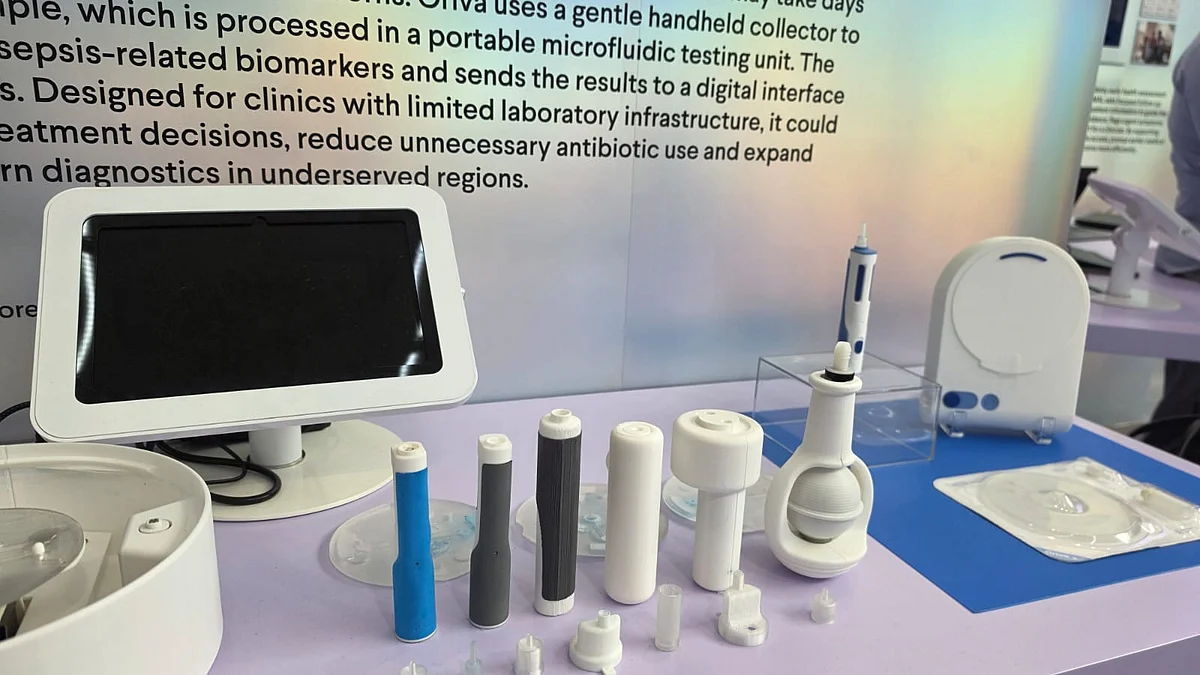
How the portable device worksThe device comprises three main components: a saliva collector, a disposable microfluidic disc and a compact testing machine.
The collector is gently placed inside the baby's mouth to obtain a sample, which is then transferred to the disc and inserted into the machine. Tiny channels within the disc carry out different stages of the testing process.
Explaining how the technology works, Xu said the team had effectively miniaturised the functions of a complex laboratory system.
“Essentially, we have taken the processes carried out by a large, complex laboratory machine and condensed them into a small disc that uses centrifugal force, rotating at different speeds, to carry out the testing process.”
ALSO READ- Abu Dhabi newborn genomic screening changes lives of over 100 babies in one year Dubai unveils automated technology to test oils, fats in 2 minutes instead of 2 hours

Legal Disclaimer:
MENAFN provides the
information “as is” without warranty of any kind. We do not accept any
responsibility or liability for the accuracy, content, images, videos,
licenses, completeness, legality, or reliability of the information
contained in this article. If you have any complaints or copyright issues
related to this article, kindly contact the provider above.


Comments
No comment