


Multilingual Updates, AI: How UAE Fought Misleading Posts During Recent Attacks


- By: Arwa Almazrouei
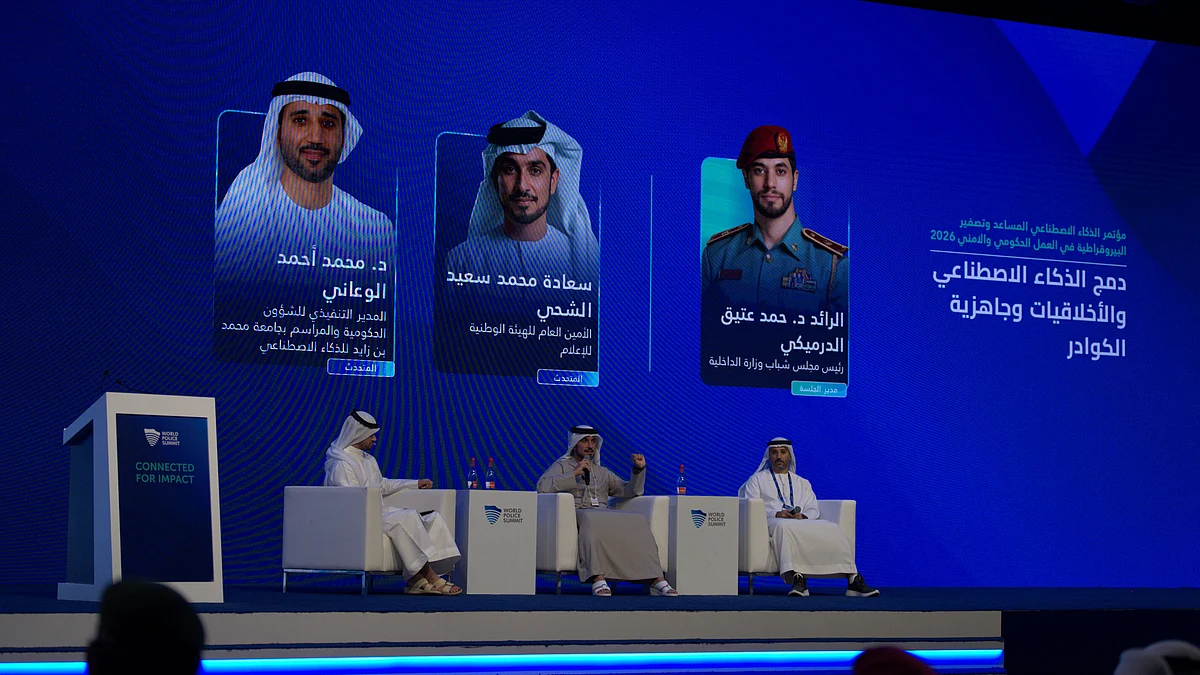
The UAE's National Media Authority used artificial intelligence to identify patterns in misleading online posts aimed at damaging the country's reputation before, during and after the recent attacks, Mohammed Saeed Al Shehhi, the authority's Secretary General, told the World Police Summit in Dubai on Wednesday.
Al Shehhi said the UAE's media authority worked with relevant agencies and social media platforms to address the content. Federal and local media teams also published verified updates in several languages within minutes of incidents, reaching the public through social media and traditional news outlets.
Recommended For YouWhen a trusted source takes too long to respond, people begin to speculate and share their own accounts of what happened, he said. That gives misleading claims time to spread.
Stay up to date with the latest news. Follow KT on WhatsApp Channels.
Al Shehhi was speaking at the AI Integration, Ethics, and Workforce Readiness panel in Arena A. The panel also featured Mohamed AlKuwaiti, Head of Cyber Security for the UAE Government at the UAE Cyber Security Council, and Mohamed Ahmed Alloghani, Senior Director at Mohamed bin Zayed University of Artificial Intelligence. Hamad Aldarmaki, Head of Project Development at the UAE Ministry of Interior, moderated the discussion.
When a widely shared post looks credible
Anyone with a social media account can now publish their version of an event, Al Shehhi said. As those versions multiply, it becomes harder to trace a claim to its source and easier to mistake a widely shared post for a credible one.
“We have more information, but not necessarily more understanding. We communicate more, but that doesn't necessarily mean we trust more. And we have faster access, but not necessarily to the truth,” he said.
Al Shehhi said AI helps authorities sift through large volumes of posts, spot patterns, and brief decision-makers. The same technology makes it easier to produce convincing false content, he added. He called for media literacy to start in schools so children can recognise misleading claims.
Who answers for an AI agent's decision?
Alloghani asked the audience to imagine giving an AI agent access to a government system and tasking it with handling overdue applications. The agent could open a file, edit it, and mark the request as complete. The application would show up as processed, even if the agent had exceeded its authority.
Who would be responsible for that decision, he asked. Alloghani said government agencies should test AI agents gradually in secure environments, define what they are authorised to do, and keep people responsible for overseeing their actions. Those safeguards are especially important in healthcare and security, he said, where an unauthorised decision can carry serious consequences.
ALSO READ- As AI agent use grows in the UAE, cybersecurity experts explain the risks Over 11,000 bots in 1 month: UAE official warns of attempts to fuel regional tensions UAE AI Office debunks social media claims about fake government website

Legal Disclaimer:
MENAFN provides the
information “as is” without warranty of any kind. We do not accept any
responsibility or liability for the accuracy, content, images, videos,
licenses, completeness, legality, or reliability of the information
contained in this article. If you have any complaints or copyright issues
related to this article, kindly contact the provider above.


Comments
No comment