


Over 40 Cyber Groups Tried To Attack UAE Infrastructure Amid Regional Crisis, Official Says


- By: Azza Al Ali
More than 40 cyber groups originating from over 20 countries attempted to exploit the recent regional crisis to launch cyberattacks against the UAE, with threats targeting critical infrastructure including energy facilities, desalination plants and essential national systems, a senior official revealed on Wednesday.
Mohammed Al Kuwaiti, Head of Cyber Security for the UAE Government, said the country continues to face cyber threats following a period of heightened attacks between February 28 and early April, with artificial intelligence being used to develop malicious code, identify security vulnerabilities and create deepfakes.
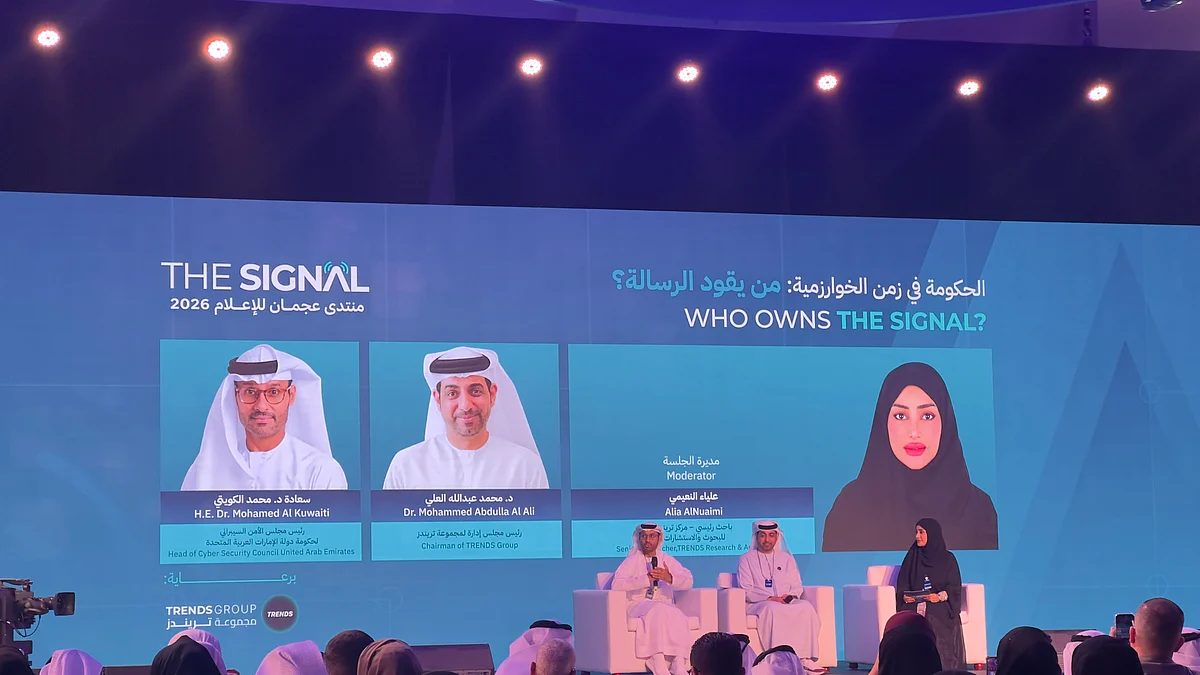
Recommended For YouSpeaking during a session titled 'Who Owns the Signal?' at the first edition of the Ajman media fourm 2026, held under the theme 'The Signal', Al Kuwaiti explained that the threats extended beyond misinformation and online manipulation to attempts targeting energy infrastructure, water desalination facilities, the Barakah nuclear power plant and national systems supporting electricity, water, healthcare, media and other essential sectors.
Stay up to date with the latest news. Follow KT on WhatsApp Channels.
Al Kuwaiti said artificial intelligence had become a central component of these threats, enabling attackers to develop malicious programmes, identify previously unknown software vulnerabilities and produce deepfake content.
While public attention often focuses on deepfakes and online rumours, he warned that these represent only a small part of the broader cybersecurity risks associated with artificial intelligence.
He said AI could also be used to identify zero-day vulnerabilities, which are previously unknown security weaknesses that attackers may exploit before developers or organisations have an opportunity to address them.
Three major cyber threatsAl Kuwaiti identified three major categories of cyber threats facing the UAE, ranging from online criminal activities to cyberterrorism and state-linked cyberwarfare.
1. The first involves cybercrime, including defamation, blackmail, fraud, impersonation, the spread of rumours and deepfake content.
He said the UAE has introduced legislation to address many of these offences, providing a legal framework to hold those responsible accountable.
2. The second threat involves cyberterrorism, particularly the use of digital platforms to spread extremist ideologies, undermine national leadership and threaten social cohesion.
Al Kuwaiti warned that extremist narratives circulating online could contribute to the emergence of lone actors or sleeper cells, highlighting the importance of public awareness and community involvement in identifying potential threats.
He stressed that combating extremist ideas requires more than technological measures, as harmful narratives must also be challenged through communication and awareness.
3. The third threat, which he described as broader in scale, involves cyberwarfare and hybrid warfare, including operations potentially supported by states and carried out through digital networks and social media platforms.
He explained that such operations could use information and communication channels to influence public opinion, create uncertainty and weaken national unity.
Al Kuwaiti stressed that the media plays an important role in responding to these threats by ensuring that accurate information reaches the public and preventing information gaps that could be exploited to spread misleading narratives.
Cyberattacks carried out through proxy networksKhaleej Times earlier reported that Al Kuwaiti had said cyberattacks targeting the UAE are often carried out through proxy groups rather than direct state operations, with networks operating globally through cloud infrastructure and under assumed identities.
More than 40 such groups and sympathizers are believed to be involved, with much of their coordination taking place on the dark web.
He previously described the dark web as an environment where cybercriminal networks buy, sell and rent hacking tools, exchange cryptocurrencies and distribute fabricated or stolen information intended to damage reputations.
These activities demonstrate how cyber threats can extend beyond technical attacks to influence public confidence and perceptions.
Despite the scale of the threats, Al Kuwaiti said the UAE's cybersecurity resilience, security institutions and community awareness had helped the country respond to attempted attacks.
He described society as the first line of defence, stressing that citizens, residents and visitors all have a role in maintaining national security and responding to misinformation.
Al Kuwaiti said the unity demonstrated across the UAE during the recent period of heightened threats reflected the country's ability to withstand both cyberattacks and attempts to undermine social cohesion.
He added that the experience had reinforced the importance of national resilience, with the country emerging more united in the face of evolving cybersecurity challenges.
ALSO READ- UAE foils around 750,000 cyberattacks targeting sectors including energy, education 700,000 cyberattacks a day: How UAE kept flights, supplies moving amid regional tensions

Legal Disclaimer:
MENAFN provides the
information “as is” without warranty of any kind. We do not accept any
responsibility or liability for the accuracy, content, images, videos,
licenses, completeness, legality, or reliability of the information
contained in this article. If you have any complaints or copyright issues
related to this article, kindly contact the provider above.


Comments
No comment