


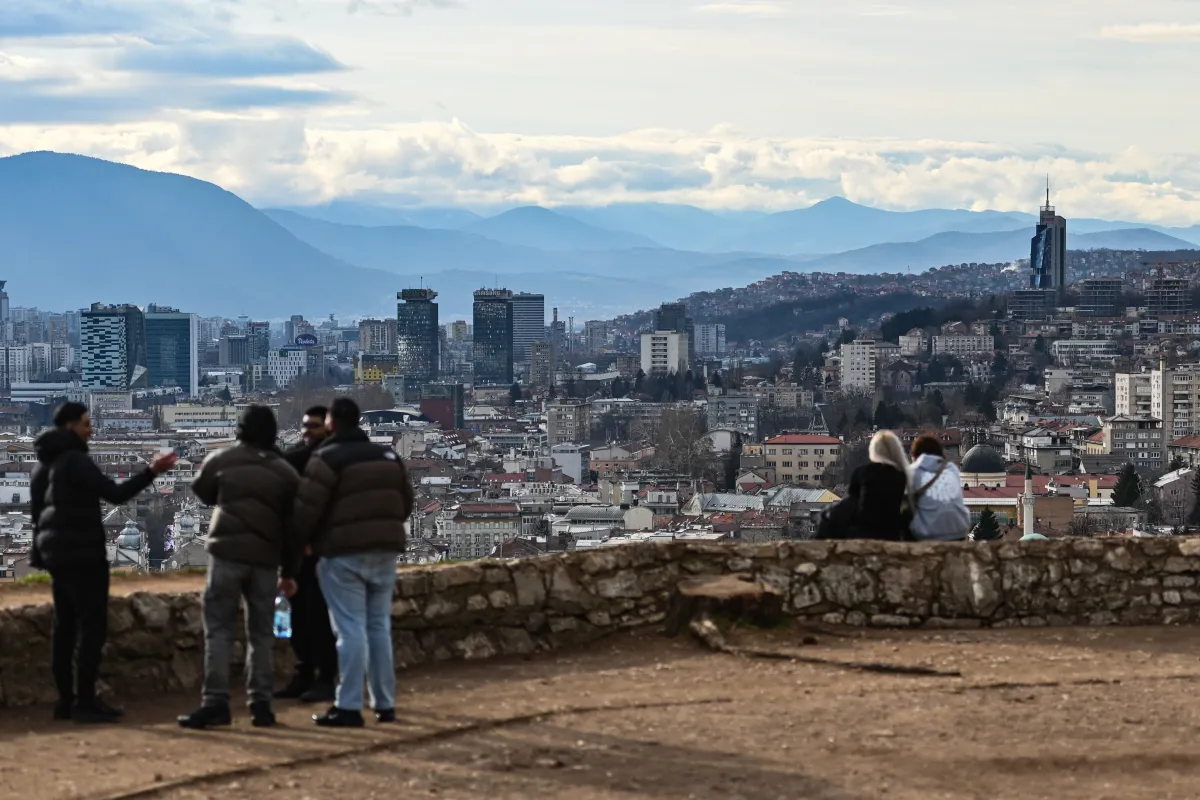
How A Swiss NGO Promotes Citizen Engagement In Bosnia And Herzegovina - SWI Swissinfo.Ch


As a reporter I cover developments in democracy where the Swiss perspective becomes relevant. I am Swiss and have long been fascinated by the way public discussions shape society.
-
More from this aut
German Departm
-
Deutsch
de
Vertreterin einer Schweizer NGO in Bosnien: ((Die Menschen setzen wieder Vertrauen in die Zivilgesellschaft))
Original
Read more: Vertreterin einer Schweizer NGO in Bosnien: ((Die Menschen setzen wieder Vertrauen in die Zivilgesellsch
Français
fr
((Les gens retrouvent confiance dans la société civile)), affirme une représentante d'une ONG suisse en Bosnie
Read more: ((Les gens retrouvent confiance dans la société civile)), affirme une représentante d'une ONG suisse en B
This autumn's elections in Bosnia and Herzegovina were not as dramatic as those in neighbouring Serbia, where a student movement secured a parliamentary majority and thereby ousted the long-standing leader Aleksandar Vucic from office. In Bosnia and Herzegovina, turnout in the parliamentary elections was at its lowest level in 30 yearsExternal link.
Nevertheless, Selma Dilber Sijercic is optimistic about the path Bosnian society is taking. She heads the Swiss-funded PRAGG project for the NGO Helvetas. PRAGG stands for“proactive citizens” in Bosnian, which is exactly how Dilber Sijercic sees Bosnian society: people in both parts of the country feel their engagement is bringing about political change.
“Yes, pre-election nationalist rhetoric has become the norm for us,” she says. Independent observers from civil society, she points out, have long highlighted the political pressure that parties and politicians exert on their respective ethnic groups through nationalist mobilisation.
“In addition, there is so much disinformation and hate speech, which contributes to a tense atmosphere in the run-up to elections,” she says.“But outside the election cycle, citizens are regaining their trust in civil society”.
External Content 'More resilient than is often portrayed'This is not merely her personal perception. The United Nations-backed study Social Cohesion in Bosnia and Herzegovina 2026 (SCORE) speaks of a society that is“more resilient than is often portrayed”. The data, it says, points to“cautious co-existence”, whereby day-to-day relations between groups are“largely functional and stable”. The“foundations for an inclusive sense of belonging” are“stronger than widely assumed”.
According to SCORE, trust in the highest level of government stands at 42%, an increase of 12% since 2020. Trust in local government is even higher, at 56%. In comparison, according to a study by the Organisation for Economic Co-operation and Development (OECD), 68% of people in Switzerland trust their local government. This makes the country the frontrunner among 38 nations.
Read more here about how OECD countries are tackling the crisis of trust in society:
More More Global elections Why Switzerland is missing from the debate over trust in governmentThis content was published on Oct 30, 2026 Politicians, officials and civil society representatives gathered in Paris to discuss declining public trust in government.
Read more: Why Switzerland is missing from the debate over trust in goverHowever, the SCORE study also contains some sobering findings. While it says that Bosnian society has become more resilient, people themselves do not perceive it that way: 46% believe that trust has declined. Only 20% believe it has improved. Similarly, more people perceive a deterioration, rather than an improvement, in inter-ethnic relations. Yet anyone who speaks to Dilber Sijercic gets an impression of what optimism looks like for society.
“If you get involved, you can make a change,” she says. For her, the lessons are clear:“Citizens get involved when it comes to solving specific problems, issues that affect them personally – everyday problems, local pollution, or the water supply.”
She describes an engagement that is“not driven by party politics, but by a desire for change”. For example, pressure from young people has ensured that the Youth Council receives a larger budget.
Of course, not all citizens would have the energy to get involved, says Dilber Sijercic.“People are struggling to pay their bills. The political system does not provide them with good services – there is a lack of transparency and willingness to be accountable,” she says.
Bosnia and Herzegovina has a complex structure. The country consists of two entities: the Federation of Bosnia and Herzegovina and Republika SrpskaExternal link.
“The complex structure and the divided responsibilities on issues relating to health, education, young people and women are difficult for many citizens to understand, which is why civil society plays such a major role,” she says.
“Associations and organisations act as a bridge to the administration” and are needed to navigate bureaucracy, she adds.

Legal Disclaimer:
MENAFN provides the
information “as is” without warranty of any kind. We do not accept any
responsibility or liability for the accuracy, content, images, videos,
licenses, completeness, legality, or reliability of the information
contained in this article. If you have any complaints or copyright issues
related to this article, kindly contact the provider above.


Comments
No comment