


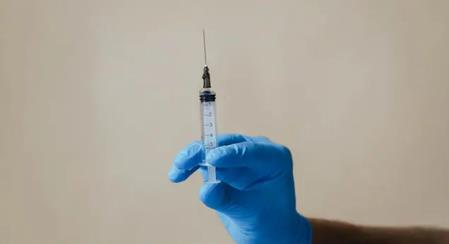
Bhopal Develops Indigenous Bird Flu Vaccine For Poultry, Shivraj Singh Chouhan To Dedicate To Nation On Nov 20


The vaccine will be unveiled at the institute and marks a major step toward strengthening disease control in the country's poultry sector.
Union Minister of Agriculture and Farmers Welfare and Rural Development, Shivraj Singh Chouhan, will dedicate India's first "indigenous inactivated H5N1 Highly Pathogenic Avian Influenza (HPAI) virus vaccine" for poultry to the nation on November 20.
Highly Pathogenic Avian Influenza, commonly known as bird flu, poses a severe threat to chickens and other birds, with outbreaks capable of causing up to 100 per cent mortality among infected flocks.
Beyond forcing mass culling and imposing trade restrictions, the disease disrupts global trade, affects poultry product prices, and severely impacts farmers' livelihoods.
Since bird flu was first detected in India in 2006, the country has recorded more than 500 combined outbreaks of the H5N1 and H5N8 subtypes.
The potential economic toll of unchecked avian influenza remains substantial.
Official estimates indicate that a major outbreak could reduce India's GDP growth by 1.5 per cent and put more than 20 per cent of the nation's poultry population at risk.
Past outbreaks have already demonstrated this financial vulnerability: the 2006 outbreak resulted in estimated direct and indirect losses of Rs 2,200 crore to Rs 3,000 crore, while a separate outbreak in Manipur caused losses equivalent to 0.5 per cent of the state's GDP.
In addition to agricultural losses, H5N1 carries serious public health implications.
According to the World Health Organization (WHO), 1,003 human cases of H5N1 avian influenza -- resulting in 479 deaths -- have been reported across 25 countries, including India, since 2003.
Virological studies show that the "H5N1 Clade 2.3.2.1a strain" has been responsible for most outbreaks in chickens, with recent infections also detected in mammals alongside three reported human cases.
Until now, no specific commercial vaccine was available to protect poultry against the circulating Clade 2.3.2.1a strain.
ICAR-NIHSAD's indigenous vaccine directly addresses this gap, aiming to minimise economic losses for poultry farmers and prevent the virus from spreading through chickens to other animals and humans.

Legal Disclaimer:
MENAFN provides the
information “as is” without warranty of any kind. We do not accept any
responsibility or liability for the accuracy, content, images, videos,
licenses, completeness, legality, or reliability of the information
contained in this article. If you have any complaints or copyright issues
related to this article, kindly contact the provider above.


Comments
No comment