


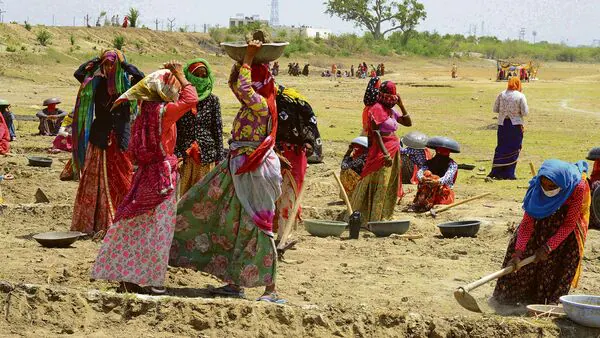
Govt Strengthens Grievance Redressal Mechanism For Rural Workers


Under the framework, notified under the Viksit Bharat–Guarantee for Rozgar and Ajeevika Mission (Gramin) (VB-G RAM G ) Act, 2025, the Ministry of Rural Development has laid down guidelines for district-level ombudspersons and appellate authorities.
Also Read | Soybean oil's share rises in India's edible oil import mixA dedicated ombudsperson at the district level will address complaints relating to job cards, denial of employment, delayed wage payments, delay compensation, worksite facilities, muster rolls and other statutory entitlements of rural workers, according to the new guidelines.
Covering discrimination, harassmentThe framework also covers complaints of discrimination, harassment and violations of workers' rights, particularly those involving women and vulnerable groups.
The VB-G RAM G Act, 2025 came into force on 1 July 2026 across all states and Union Territories. Since coming into force on 1 July 2026, the Act has replaced the erstwhile MGNREGA framework and provides a statutory guarantee of 125 days of wage employment to eligible rural households.
The latest guidelines are aimed at strengthening institutional oversight and providing rural workers with an accessible mechanism to seek redressal of grievances arising from the implementation of the rural employment programme, the ministry said.
Also Read | Fertilizer demand set to recover in rabi, but water stress clouds outlookThe ministry has also expanded the pool of eligible candidates for appointment as ombudspersons to include individuals with experience in rural development, public administration, law, academics, social work and management. Changes have also been made to provisions governing tenure and remuneration to ensure continuity and effective functioning.
Digital routeA key feature of the guidelines is a dedicated digital platform for registering and tracking complaints, recording proceedings, uploading awards and monitoring action taken on grievance redressal. Geo-tagged and time-stamped photographs taken during field visits will also be used to improve transparency and documentation.
Also Read | Ethanol boom gives animal feed makers a cheaper alternative to soybean mealThe guidelines further strengthen community participation by requiring ombudspersons to attend at least three social audit public hearings or Gram Sabhas every month. This is expected to provide workers with an opportunity to raise concerns directly and enable authorities to identify discrepancies and initiate corrective action.
The ombudsperson and appellate authority mechanism will complement other accountability provisions under the VB-G RAM G Act, including digital monitoring, public disclosure and social audits.

Legal Disclaimer:
MENAFN provides the
information “as is” without warranty of any kind. We do not accept any
responsibility or liability for the accuracy, content, images, videos,
licenses, completeness, legality, or reliability of the information
contained in this article. If you have any complaints or copyright issues
related to this article, kindly contact the provider above.


Comments
No comment