


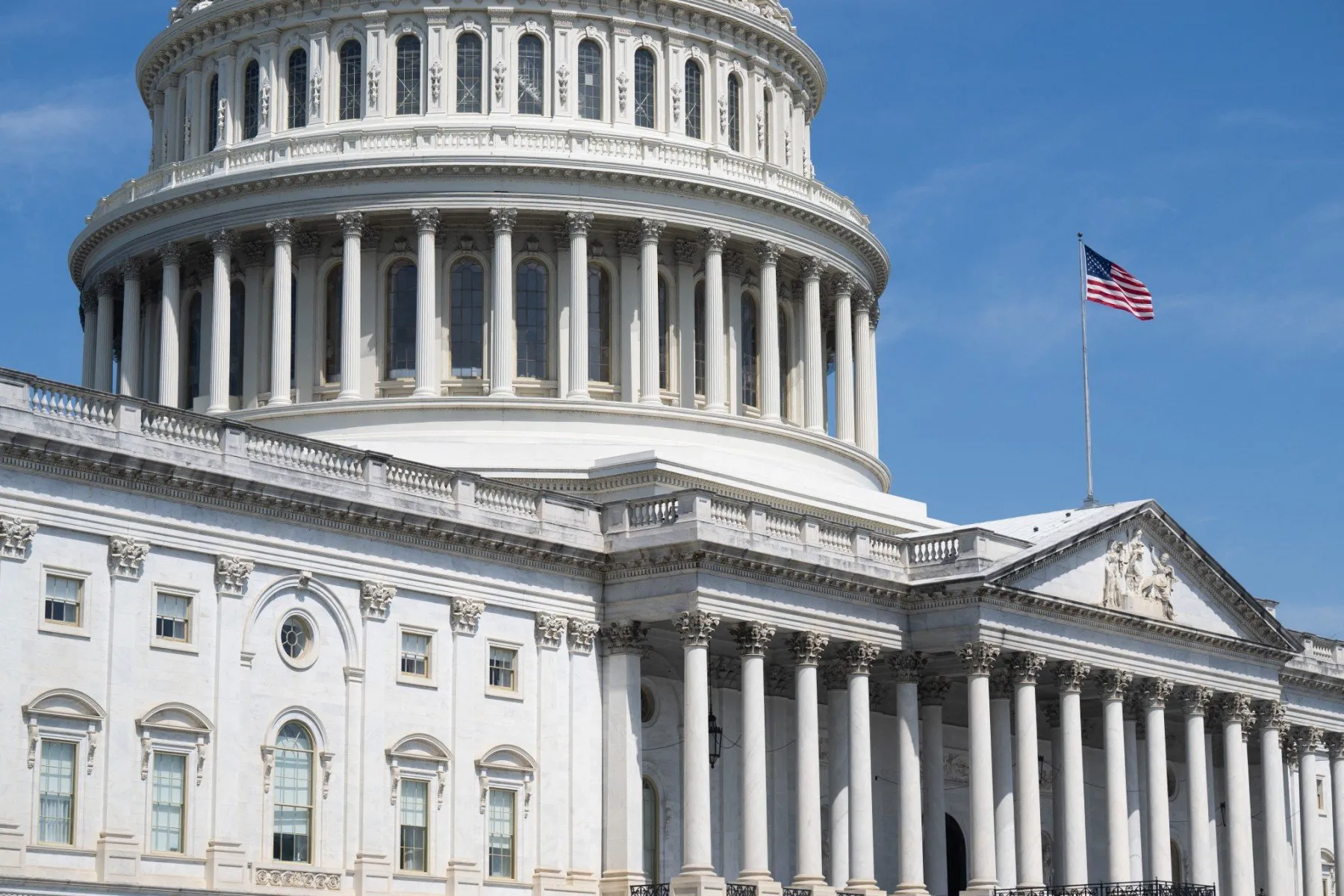
New US Congress Must Rethink Ties With Pakistan's Military


For two years, Pakistan's strategy in Washington rested on one man. It depended on President Donald Trump's personal warmth toward army chief Field Marshal Asim Munir, whom Trump has publicly called“my favourite field marshal,” and on the promise of mineral deals. That strategy works only while Trump faces no checks. From January 2027, he will.
Democrats won both the House and the Senate on 3 November. The committees that control aid, arms sales and oversight will pass to a party whose members have already asked the State Department to sanction Pakistan's top military leadership. The question is no longer whether U.S. policy on Pakistan will be reviewed. The question is whether the review brings real consequences for human rights abuses and military rule, or only more hearings.
The bargain under review is older than this administration, and it has failed on its own terms. After 2001, Pakistan received more than $30 billion in U.S. aid and military payments in return for counterterrorism cooperation. Yet the Afghan Taliban returned to power in Kabul in 2021, helped by the safe havens their leaders had enjoyed inside Pakistan for two decades.
At home, military campaigns in Khyber Pakhtunkhwa (KP) and Balochistan brought mass displacement, drone strikes and the enforced disappearance of civilians. They did not end militancy. When Islamabad suspended KP's government in October, it cited a 195 percent rise in terrorist incidents. By its own measure, the security-first approach has failed.
Pakistan has about 250 million people, and nearly two thirds of them are under 30. Their experience of the army Washington calls a partner looks nothing like the version sold in Washington.
A general above the lawWhat this partnership now protects is written into Pakistan's constitution. The 27th Amendment passed in November 2025, while the opposition boycotted the Senate vote. It rewrote Article 243, abolished the post of Chairman of the Joint Chiefs of Staff Committee, and made the army chief the Chief of Defence Forces, placing the army, navy and air force under one officer.
The amendment lets a field marshal keep his rank for life. He can be removed only through impeachment under Article 47, which needs a two-thirds vote in a joint sitting of parliament. He also receives the president's immunity under Article 248, and the same amendment made that immunity lifelong. In practice, the most powerful man in the country can never be taken to court for anything he did in command. Ordinary diplomacy cannot put conditions on such a man. Only real costs can.
In October, KP showed what this system makes possible. On 11 October, President Asif Ali Zardari, acting on the prime minister's advice, imposed an emergency in 12 districts and governor's rule over the whole province. An 11-member advisory council now runs provincial departments under the governor, and one of its members is a retired army lieutenant general. Chief Minister Sohail Afridi, Assembly Speaker Babar Saleem Swati and several cabinet members were taken into what officials called“preventive custody.”
The government says Afridi's party, Pakistan Tehreek-e-Insaf (PTI), has links with the banned Tehreek-e-Taliban Pakistan (TTP). Ministers say they have“credible evidence” and promised to share it later. They have not made it public. An elected government was removed on a charge that no court has tested and no citizen has seen.
The minerals questionThis matters to Americans more than it seems, because of what lies under the ground. The 18th Amendment of 2010 gave Pakistan's provinces control over most of their mineral resources. In 2025, the Special Investment Facilitation Council (SIFC), set up in 2023 with the army chief on its top committee, pushed a national framework that each province had to adopt through its own minerals law.
In KP, that law met fierce resistance from political parties, mine owners and members of PTI itself. Critics called it an attack on provincial autonomy. The elected government that stood in the way has now been removed. Islamabad says the reason was terrorism. The timing deserves a closer look.
The military does more than regulate this sector. It does business in it. In September 2025, the Frontier Works Organisation (FWO), the army's engineering arm, signed a $500 million deal with Missouri-based US Strategic Metals covering antimony, copper, tungsten and rare earths. Industry analysts called it an early-stage deal with high risk.
American taxpayers are involved too. In December 2025, the U.S. Export-Import Bank approved $1.25 billion for the Reko Diq copper and gold mine in Balochistan. Rights groups say enforced disappearances are most widespread in that province. It is also where Mahrang Baloch, a Nobel Peace Prize nominee who campaigns against those disappearances, was sentenced to life in prison in June. Amnesty International said the trial was held in secret on jail premises.
Pakistan's leaders say the country's minerals are worth $8 trillion. That number is a government claim. Nearly 90 percent of the country's known minerals remain unexplored, and no internationally certified reserve estimates back the figure. U.S. public money is backing an unproven mineral boom in regions where local people have the least say.
What Washington should demandCongress has already collected most of the evidence it needs. In December 2025, 44 Democrats led by Representatives Pramila Jayapal and Greg Casar wrote to Secretary of State Marco Rubio. They asked for visa bans and asset freezes on officials responsible for abuses under Prime Minister Shehbaz Sharif and Field Marshal Munir. They cited an“escalating campaign of transnational repression” and said military trials of civilians had erased judicial independence.
This is not only a Democratic concern. In March 2025, Republican Joe Wilson and Democrat Jimmy Panetta introduced the Pakistan Democracy Act, a bill to sanction Munir under the Global Magnitsky Act. And Abdul El-Sayed, who has called Pakistan's government a“military dictatorship” and questioned why American money funds it, is now headed to the Senate.
The strongest objection to this plan comes from Pakistani critics of the military, not its defenders. They say the ties between the Pentagon, U.S. intelligence agencies and the Pakistani army are institutional. Those ties survive changes in Congress and have outlasted every past attempt to attach conditions. So they argue that a shift from Republican to Democratic control will change nothing for ordinary Pakistanis.
They are right about relationships but wrong about tools. What has changed is not the mood in Washington but legal power. Aid conditions, defense bill language, Export-Import Bank lending, F-16 maintenance contracts, military training funds and access to the U.S. financial system are all controlled by the chambers that just changed hands. None of them depends on the goodwill of any agency.
Washington should use these tools, and the tests are easy to set. Pakistan should repeal lifetime immunity for its army chief, restore KP's elected government, end military trials of civilians, account for the disappeared and free political prisoners. Each of these steps can be measured.
For 25 years, Washington has argued that backing Pakistan's army buys stability. It has bought neither stability nor democracy. Today Pakistan has a 195 percent rise in terrorist incidents by its own count, a province run by appointed advisers and a peace activist serving a life sentence. It is time to drop the argument.
Disclaimer: The views expressed in this article are those of the author and do not necessarily reflect the editorial policy or position of Khaama Press.

Legal Disclaimer:
MENAFN provides the
information “as is” without warranty of any kind. We do not accept any
responsibility or liability for the accuracy, content, images, videos,
licenses, completeness, legality, or reliability of the information
contained in this article. If you have any complaints or copyright issues
related to this article, kindly contact the provider above.


Comments
No comment