


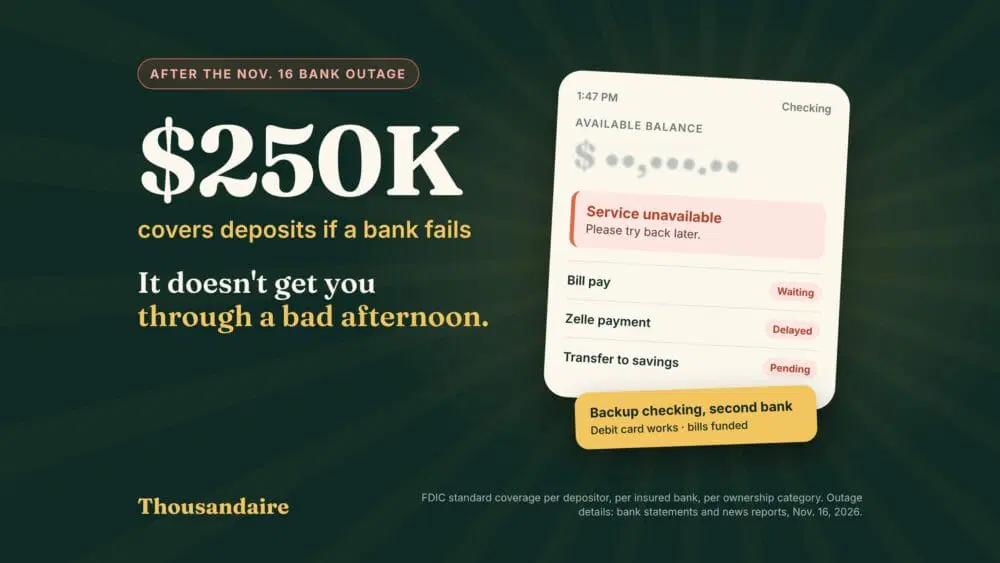
Bank Outage Backup Plan: Two Banks, Two Weeks Of Bills


| Input | Example |
|---|---|
| Monthly fixed bills (housing, utilities, insurance, minimum payments) | $4,000 |
| Two weeks of those bills ($4,000 × 12 ÷ 26) | $1,846 |
| One week of groceries, gas and other essentials | $300 |
| Backup balance | about $2,150 |
Use your own numbers. If you already keep an emergency fund at a second bank, part of it can do this job. The point is that it can be reached with a debit card at a different institution, not that it's new money.
3. Spread out what moves automaticallyLook at where each automatic payment draws from and when. If your mortgage, car payment and credit card autopay all leave the same account in the same three days, a single afternoon outage around those dates is a real problem. Two simple changes:
-
Move one or two autopays to the backup account, so it gets used every month and you notice if anything goes wrong with it.
Split your direct deposit if your employer allows it, sending a fixed amount to the backup account. That keeps it topped up without a reminder.
A few hundred dollars at home covers the stretch where both a card and an app fail at a register. You don't need more than that.
5. Hold the rest of your money where it already isThe backup account is about access, not where you invest. An outage is no reason to sell investments, empty a bank account or move a large balance in a hurry. If you have more than the coverage limit at one bank, that's worth fixing on its own schedule, using the FDIC's ownership-category rules, not in the middle of a news cycle.
After an outage: two rules for the following daysTreat any call about your account as suspect. Fraudsters read the news too. A call, text or email that mentions the outage and asks you to“verify” your account, read back a code, or move money“to keep it safe” should end the conversation. Hang up and call the number printed on the back of your card or on your statement. Your bank doesn't need you to move money to protect it.
Check your statement for the next few weeks. Delayed transactions can post twice or post late. If something you didn't authorize shows up, report it right away. The Consumer Financial Protection Bureau explains that for a lost or stolen card, telling your bank“within two business days” caps your liability at $50, while waiting longer could leave you responsible“for up to $500.” At the latest, you“must notify your bank within 60 days” after the statement showing the transaction is sent. After you report it, the bank“generally has ten business days to investigate the issue.”
The decision in one lineKeep your deposits insured, and keep two weeks of bills at a second, unrelated bank. Monday's outage tested access, not safety, and the backup account is how you pass that test.
Sources Federal Deposit Insurance Corporation, Understanding Deposit Insurance Federal Aviation Administration, Nationwide Ground Stop: Questions and Answers Consumer Financial Protection Bureau, How do I get my money back after I discover an unauthorized transaction or money missing from my bank account? KPRC Click2Houston, Thousands report banking outages Monday; Chase cites software bug, other banks report transaction delays (for the Chase and Zelle statements) Thousandaire Editorial TeamThe Thousandaire Editorial Team creates practical, evidence-based personal finance content for people building real wealth. We break down investing, retirement, taxes, real estate, and other wealth-building decisions with clear explanations, real numbers, and no hype

Legal Disclaimer:
MENAFN provides the
information “as is” without warranty of any kind. We do not accept any
responsibility or liability for the accuracy, content, images, videos,
licenses, completeness, legality, or reliability of the information
contained in this article. If you have any complaints or copyright issues
related to this article, kindly contact the provider above.


Comments
No comment