


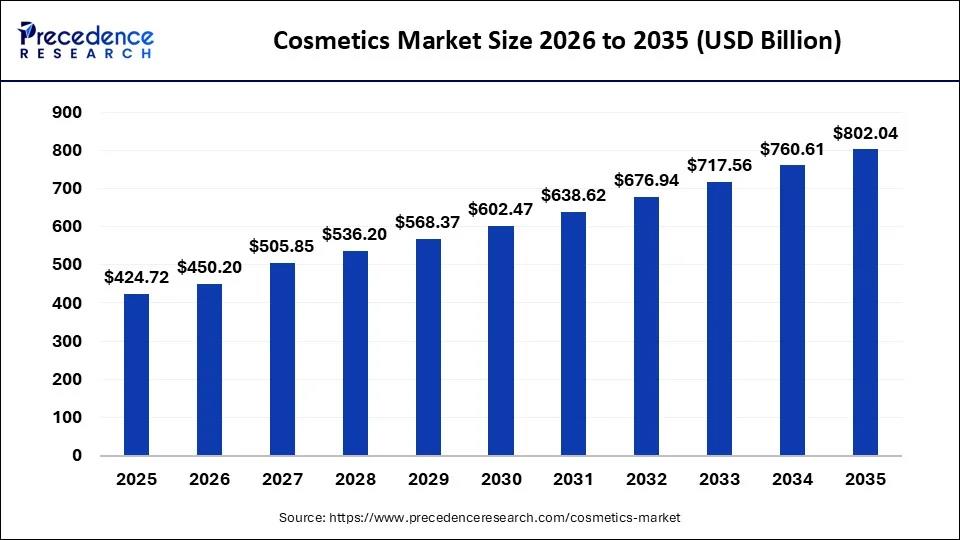
Cosmetics Market To Reach USD 802.04 Billion By 2035 As Skincare, Fragrance And Online Beauty Drive Growth And Mega-Deals Reshape The Industry


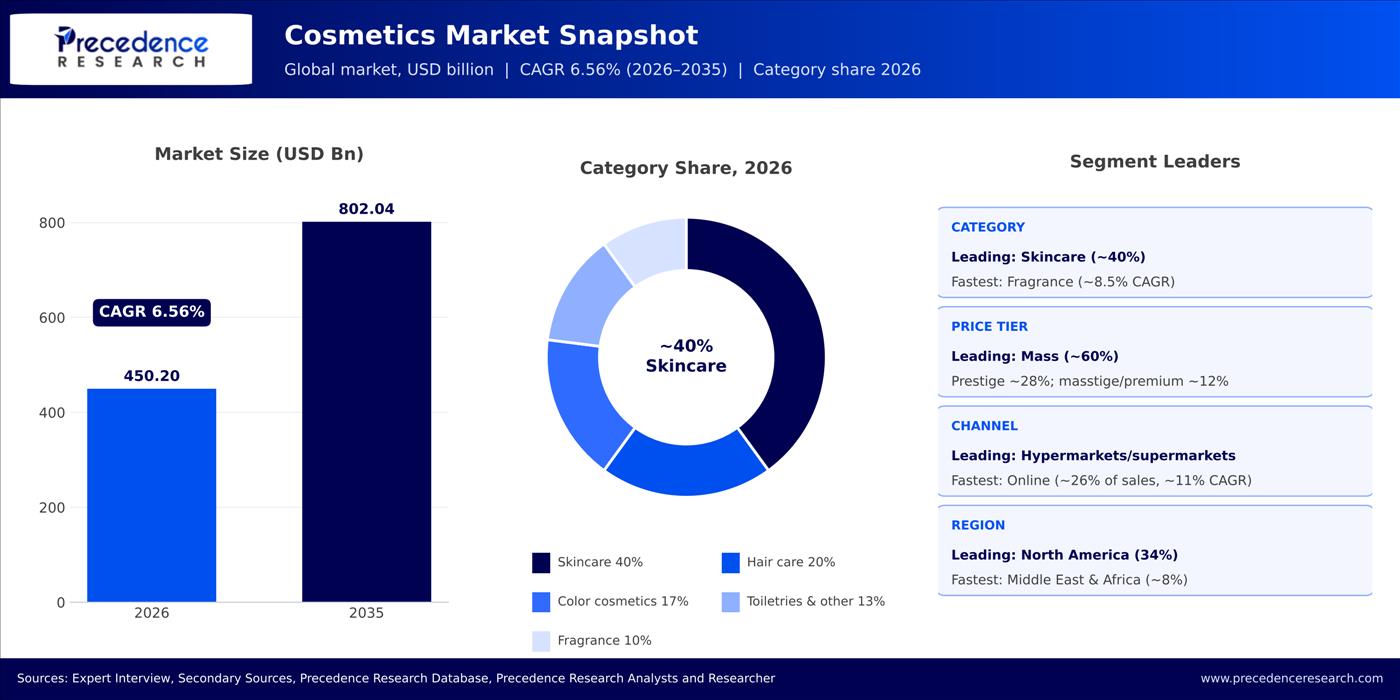
| Category | Approx. Share | 2026 Value (modeled) | Growth Signal |
| Skincare (skin & sun care) | ~40% | About USD 180.08 billion | Largest; ~6.8% CAGR; dermocosmetics lead |
| Hair care | ~20% | About USD 90.04 billion | ~5.5% CAGR; professional and scalp care |
| Color cosmetics (makeup) | ~17% | About USD 76.53 billion | ~6.0% CAGR; social-media driven |
| Toiletries & other | ~13% | About USD 58.53 billion | ~4.5% CAGR; mature |
| Fragrance | ~10% | About USD 45.02 billion | Fastest major category; ~8.5% CAGR |
Sources: Expert Interview, Secondary Sources, Precedence Research Database, Precedence Research Analysts and Researcher
Cosmetics Market by Price Tier, Gender and Channel
| Segment Group | Leading Segment | Fastest-Growing / Notable | Key Fact |
| Price tier | Mass (~60% of value) | Prestige (~28%) | Masstige and premium ~12% |
| Gender | Women | Men (male grooming ~8% growth) | Male skincare is gaining shelf space |
| Distribution channel | Hypermarkets/supermarkets | Online (~11% CAGR) | Online ~26% of sales, ~35% by 2030 |
| Positioning | Conventional | Natural and clean (~9% growth) | ~8–9% of sales |
Sources: Expert Interview, Secondary Sources, Precedence Research Database, Precedence Research Analysts and Researcher
Category. Skincare leads because of daily-use routines, dermo-cosmetics and sun protection Channel and consumer. Supermarkets and hypermarkets remain the largest channel, but online grows about 11% a year as social commerce and brand websites expand. Male grooming and vegan cosmetics and other clean products are growing faster than the market.Sources: Expert Interview, Secondary Sources, Precedence Research Database, Precedence Research Analysts and Researcher
Regional and Country Analysis
Cosmetics Market by Region
| Region | Position | Key Facts | Growth Signal |
| North America | Largest, 34% (2026) | U.S. USD 107.98B (2026) → USD 195.66B (2035) | Prestige fragrance, derma skincare |
| Asia Pacific | Major region | China, Japan, Korea and India | Travel retail recovery; India growth |
| Europe | Major producer | About 40% of global export value | Luxury and fragrance strength |
| Middle East & Africa | Fastest-growing (~8% a year) | Gulf luxury and halal beauty demand | Young, growing population |
| Latin America | Growing | Brazil and Mexico | Direct selling and mass brands |
Sources: Expert Interview, Secondary Sources, Precedence Research Database, Precedence Research Analysts and Researcher
North America. The U.S. is the largest single market, at USD 107.98 billion in 2026. Estée Lauder reported continued North America growth in its latest quarter, and prestige fragrance and clinical skincare are the main drivers.
Asia Pacific. Asia Pacific is a major growth engine. Estée Lauder's Asia/Pacific organic sales rose 10% in its latest quarter, helped by travel retail at Beijing and Shanghai airports and online sales in Hainan, and L'Oréal reported accelerating growth in India.
Europe and Middle East & Africa. Europe is the industry's production and export hub, with about 40% of global export value. The Middle East & Africa is the fastest-growing region , led by Gulf luxury demand and halal cosmeticsSources: Expert Interview, Secondary Sources, Precedence Research Database, Precedence Research Analysts and Researcher
What Is Changing in the Industry
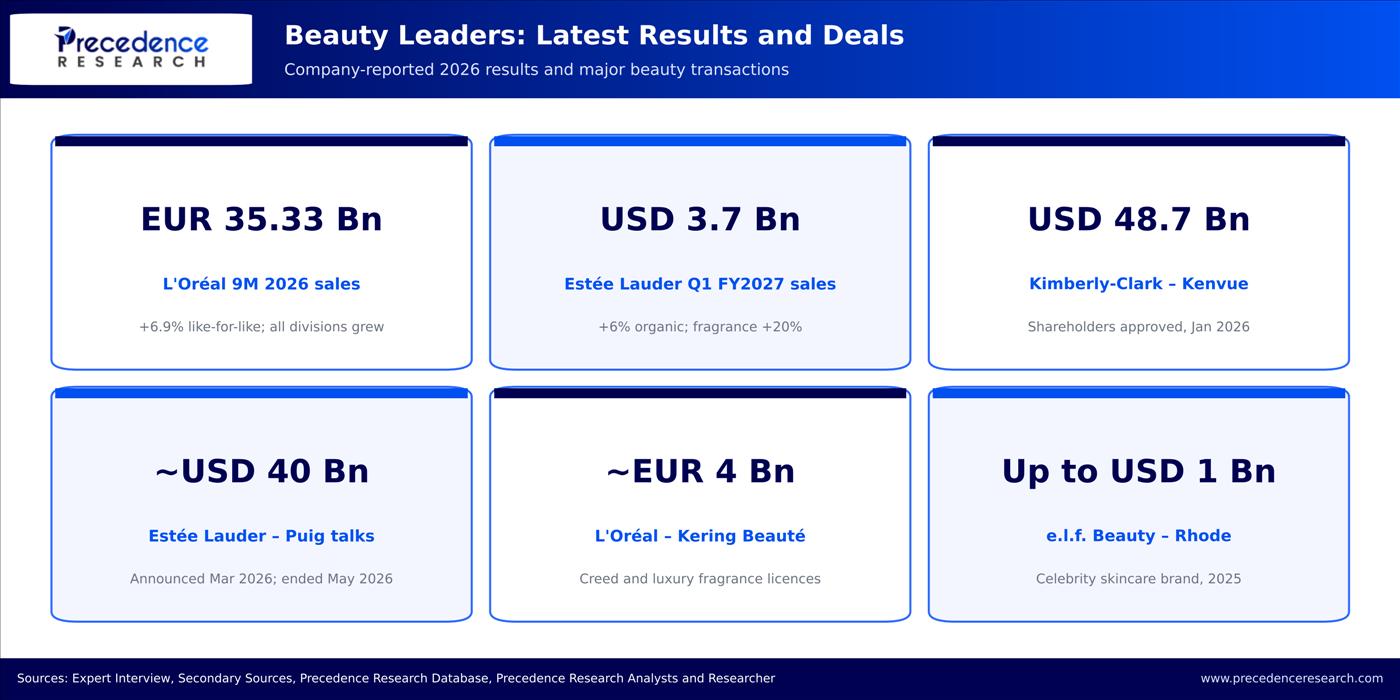
Figure 2: Beauty Leaders, Latest Results and Deals
Sources: Expert Interview, Secondary Sources, Precedence Research Database, Precedence Research Analysts and Researcher
Consolidation has reached record size. Kimberly-Clark's USD 48.7 billion acquisition of Kenvue, owner of Neutrogena and Aveeno, won shareholder approval in January 2026. Estée Lauder and Puig confirmed talks in March 2026 on a combination valued at about USD 40 billion, but the talks ended in May.
What it indicates: Scale matters more as brands fight for retail space, media and supply chains, and large deals will keep returning.
The leaders are buying into luxury fragrance. L'Oréal acquired Kering Beauté, including Creed and long-term licences for Kering's fashion houses, for about EUR 4 billion.
What it indicates: Fragrance, the fastest-growing major category, is now a central battleground for the largest companies.
Growth has returned for the prestige leaders. L'Oréal's nine-month 2026 sales grew 6.9% like-for-like with a strong recovery in its Luxe division, and Estée Lauder raised its fiscal 2027 outlook after organic growth of 6% and a jump in operating margin to 12.1%.
What it indicates: The prestige segment is recovering after a difficult period, especially in Asia travel retail.
Portfolios are being reshaped. Estée Lauder is selling Too Faced, Smashbox and Dr. Jart+, while e.l.f. Beauty agreed to buy Rhode for up to USD 1 billion and Unilever added wellness brands.
What it indicates: Companies are focusing on fewer, faster-growing brands in skincare, fragrance and wellness.
Sources: Expert Interview, Secondary Sources, Precedence Research Database, Precedence Research Analysts and Researcher
Key Market Drivers
- Rising spending on skincare Premiumization in fragrance and prestige beauty. Growth of e-commerce Rising demand in India, the Middle East and Africa. Interest in natural, clean, vegan cosmetics halal cosmetics
Sources: Expert Interview, Secondary Sources, Precedence Research Database, Precedence Research Analysts and Researcher
Major Challenges
- Intense competition and fast-moving trends driven by social media. Raw material, packaging and logistics cost pressure. Regulatory change on ingredients and labeling. Volatile travel retail and luxury demand in China. Counterfeit products in online channels.
Sources: Expert Interview, Secondary Sources, Precedence Research Database, Precedence Research Analysts and Researcher
Emerging Opportunities
- Fragrance, the fastest-growing major category. Male grooming and male skincare, growing about 8% a year. Online and social commerce, rising toward about 35% of sales by 2030. Natural and clean beauty, growing close to 9%. Sustainable packaging
Sources: Expert Interview, Secondary Sources, Precedence Research Database, Precedence Research Analysts and Researcher
Company and Competitive Intelligence
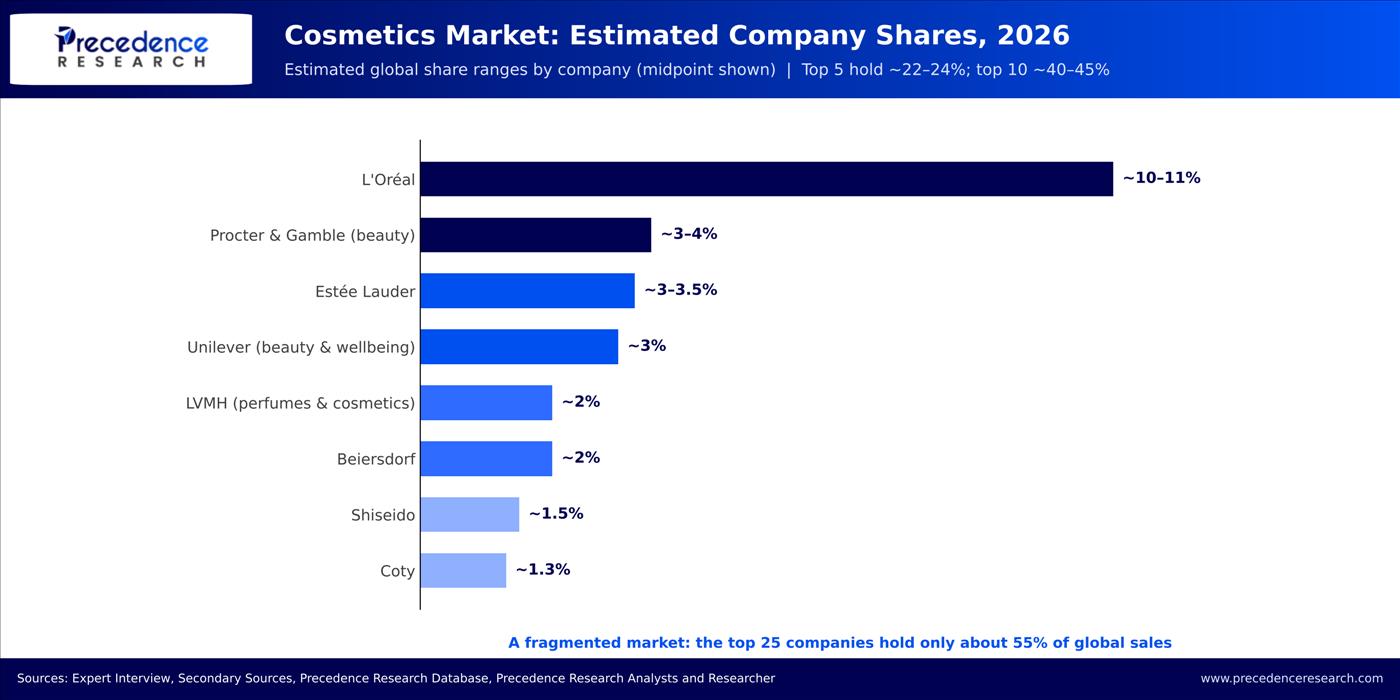
Figure 3: Cosmetics Market Estimated Company Shares, 2026
Sources: Expert Interview, Secondary Sources, Precedence Research Database, Precedence Research Analysts and Researcher
The market is fragmented. Precedence Research estimates that L'Oréal holds about 10–11% of global sales, followed by Procter & Gamble's beauty business (about 3–4%), Estée Lauder (about 3–3.5%), Unilever's beauty and wellbeing division (about 3%), LVMH perfumes and cosmetics and Beiersdorf (about 2% each), Shiseido (about 1.5%) and Coty (about 1.3%). The top five hold about 22–24%, the top ten about 40–45% and the top 25 about 55%.
| Company | Est. Share | Latest Reported Data / Development | Strategic Direction |
| L'Oréal | ~10–11% | 9M 2026 sales EUR 35.33B (+6.9% LFL); Kering Beauté acquisition | Luxury fragrance, dermatological beauty, emerging markets |
| Procter & Gamble (beauty) | ~3–4% | Olay, SK-II, Pantene, Head & Shoulders | Mass skin and hair care |
| Estée Lauder | ~3–3.5% | Q1 FY2027 sales USD 3.7B (+6% organic); fragrance +20% | Turnaround; portfolio pruning; outlook raised |
| Unilever (beauty & wellbeing) | ~3% | Prestige and wellness acquisitions | Premium skincare and wellness |
| LVMH (perfumes & cosmetics) | ~2% | Dior, Guerlain, Sephora retail | Luxury fragrance and makeup |
| Beiersdorf | ~2% | NIVEA, Eucerin, La Prairie | Derma and sun care |
| Shiseido | ~1.5% | Clé de Peau, Drunk Elephant | Prestige skincare |
| Coty | ~1.3% | Prestige fragrance licences | Fragrance-led strategy |
| Kenvue (Kimberly-Clark) | n/a | USD 48.7B acquisition approved Jan 2026 | Neutrogena and Aveeno in a larger consumer group |
Sources: Expert Interview, Secondary Sources, Precedence Research Database, Precedence Research Analysts and Researcher
Sources: Expert Interview, Secondary Sources, Precedence Research Database, Precedence Research Analysts and Researcher
Customer and Buyer Intelligence
| Target Account Group | Decision-Makers | Purchase Signals | Commercial Opportunity |
| Beauty retailers | Category Director, Merchandising Head | Shelf resets, new brand launches | Assortment and pricing data |
| Brand owners | CMO, Strategy Head, BD Director | Portfolio reviews, M&A | Target screening and category sizing |
| Ingredient and fragrance houses | Sales and Innovation Heads | New product pipelines | Demand forecasts by category |
| Packaging suppliers | Business Development Head | Sustainability targets, refills | Format and material trends |
| E-commerce platforms | Beauty Category Lead | Social commerce growth | Brand partnerships and analytics |
| Investors | Consumer Sector Lead | Deals, results, valuations | Due diligence and benchmarking |
Sources: Expert Interview, Secondary Sources, Precedence Research Database, Precedence Research Analysts and Researcher
How Precedence Research Supports Decision-Making
Master Dataset provides segment, regional and company data for cosmetics and adjacent markets such as the skincare premium cosmetics dermo-cosmetics marketsPrecedence Quadrant compares beauty companies on share, growth, category mix and channel strength, helping brand owners benchmark rivals and investors screen targets.
Interactive Intelligence Dashboard tracks company results, launches, acquisitions and channel shifts, so marketing and strategy teams can react quickly.
Quality & Manufacturing Intelligence maps contract manufacturers, ingredient suppliers and packaging capacity, supporting sourcing and launch planning.
Customized Research answers specific questions, such as fragrance growth by country, male grooming opportunities or entry plans for the Middle East.
| Solution | What It Provides | How It Helps |
| Master Dataset | Segment, region and company data on cosmetics | Sizes demand by category and channel |
| Precedence Quadrant | Company comparison on share, growth and mix | Benchmarks rivals and screens targets |
| Interactive Dashboard | Live tracking of results, launches and deals | Times marketing and investment moves |
| Quality & Manufacturing Intelligence | Manufacturer, ingredient and packaging mapping | Supports sourcing and launches |
| Customized Research | Category, country and consumer studies | Answers decision-specific questions |
Sources: Expert Interview, Secondary Sources, Precedence Research Database, Precedence Research Analysts and Researcher
Why Continuously Updated Intelligence Matters
Beauty trends move at social-media speed. Monthly updates suit marketing and category teams tracking launches and online sales. Quarterly updates match company results such as L'Oréal and Estée Lauder. Six-monthly updates help strategy teams follow channel and regulatory changes, and annual updates support investors reviewing market size and share. Precedence Research offers all four update cycles.
Strategic Outlook
- CEOs and CXOs: the market adds USD 351.84 billion by 2035; scale and portfolio focus decide winners in a fragmented field. Strategy and business development teams: fragrance, male grooming and natural beauty grow faster than the market; mega-deals will continue. R&D leaders: focus on dermocosmetic efficacy, clean formulations and fragrance innovation. Procurement teams: manage ingredient and packaging costs while meeting sustainability targets. Investors: challenger brands with strong online growth remain attractive targets for the leaders. Suppliers and manufacturers: demand rises for fragrance ingredients, sustainable packaging and contract manufacturing.
Sources: Expert Interview, Secondary Sources, Precedence Research Database, Precedence Research Analysts and Researcher
Company Ecosystem
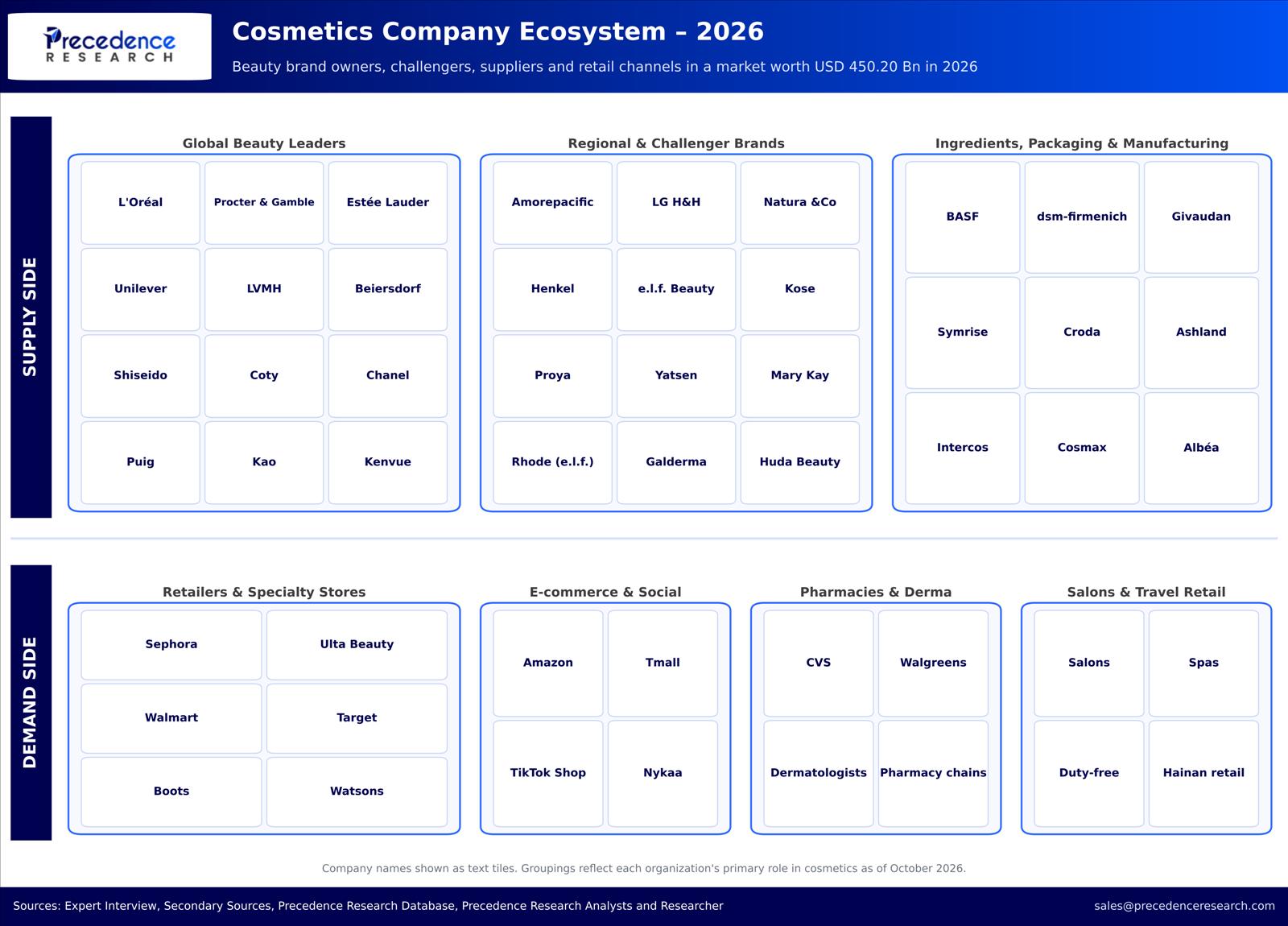
Figure 4: Cosmetics Company Ecosystem, 2026
Sources: Expert Interview, Secondary Sources, Precedence Research Database, Precedence Research Analysts and Researcher
Call to Action
To understand which categories, channels and companies will lead the cosmetics market through 2035, explore the full report or speak with a Precedence Research analyst.
- Report: Request a sample: Schedule a meeting:
Fill out the form for relevant samples, case studies, and examples. ...
Related Reports
Skincare Market: Skin Care Products Market: Premium Cosmetics Market: Dermo-Cosmetics Market: Halal Cosmetics Market: Vegan Cosmetics Market: Mineral Cosmetics Market: Anti-Aging Market: Baby Skincare Market: Anti-Pollution Skincare Products Market: Herbal Beauty Products Market: Beauty Devices Market: Home Fragrance Market: Skincare Packaging Market: Sustainable Packaging Market: E-commerce Market: B2C E-Commerce Market: Pharmacy Market: Logistics Market: Artificial Intelligence Market:About Precedence Research
Precedence Research is a global market intelligence and consulting company. It provides market sizing and forecasts, competitive and company analysis, customer and buyer intelligence and customized research across consumer goods, healthcare, ICT, energy, chemicals and materials and other industries, helping executives and investors make evidence-based decisions.
Our Partners
- Towards Healthcare: Towards Packaging: Towards Chemical & Materials:
Connect With Us
- USA: +1 804 441 9344 APAC: +61 485 981 310 or +91 87933 22019 Singapore: +65 3105 1271 Europe: +44 7383 092 044 Email:...
Social Media
- LinkedIn: Facebook: X: Medium:


Legal Disclaimer:
MENAFN provides the
information “as is” without warranty of any kind. We do not accept any
responsibility or liability for the accuracy, content, images, videos,
licenses, completeness, legality, or reliability of the information
contained in this article. If you have any complaints or copyright issues
related to this article, kindly contact the provider above.


Comments
No comment