


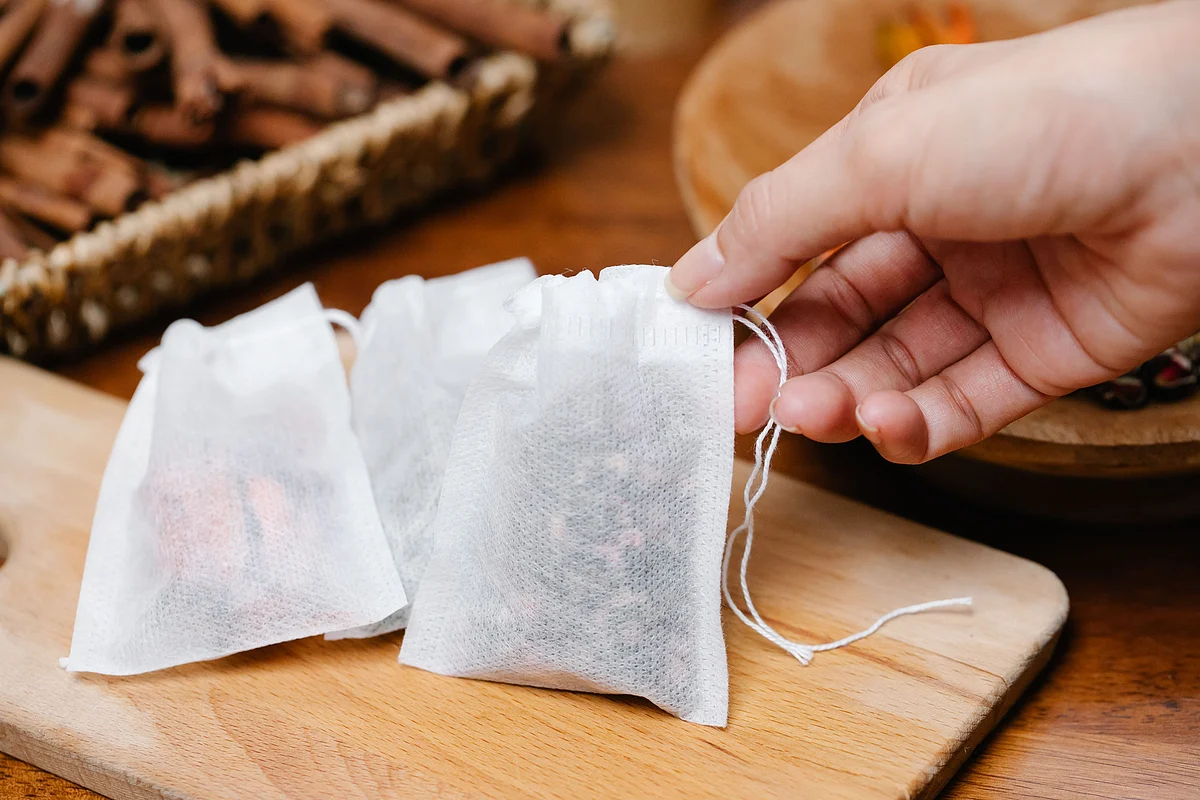
How Finding Drugs Hidden In Tea Bags Helped Interpol Bust Global Ring, Dubai Summit Hears


Stephen Fry, Executive Director for Investigation Support at Interpol, shared the case at the World Police Summit in Dubai, illustrating how a single find can expose a much larger criminal network.
Recommended For You UAE National Day: 3-day Eid Al Etihad break announced for public sectorA beach cleaner discovered the bag on Jeju Island. When South Korean authorities approached Interpol, investigators compared its packaging with images and intelligence from previous seizures.
Stay up to date with the latest news. Follow KT on WhatsApp Channels.
“And then a match. And then another, and then another,” Fry said. Across nine countries, investigators identified seizures involving 24 tonnes of ketamine concealed in the same distinctive packaging.
Bringing those countries together allowed police to exchange findings, identify leads and establish that the seizures were connected.
“For these networks, a seized shipment is simply the cost of doing business,” he said.
Following the network
Fry urged police to treat every seizure as the beginning of an investigation, tracing trafficking routes, financial flows and intermediaries back to the sources of supply.
The real measure of success, he said, was weakening a criminal network's ability to operate, make money and rebuild.
“In a globalised drug trade, no country can see the whole network.”
His remarks followed an address by Fahad Abdullah Haikal, Official Spokesperson for the National Drug Enforcement Authority, who outlined the UAE's three priorities in fighting drugs: pursuing traffickers, prevention, and rehabilitation.
“We are moving along three interconnected paths: firmness in pursuing the merchants of death, prevention that protects minds, and rehabilitation that takes people by the hand to return to life,” Haikal said.
He described protecting people as central to building nations, aiming to safeguard families and communities and create a drug-free future.
Changing drugs, changing methods
Fry said ketamine was the fastest-growing substance on Interpol's radar. The threat involved both the diversion of legitimate pharmaceutical products and illicit production in clandestine laboratories operating on an increasingly industrial scale.
During a recent operation, ketamine seizures exceeded methamphetamine seizures for the first time in that operation, he said.
Fentanyl remained another devastating threat. The quantity seized during the same operation amounted to an estimated 63 million fatal doses, according to Fry.
Traffickers were also developing more sophisticated concealment methods, chemically disguising drugs in products such as leather, paprika and paint.
Other techniques included lead shielding to make cargo less visible during X-ray screening, alongside forged customs and shipping documents. Artificial intelligence was making convincing fakes easier to produce, he warned.
Trafficking routes were shifting too, with Latin American groups developing direct routes to Asian markets and routes between South America and Europe increasingly converging on Africa.
“Global drug networks thrive on the gaps between jurisdictions and the differences in our systems,” Fry said.“Every weakness of our cooperation is an opening for them.”
Targeting profits
Fry highlighted Interpol's Silver Notice, which helps countries trace criminal assets, including the proceeds of drug trafficking.
He also outlined a new task force in Buenos Aires that would bring investigators from 12 South American countries together to share intelligence, pursue investigations and identify high-value targets.
Cooperation was already producing practical exchanges, he said. An Interpol drugs conference in Prague the previous month included more than 70 case coordination meetings.
Shipping companies, port operators, pharmaceutical and chemical businesses, and banks were also important partners, because trafficking networks exploited their products, services and infrastructure.
Fry urged police leaders to share information early and build relationships that could turn individual investigations into coordinated action.
“One piece of information shared at the right moment can be the difference between a closed case and a dismantled organized criminal drug network,” he said.
ALSO READ- UAE expert warns of drug networks using social media, encrypted apps to target youth UAE arrests 20 international drug network members, foils attempt to smuggle 30kg drugs UAE foils 14 attempts to smuggle over 300 kg of drugs in less than 2 months

Legal Disclaimer:
MENAFN provides the
information “as is” without warranty of any kind. We do not accept any
responsibility or liability for the accuracy, content, images, videos,
licenses, completeness, legality, or reliability of the information
contained in this article. If you have any complaints or copyright issues
related to this article, kindly contact the provider above.


Comments
No comment