


Nations Announce Progress At COP31 Towards Delivering Land Rights For Local Communities


At COP31, governments highlighted advances in securing the land rights of Indigenous Peoples and local communities, alongside new efforts to translate the ILTC into action on the ground.
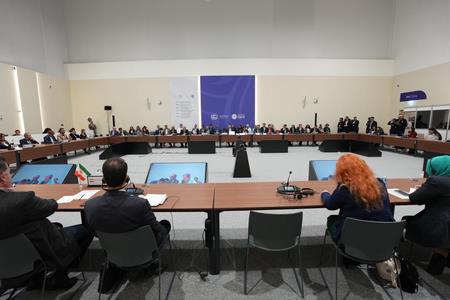
Ministers, philanthropic, and Indigenous leaders met at Delivering Land Rights: The Intergovernmental Land Tenure Commitment, One Year On, convened through the Forest and Climate Leaders' Partnership (FCLP).
The gathering celebrated progress made in the first year of the ILTC with presentations from high-level representatives from Congo, Fiji, Ecuador, Colombia, Indonesia and Brazil and highlighted the need for further alignment with Indigenous Peoples and Local Communities.
Indigenous Peoples and local communities are among the world's most effective stewards of forests, with forests under Indigenous stewardship experiencing significantly lower rates of forest loss than comparable areas.
Yet despite their critical role in protecting forests and biodiversity, less than one per cent of international climate finance is directed towards recognising their rights and supporting community forest management.
Securing land and territorial rights, strengthening their leadership and expanding direct access to finance are essential to achieving global forest, climate and biodiversity goals.
The ILTC is supported by growing international cooperation, including the renewed $1.8 billion Forest and Land Tenure Pledge, through which governments and philanthropic funders have committed support for Indigenous Peoples, local communities, and Afro-descendant communities through 2030.
Mobilising additional investment and ensuring finance reaches communities directly will be critical to delivering the ambition of the ILTC.
Across participating countries, governments are translating the commitment into concrete national action, working with Indigenous Peoples and local communities to strengthen land recognition, tenure security and forest governance. Progress during the ILTC's first year includes:
In Brazil, the government has worked with communities to advance the process of regularisation across six million hectares of Indigenous and quilombola territories since COP30, against a national contribution of 63 million hectares in total.
Brazil's initial country plan has also identified opportunities to recognise and strengthen land tenure across 54 Indigenous territories and 70 quilombola territories ahead of 2030.
In Indonesia, the government officially designated 376,280 hectares of customary forest across 177 units, with a target of 1.4 million hectares by 2029, as announced at COP30 in Belém. In Nigeria, the government has engaged 26 communities in discussions on strengthening tenure rights across 200-250k hectares.
The sub-national government of Cross River State has also proposed a pilot exercise in the Mbe Mountains to scale up efforts to secure land tenure and support forest conservation and livelihoods.
Eloy Terena, Minister of Indigenous Peoples of Brazil, said:“The demarcation and protection of Indigenous territories are essential strategies for tackling the climate crisis and preserving the environment. We are at the end of a year of action, of concrete advances in the implementation of our commitments.
“Brazil's goal for the ILTC was ambitious, but we have already made progress on demarcations, on the removal of illegal occupants, and also on support for the governance of these lands -- actions that are fundamental to ensuring all the positive indices that the country is presenting here at COP31.”
(Vishal Gulati can be contacted at...)

Legal Disclaimer:
MENAFN provides the
information “as is” without warranty of any kind. We do not accept any
responsibility or liability for the accuracy, content, images, videos,
licenses, completeness, legality, or reliability of the information
contained in this article. If you have any complaints or copyright issues
related to this article, kindly contact the provider above.


Comments
No comment