


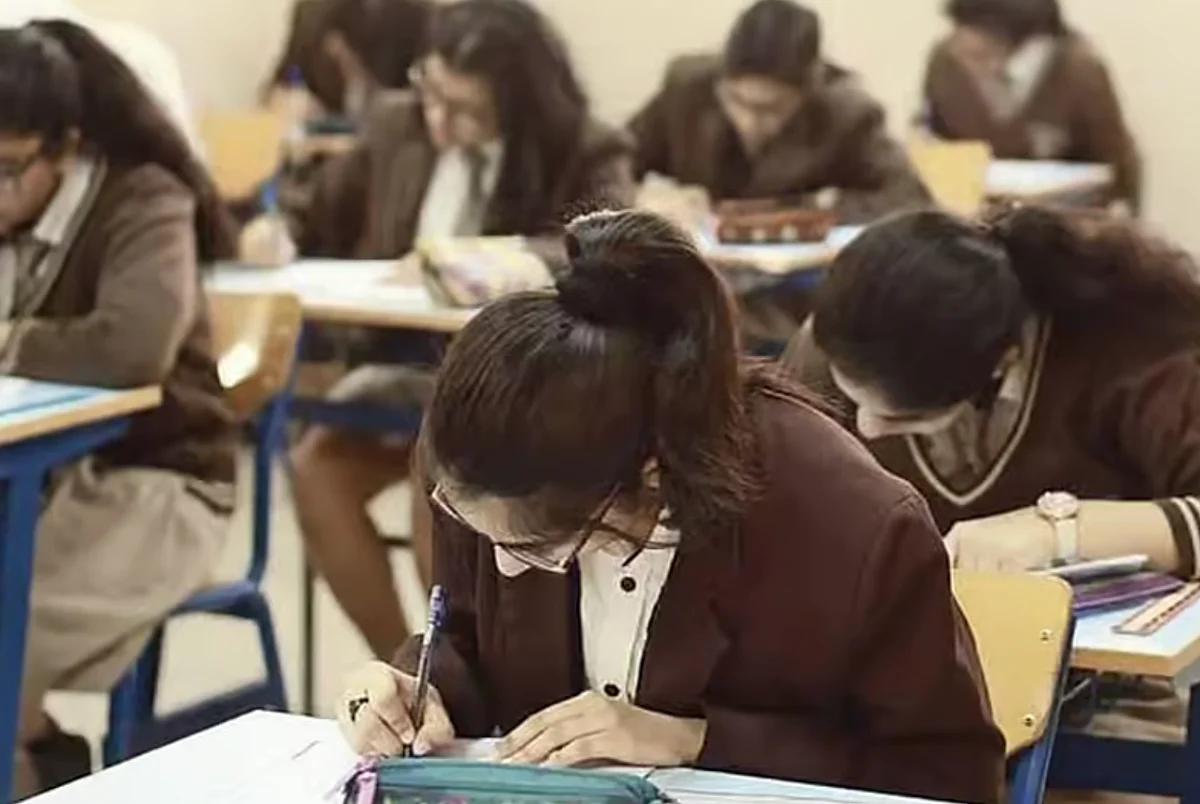
CBSE Boards Less Than 100 Days Away: UAE Schools Ramp Up Revision Amid Tight Paper Gaps


For some students, however, the concern is not just the volume of syllabus to cover but the limited time between certain papers. Subjects scheduled on consecutive days or with only a short break in between have left some students anxious about fitting in adequate revision.
Recommended For You UAE National Day: 3-day Eid Al Etihad break announced for public sectorThe examinations, conducted by India's Central Board of Secondary Education (CBSE), will begin on February 16, 2027. Class 10 examinations will continue until March 9, while Class 12 examinations will run until April 9.
Stay up to date with the latest news. Follow KT on WhatsApp Channels.
Following the release of the Board exam timetabl on November 6, schools have begun refining their preparation strategies, with teachers focusing on completing the syllabus, conducting practice examinations and helping students manage their time effectively.
Dr Sheeba Jojo, Principal of GEMS Our Own English High School, said the short intervals between certain papers were a source of concern, particularly for students taking subjects with extensive theoretical content.
In Class 10, English and Malayalam are scheduled on February 26 and 27 respectively, leaving students with little time to switch between the two subjects.
“In Grade 12, Economics on March 16, Marketing on March 18 and Political Science on March 19 pose a challenge, as all three subjects have extensive theoretical content. The short gaps between these examinations make it difficult for students to undertake adequate revision.”
Similarly, students taking Informatics Practices on March 31, followed by Business Studies on April 1, are also worried about the preparation required for both papers.
“These scheduling gaps have understandably contributed to increased stress and anxiety among students, who feel that they are unable to prepare as thoroughly as they would like,” Jojo said.
To address these concerns, the school is introducing early revision sessions and sharing structured study schedules with parents in advance. Model examinations and practice tests will also help students become familiar with the examination format and build confidence.
Revision plans, counselling to ease exam anxietyRather than adding to students' workload immediately before an examination, teachers will offer optional sessions to address specific doubts and clarify difficult concepts. Jojo said the school also provides counselling support for students who experience examination anxiety.
She advised students facing closely scheduled papers to avoid depending on the short intervals between examinations to complete their preparation.
“In cases where examinations are scheduled on consecutive days, students should aim to complete the preparation for both subjects well in advance of the first examination rather than depending on the gap between the two papers.”
At Woodlem Park School in Al Jurf, Ajman, teachers are also working closely with students to identify areas that require additional attention.
Bhanu Sharma, Principal of the school, said some students were concerned about consecutive-day examinations, particularly in subjects that require substantial preparation.
The school's approach involves individual guidance, focused revision sessions and practice papers, with teachers helping students identify which topics need greater attention.
“We are running a flexible revision plan with focused sessions, practice papers and doubt-clearing classes. Teachers are identifying students who need extra guidance, and our counsellors are available for emotional support. Every child should feel supported, prepared and confident,” Sharma said.
She also stressed that parents have an important role to play in ensuring that examination preparation does not become a source of additional pressure at home.
“Parents can help by staying calm and encouraging, and by avoiding comparisons and unrealistic expectations,” she said, adding that adequate sleep, healthy food, exercise and regular breaks were equally important during the preparation period.
'Used to short gaps between papers'Not all schools believe the short gaps between papers should necessarily be a cause for concern.
Deepika Thapar Singh, CEO-Principal of Credence High School, said students at her school were familiar with a similar examination pattern, as internal assessments rarely offered more than one or two days between papers.
“Our students are quite comfortable with the board timetable, because they are used to short gaps between papers. Even in our school assessments, we rarely give more than a one or two-day break, so the pattern is familiar to them,” she said.
She believes consistent preparation throughout the academic year can help students approach closely scheduled examinations with greater confidence.
“A child who studies a little every day and revises regularly has no reason to worry about gaps; long breaks are not really needed when the preparation is steady.”
The school continues to provide focused revision guidance, while its counsellor remains available to students who need reassurance.
Singh urged parents to create a supportive environment at home rather than allowing board examination preparations to become a source of tension.
Her advice to students is to maintain a regular study routine, practise sample papers and approach each examination independently rather than becoming overwhelmed by the entire timetable.
“Above all, I would tell every student to trust the preparation, take one paper at a time, and walk into the examination hall with confidence.”

Legal Disclaimer:
MENAFN provides the
information “as is” without warranty of any kind. We do not accept any
responsibility or liability for the accuracy, content, images, videos,
licenses, completeness, legality, or reliability of the information
contained in this article. If you have any complaints or copyright issues
related to this article, kindly contact the provider above.


Comments
No comment