


India, Sweden Push To Turn Industrial Climate Pledges Into Projects


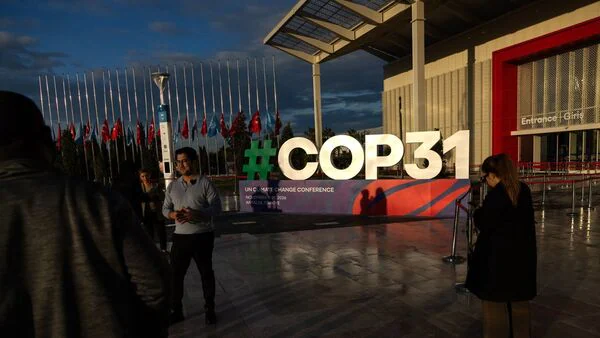
LeadIT 3.0, covering 2027-30, was announced by Union environment minister Bhupender Yadav at an industry leaders' roundtable on the sidelines of the UN Climate Change Conference (COP31) in Antalya, Türkiye, on Tuesday, according to a government statement. The roundtable was co-chaired by Yadav and Sweden's state secretary for Climate and Enterprise Helena Dyrssen.
The new phase will shift the initiative's focus from establishing partnerships to scaling industrial projects, mobilizing capital and delivering tangible results. Its three priorities are technology development and diffusion through industrial projects; capital mobilization and de-risking to connect projects with finance; and capacity building and policy support, including carbon markets and workforce transition.
Quick answers to key questions
.5 QUESTIONS1What is LeadIT 3.0?⌵LeadIT 3.0 is the 2027–30 phase of the India-Sweden Leadership Group for Industry Transition initiative. It aims to turn industrial decarbonisation commitments into projects and measurable emissions cuts.
2What are the three priorities of LeadIT 3.0?⌵Its priorities are developing and sharing technology through industrial projects, mobilising and de-risking capital, and providing capacity-building and policy support. The policy work includes carbon markets and workforce transition.
3Which industries and technologies are part of the India-Sweden industrial transition effort?⌵The initiative focuses on hard-to-abate sectors such as steel, cement and transport. Earlier projects explored hydrogen-based ironmaking, industrial heat electrification, carbon capture and utilisation, and lower-carbon cement production.
4How does LeadIT 3.0 differ from the initiative's previous phase?⌵The new phase shifts the focus from establishing partnerships to scaling projects, mobilising finance and delivering results. The second phase facilitated 11 pre-pilot projects in steel and cement.
5Why does India say industrial decarbonisation should include workers and communities?⌵India says the transition should create opportunities for workers and communities, particularly in developing economies, rather than focus only on emissions cuts. It also needs to progress alongside priorities such as poverty alleviation, energy access, jobs and infrastructure.
Also Read | No time to lose: Climate finance is the make-or-break issue at COP31 summit“Geopolitical conflicts, volatile energy markets and competing development priorities make international cooperation even more important, particularly in hard-to-abate industrial sectors,” Yadav said, adding that India's priorities of poverty alleviation, energy access, job creation and infrastructure development must progress alongside its transition to a low-carbon economy.
The launch comes as governments and industries face mounting pressure to cut emissions from energy-intensive sectors, where decarbonization often requires substantial capital investment, technological innovation and changes in production processes.
Building on partnershipsIndia and Sweden launched LeadIT in 2019. Its second phase facilitated 11 pre-pilot projects in steel and cement under the India-Sweden Industry Transition Partnership. These cover hydrogen-based ironmaking, electrification of industrial heat, carbon capture and utilisation, clinker substitution, industrial circularity and the use of artificial intelligence to reduce cement demand.
LeadIT has also supported South Africa's investment plan under the Climate Investment Funds and Ethiopia's engagement on low-carbon cement, Yadav said.
The initiative's membership has since expanded to 20 countries and 33 companies, with Brazil joining as its latest country member, strengthening participation from the Global South.
Also Read | India has delivered the evidence; COP31 must make clean capital cheaperYadav called on countries and companies to move beyond feasibility studies towards pilot projects, demonstrations and replication, arguing that industrial transition commitments must translate into measurable outcomes.
Highlighting India's climate progress, the minister said the country had reduced its emissions intensity by 37.38% between 2005 and 2022 and achieved 50% of its installed electricity capacity from non-fossil fuel sources, five years ahead of its target. India's additional forest carbon sink has reached around 2.44 billion tonnes of carbon dioxide equivalent, he added.
Yadav said the industrial transition must create opportunities for workers and communities, particularly in developing economies, rather than focus solely on reducing emissions.
The launch at COP31, which the Turkish presidency has described as the 'COP of Implementation', is intended to strengthen international cooperation and accelerate the shift from industrial transition commitments to on-ground projects.

Legal Disclaimer:
MENAFN provides the
information “as is” without warranty of any kind. We do not accept any
responsibility or liability for the accuracy, content, images, videos,
licenses, completeness, legality, or reliability of the information
contained in this article. If you have any complaints or copyright issues
related to this article, kindly contact the provider above.


Comments
No comment