


Could A Tiny Implant Help Rectal Cancer Avoid Major Surgery? UAE Trial Begins


- By: Haneen Dajani
A tiny implant that releases chemotherapy directly at the site of a cancer tumour is being tested in Abu Dhabi, in a clinical trial that could eventually offer some rectal cancer patients an alternative to surgery that may leave them with a permanent stoma.
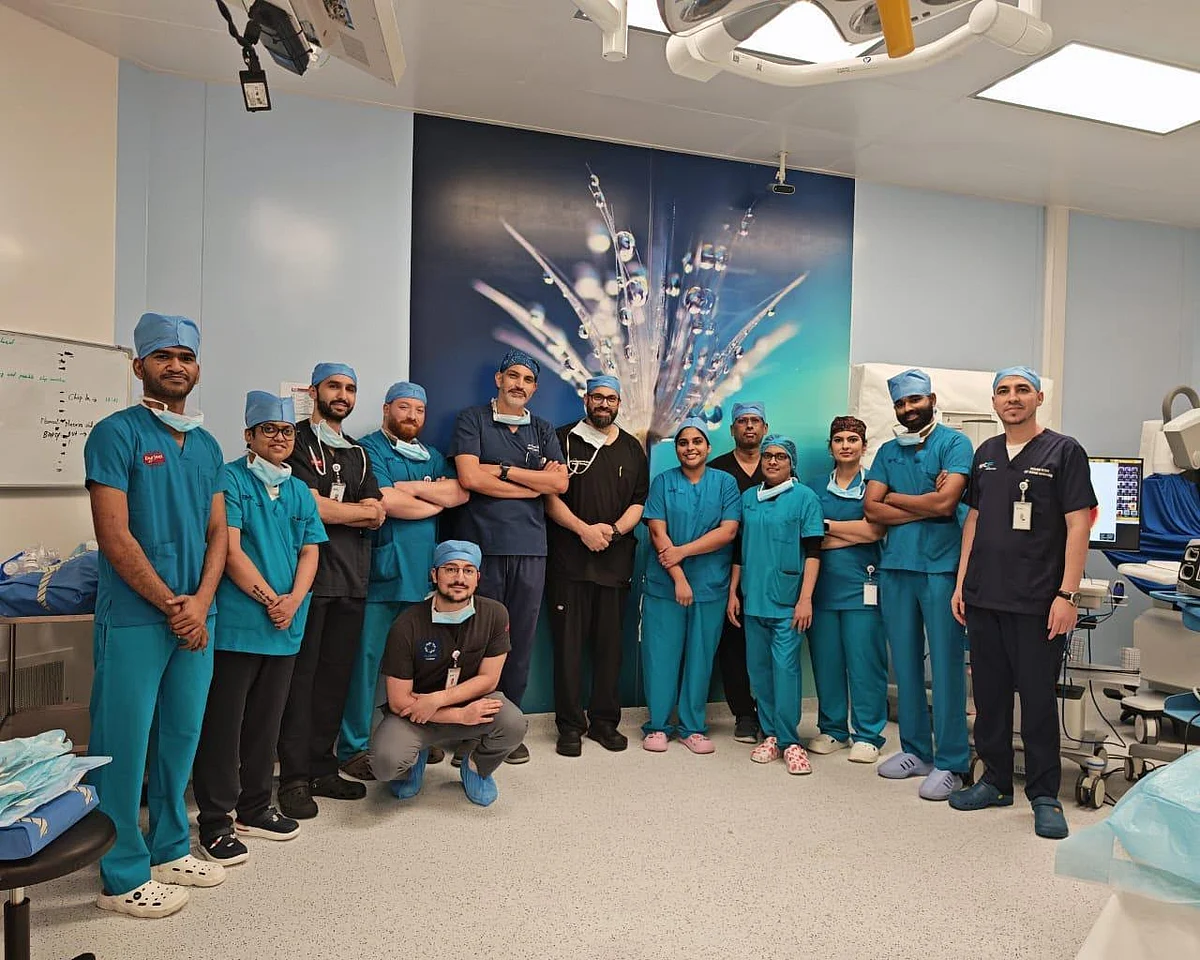
The first patient has received the investigational MediChip implant at Burjeel Cancer Institute, where US biotechnology company BioSapien is conducting its first-in-human Phase I trial. The study is testing whether the biodegradable device can safely deliver chemotherapy locally to patients with rectal cancer.
Recommended For You UAE National Day: 3-day Eid Al Etihad break announced for public sectorThe company's founder and chief executive, Dr Khatija Ali, told Khaleej Times that the trial was ongoing and that there had so far been no concerns. However, she declined to disclose details about the first patient or the procedure.
Stay up to date with the latest news. Follow KT on WhatsApp Channels.
“What I can say is that the clinical trial is ongoing, and so far we have no concerns,” she said.
The ambition behind the technology is to help patients whose tumours have almost disappeared following conventional chemotherapy and radiation but have not completely responded to treatment.
Ali explained that such patients may still face the removal of the rectum and the possibility of living with a stoma, a surgically created opening through which waste passes into an external bag.
“You're essentially pooping in a bag for the rest of your life,” she said, describing the impact of the procedure as“very stressful” and“life-altering”.
BioSapien hopes its implant could eventually provide another option by delivering chemotherapy directly to the remaining tumour, potentially shrinking it further and allowing the rectum to be preserved.
“Our whole end goal is organ preservation,” Ali said.“That's the thing that we're aiming for as a company.”
She was careful to stress that the treatment remains experimental and has not been approved for general use.
“This is a trial, an experiment; we're basically potentially offering patients another option to seek experimental therapy.”
How the implant worksMediChip is a biodegradable, 3D-printed implant containing 5-fluorouracil (5-FU), a chemotherapy drug commonly used in cancer treatment. It is surgically placed at the tumour site, where the material gradually breaks down through a process called hydrolysis, releasing the drug locally.
Unlike intravenous chemotherapy, which circulates through the bloodstream and exposes the wider body to the medication, the implant is designed to concentrate treatment around the tumour.
Ali said conventional chemotherapy can involve repeated hospital visits, with patients receiving multiple cycles of treatment.
“Instead of basically ruining the whole body and blasting the whole body with chemo, the idea here is that we can locally just put the chemo where the cancer is."
She added:“The idea is that it just goes directly where the tumour is, so that you don't have to be sitting in a chair, you don't have to go to the hospital, you don't have to worry about losing your hair.”
When asked how she was inspired to come up with this innovation, she said she was researching biodegradable materials used in surgical procedures and, after reviewing thousands of papers, began thinking about adapting them to deliver chemotherapy directly to tumours. “I started thinking, what if we use a similar concept like that to deliver chemotherapy locally at the actual site of the tumour?”
The device requires a procedure to implant it, but Ali said it does not involve open surgery or a major operation. She declined to give the duration of the procedure carried out on the first patient.
What the trial will establishThe current Phase I study, known as OPTIMISE-REFORM, is primarily designed to assess the implant's safety, feasibility and tolerability, rather than establish whether it can cure cancer or eliminate the need for surgery.
Researchers will examine whether the chip stays in place, whether patients experience pain and whether it can be tolerated during normal activities, including bowel movements.
The study will also investigate whether the device releases the chemotherapy as intended. Tissue samples will be analysed to check for the presence of the drug, while changes in circulating tumour DNA, fragments of cancer-related genetic material found in the bloodstream, will be explored as an early indicator of tumour response.
Ali said the trial is a dose-escalation study, intended to establish how many implants may be needed to produce a therapeutic response.
The company hopes to enrol six patients in the initial trial, with recruitment dependent on the availability of eligible participants. Ali said results from the first patient could be available within 45 days of treatment, and that the company hoped to enrol the second and third patients before completing the study.
She expects the current trial to run for about another six months, potentially until May 2027.
The implant is retrieved during this early study because researchers need to establish how much of the drug has been released and how much remains in the device. In a future Phase II trial, the company hopes the implant can be left in place without needing to be removed.
Promising early findings, but human evidence is still neededAli said pre-clinical animal studies had shown tumour reductions ranging from 45 to 90 per cent compared with systemic chemotherapy. She also described results from studies in pigs, in which researchers found high concentrations of the drug around the implant but almost none in the bloodstream.
“The tissue around the chip was healthy,” she said, adding that the tissue directly beneath it was affected by the chemotherapy.“It's promising, well put it that way.”
These findings are from animal studies and do not establish how the implant will perform in people. The current trial is the first stage of evaluating the technology in human patients.
If the initial study progresses as hoped, BioSapien plans to pursue a Phase II trial involving about 40 patients across the Gulf region. Ali said countries being considered include the UAE, Saudi Arabia, Jordan, Oman and Qatar, with the company hoping to begin in the second half of 2027.
That larger study would compare different treatment combinations, including the implant with and without chemotherapy or radiation, to assess tumour response and whether surgery could be avoided in selected patients.
The company is initially focusing on gastrointestinal cancers, including rectal, colon, stomach, oesophageal, liver and pancreatic cancers. Ali said the underlying delivery platform could potentially be adapted for other solid tumours, although those are not the focus of the current trial.
Why Abu Dhabi?Ali said BioSapien considered several countries before choosing Abu Dhabi for its first human trial, citing the speed of regulatory approvals, the cost of conducting research and the quality of local medical facilities.
She said the company received its approval from the Department of Health – Abu Dhabi in 12 days, adding that the authority offered a guaranteed 30-day turnaround for regulatory approvals.
“It was a fraction of the cost in comparison to the US and other places,” she said, while pointing to the availability of hospitals such as Burjeel Medical City.
For now, the priority is to establish whether the implant can be used safely in people and generate reliable clinical evidence.
Ali said the first human results would be an important step towards testing whether the technology can deliver on its longer-term ambition.
“Every human being that we put through our clinical trials allows us to generate more data to support that thesis,” she concluded.
ALSO READ- Scientist to run heart stem cell trial in UAE after patients outlive death prognosis 'We want to redefine surgery': Abu Dhabi links operating rooms to AI platform Abu Dhabi builds advanced gene-therapy ecosystem, brings international practices to UAE

Legal Disclaimer:
MENAFN provides the
information “as is” without warranty of any kind. We do not accept any
responsibility or liability for the accuracy, content, images, videos,
licenses, completeness, legality, or reliability of the information
contained in this article. If you have any complaints or copyright issues
related to this article, kindly contact the provider above.


Comments
No comment