


Swiss Climate Lawmakers Get Industry Paychecks. Is That A Problem?


I cover climate and sustainability topics with a data-driven perspective. Trained as a journalist but working as a data scientist, I combine storytelling with analysis to uncover the facts behind Switzerland's green transition. At SWI swissinfo, I focus on how climate change affects daily life and what solutions can make a difference.
-
More from this aut
English Departm
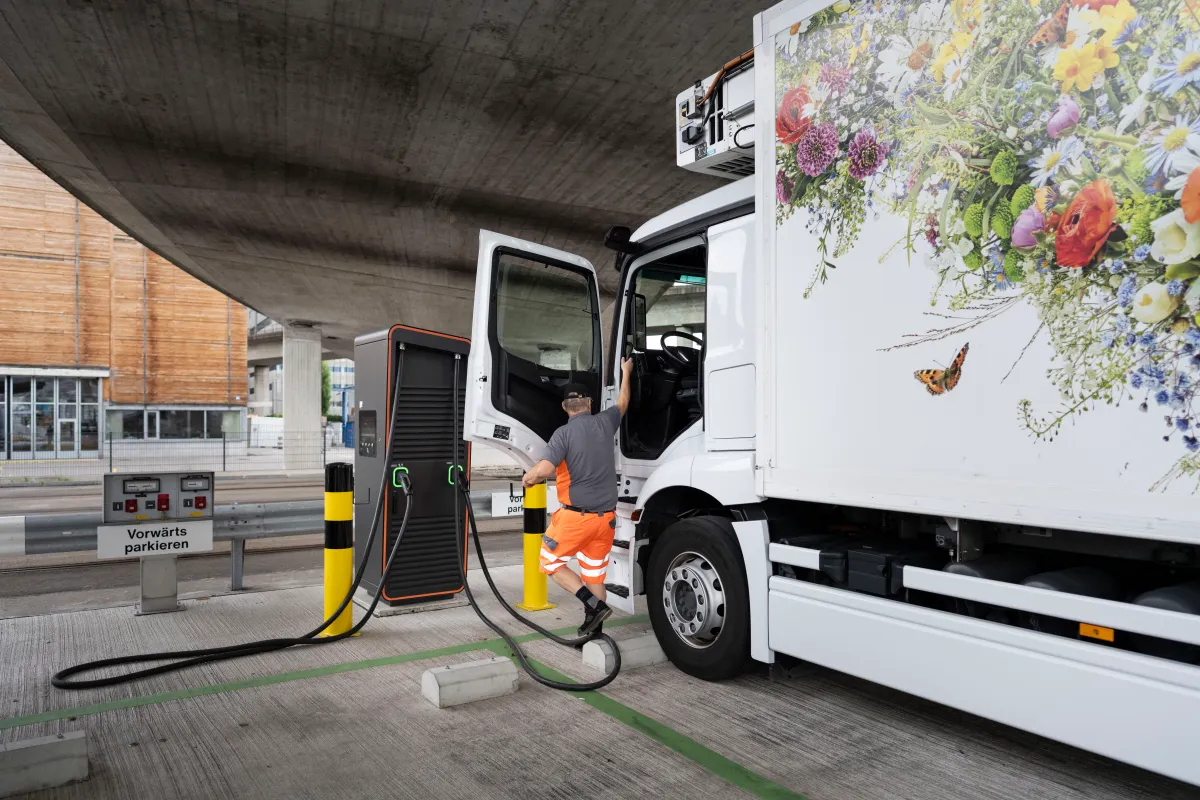
In June, Senator Thierry Burkart won a vote on how much electric trucks will pay to use Swiss roads. They are exempt from the heavy vehicle charge today and will start paying it in 2031, at a discount. Whereas the Senate's transport committee wanted to cap that discount, Burkart proposed a minimum discount with no upper limit. His proposal passed by 22 votes to 21.
Burkart knows the industry well. The lawyer from Aargau is the paid president of ASTAG, the Swiss trucking association, which had asked for discounts fixed in law in 2024.
Nothing about this dual work is illegal. Swiss lawmakers may vote on, and even propose, laws that affect industries they work in or are paid by. Burkart declared his employment at the start of the debate, as the law requires.
Asked by Swissinfo about his two roles, Burkart said he had declared his interest correctly in writing and in the debate, and that his work was well known in the Senate. The committee elected him its spokesman unanimously,“not least because of my expertise in this matter”, he said. In his view, the new rules make it more likely that trucking firms will buy electric rather than diesel trucks, so his involvement had“a positive benefit for climate policy”.
Burkart is one of many lawmakers in Switzerland who work in industries they also oversee. Of the 38 members on committees that draft climate and energy laws, 20 hold posts in the sectors the laws regulate, from power companies and the gas industry to trucking, farming and solar associations. That is according to parliament's register of interests, where members must list their jobs and board seats and say whether they are paid. Most of these declared posts are paid.
Many legislators share Burkart's view that this system is a net benefit. Swiss lawmakers are part-time, meaning they split their capacities between legislative sessions and working in their home districts. Proponents say this leads to lawmakers who have a closer connection to their constituents and a greater knowledge of the industries they oversee.
Martin Schmid, a Radical-Liberal on the Senate's energy committee who presides over the Swiss gas industry association and is paid for that work, says the size of committees and the overall legislature limit any one member's influence. Each committee has 13 members and the Senate has 46.“One person can bring in the industry's point of view but cannot decide [by themselves], unless they have such good arguments that the majority follows,” he said.
But critics say that without adequate disclosure and oversight, conflicts of interest can go unnoticed.“Swiss democracy has its blind spots and its vulnerabilities,” said Odile Ammann, a professor of law at the University of Lausanne who has studied lobbying rules since 2018.
Do these ties change how members vote? In the chamber, they do not appear to. Swissinfo analysed 237 climate and energy votes and found that members with industry posts do not break with their party more often than other members. Industry ties and party lines often point the same way: on the energy committees, all five members with posts in the oil, gas, car and trucking sectors belong to the two main parties on the right, the Swiss People's Party and the Radical-Liberal Party. Members from the left-wing Social Democratic Party and the Green Party also have posts in the energy sector, but all of them are with renewable energy groups.
What matters for citizens is whether they can see these ties when they're deciding whom to support.“In many cases people are likely unaware of them,” said Isabelle Stadelmann-Steffen, a professor at the University of Bern who studies how Swiss voters judge energy and climate policy. Cooperation between interest groups and politicians is part of how Swiss consensus democracy works, she says, but“it is of course important to have as much transparency as possible regarding these interlinkages and spending flows”.
The ties between energy companies and politicians run in all directions. Axpo, Switzerland's largest power producer, belongs to cantons and their utilities. Parliamentarians Jakob Stark of the Swiss People's Party and Martin Bäumle of the Liberal Greens sit on its board. Axpo paid Stark CHF82,000 ($97,000) for 2024/25 and Bäumle CHF48,000 for nine months of 2025, according to its financial report.
Stark told Swissinfo that Axpo's tasks and strategy largely match his own values and convictions, so conflicts of interest are rare.“Should they arise, I follow my values and convictions,” he says. Where a bill directly affects Axpo's interests, he declares the tie in the debate or abstains.
Social Democrat Gabriela Suter is paid by the solar association Swissolar and by AEE Suisse, the renewable energy umbrella group. Priska Wismer-Felder of the Centre Party is paid by AEE Suisse and by the wind energy association Suisse Eole.
Members of parliament can also bring interest groups into the building. Each member can give two badges to enter parliament to people of their choice. Because Switzerland has no lobbyist registry, badge holders only have to state their employer or function, not whom they lobby for or on what. Thirty-four of the 38 energy committee members have given out 61 badges, 40 of them to interest group representatives, from the trucking association and car importers to solar associations and environmental groups. Four of the 61 went to organisations that pay the member of parliament, among them ASTAG and Swissolar.
External ContentAmmann sees advantages in the so-called militia system wherein members of parliament work part-time: members stay connected to society and bring their own expertise into parliament, and it costs less than a professional legislature.
One of its blind spots, she says, is expertise. Members of parliament do not work full time and receive CHF33,000 a year to cover staff and other expenses. In 2024 more than half had no personal staff, Ammann says. This means lawmakers rely on outsiders for knowledge, and often those outsiders are parts of interest groups tied to members through their side jobs.
“There is a risk that certain views are taken into account just because these views are available and they are close to the politicians,” Ammann says. Energy is a case in point.“The more technical an area is, the more expert knowledge is needed,” she says, and the harder it is for lawmakers“to distinguish a neutral opinion from one that may be interested or self-serving”.
What exactly is the militia principle? See our explainer video below:
Since 2019, members of the Swiss parliament have had to declare whether an outside post they hold is paid, though not how much they're paid. Across parliament, lawmakers have declared 931 paid posts. The amount paid is known for 22% of them, but only because those members told the watchdog group Lobbywatch voluntarily.
Burkart, who has not disclosed what ASTAG pays him, said that in Switzerland income is a private matter, and that parliament has rejected mandatory disclosure several times.
Germany, France and the European Parliament publish what members earn on the side.“Switzerland is lagging behind very clearly,” Ammann says.
External ContentMost EU member states restrict their lawmakers' side jobs, and many ban them, says Raphaël Kergueno, senior policy officer at Transparency International EU in Brussels. The European Parliament allows side jobs, and since the 2022 Qatargate scandal, in which members of the European Parliament were accused of taking money from Qatar and Morocco to sway its decisions, its members must state their exact side income instead of a range.“If side activities are allowed, then you should have the income tied to it,” Kergueno says.
The Council of Europe's anti-corruption body, GRECO, has asked Switzerland to add figures on members' financial interests to the register and to check whether members follow the rules. When it closed its review of the Swiss rules for members in parliament in 2024, neither measure had been fully implemented, and GRECO said it“regretted” the lack of checks. It will not look at the issue again unless there is a“concerning development”, it told Swissinfo.
Swiss members must also declare their interests when they speak in parliament. Ammann says the rule is read narrowly. It covers only interests directly affected by the matter at hand and not ties already listed in the register.“It doesn't really serve the purpose of informing people about ties that are relevant to the discussion,” she says.
Swissinfo checked every speech since December 2023 by the 16 energy committee members who hold posts in energy, climate-related industries or property. In 72 speeches, the member spoke on a bill affecting the sector of one of their posts. In 9 of them, the member did not mention the tie at any point in that bill's debate.
The register itself is the members' own responsibility, according to parliament. The law allows for disciplinary measures for not making required disclosures, but“in practice, it has never happened”, Ammann says.
Swissinfo compared the register with the commercial register, the public record of Swiss companies, foundations and associations, and found that at least 30 of the 246 members of parliament, from all parts of the political spectrum, sit on boards they have not declared, although the law requires it. Most of the organisations concerned are foundations and associations. None of the gaps involved energy companies.
More More Swiss democracy How the Swiss militia system strengthens civic identity – and favours the privilegedThis content was published on Apr 24, 2025 The militia principle is a special feature of Swiss democracy. It strengthens the connection between those who govern and those who are governed. An explainer.
Read more: How the Swiss militia system strengthens civic identity – and favours the privi
Legal Disclaimer:
MENAFN provides the
information “as is” without warranty of any kind. We do not accept any
responsibility or liability for the accuracy, content, images, videos,
licenses, completeness, legality, or reliability of the information
contained in this article. If you have any complaints or copyright issues
related to this article, kindly contact the provider above.


Comments
No comment