


With US Alliance Less Certain, Seoul Needs To Fix Missile Defense


Seoul can no longer afford to treat missile defense as a secondary component of national security at a time when North Korea is rapidly expanding its missile arsenal, China is developing increasingly sophisticated missile systems – and confidence in the long-term reliability of the US-South Korea alliance is becoming increasingly uncertain.
For decades, South Korea's national security architecture has rested on the assumption that the United States would provide the necessary military capabilities to deter and, if required, defeat North Korean aggression.
However, the strategic environment is changing. Growing political disagreements between Washington and Seoul have introduced uncertainty into the alliance. Differences over China policy, regional missile defense cooperation and intelligence-sharing arrangements have become increasingly consequential. South Korea's historical reservations about participating in a US-led regional missile defense architecture have further complicated strategic coordination with Washington.
As distrust between Washington and Seoul grows, South Korea must prepare for a strategic environment in which American assistance cannot be treated as an unlimited or unconditional resource. The country needs the capacity to defend its population, military installations and critical infrastructure even when American military support is constrained by the competing international commitments of both countries.
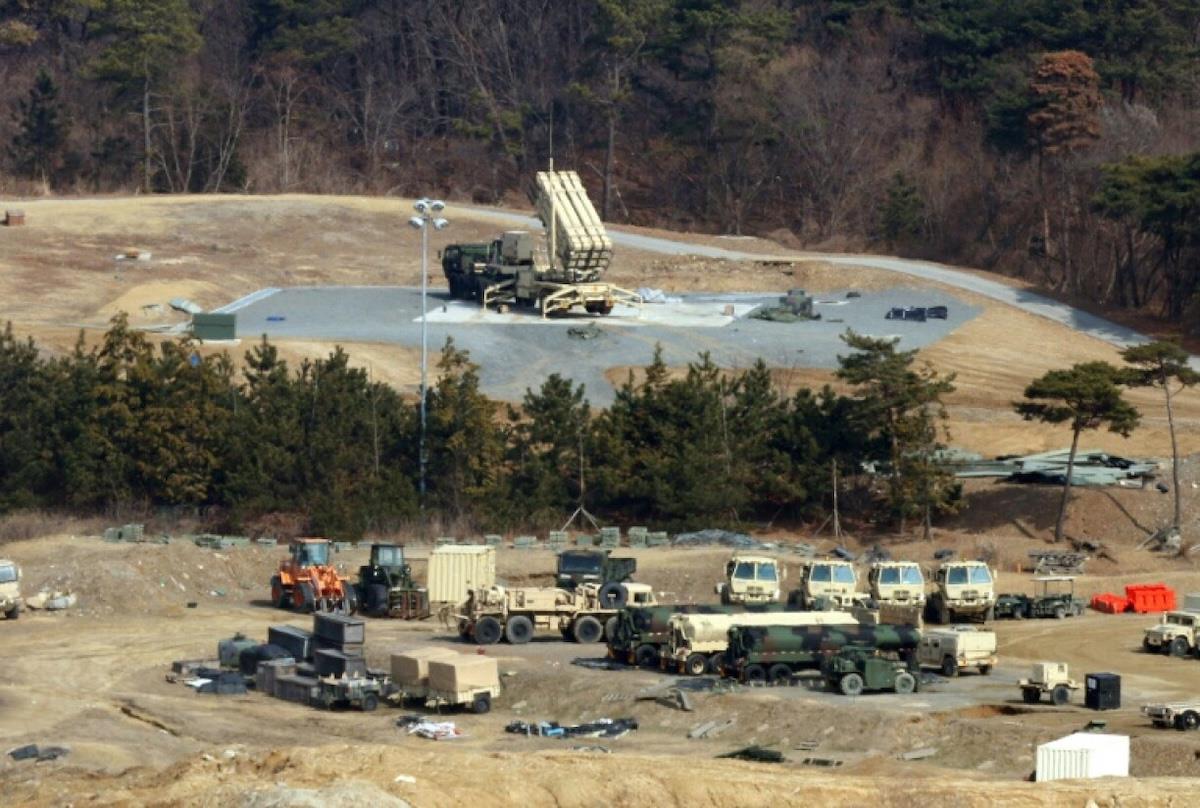
The American shield: tested, but not sufficientSouth Korea's existing missile defense architecture remains heavily dependent on American technology and military deployments. The US-operated Terminal High Altitude Area Defense (THAAD) battery stationed in South Korea provides high-altitude interception capabilities against certain ballistic missile threats, while Patriot PAC-2 and PAC-3 systems offer lower-altitude air and missile defense, protecting military installations and other strategically important locations.
At the regional level, US Navy destroyers equipped with the Aegis combat system and Standard Missile interceptors, including the SM-3, contribute to ballistic missile surveillance and interception. These capabilities are further reinforced by an extensive American early-warning and surveillance network incorporating satellite-based monitoring, the AN/TPY-2 radar associated with THAAD and other advanced sensors.
At first glance, these capabilities appear impressive. However, the 2026 Iran war has exposed important limitations in the wider American missile defense architecture. Several structural weaknesses became apparent during the conflict. Iranian attacks demonstrated that some missiles could penetrate defensive systems, reach their intended areas and cause casualties and substantial infrastructure damage.
Second, interceptor availability emerged as a serious strategic weakness. A July 2026 CSIS assessment estimated that Patriot stocks had fallen below 1,000 interceptors, while THAAD inventories had declined considerably. Subsequent assessments continued to highlight the difficulties of replenishing these specialized weapons quickly.

Legal Disclaimer:
MENAFN provides the
information “as is” without warranty of any kind. We do not accept any
responsibility or liability for the accuracy, content, images, videos,
licenses, completeness, legality, or reliability of the information
contained in this article. If you have any complaints or copyright issues
related to this article, kindly contact the provider above.


Comments
No comment