


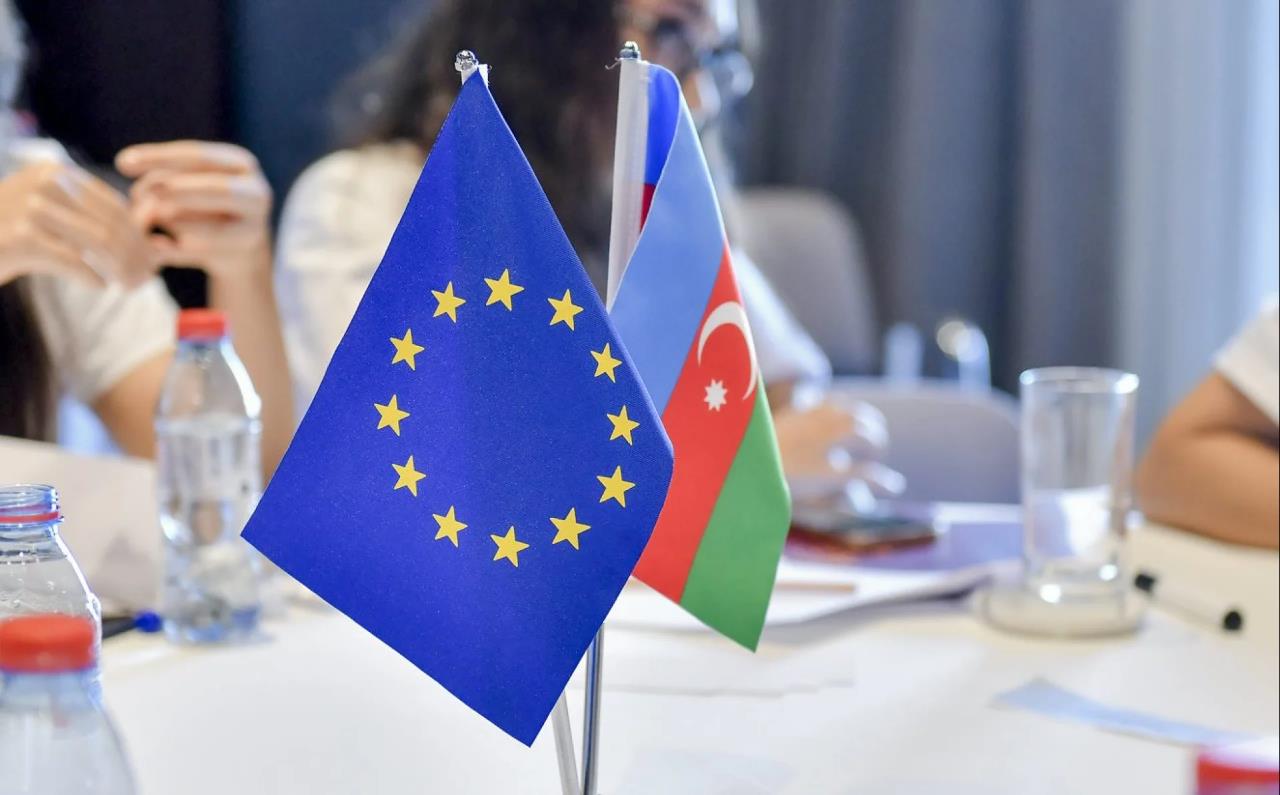
Why Did Azerbaijan Decline The EPC Summit's Three Declarations?


The ninth European Political Community (EPC) Summit, held in Dublin on November 12 under the theme“Europe – strong, secure and connected,” brought together nearly 50 European leaders to discuss continental security, energy cooperation, economic competitiveness and transport connectivity. Azerbaijan's participation was marked by an extensive diplomatic agenda, with President Ilham Aliyev holding bilateral meetings with several European leaders, including European Council President António Costa, Romanian President Nicușor Dan and British Prime Minister Andy Burnham. Most notably, Baku and London formally elevated their relations to a strategic partnership, signing a joint declaration covering defence, security, energy, trade, connectivity and technological cooperation. President Aliyev also met Armenian Prime Minister Nikol Pashinyan to discuss the peace process and regional transport links, reinforcing Azerbaijan's role in broader European diplomatic discussions.
Nevertheless, amidst the event, one decision especially deserves attention. Azerbaijan refused to approve three agreements on basic principles of security in Europe, migration and cooperation to combat drug trafficking. Baku stated that the approval of such documents would have implied more legal and political obligations, since, according to Baku, the European Political Cooperation was created mainly as a venue for dialogue and not for bearing any legal responsibilities. It is quite clear that this is a very important aspect in the foreign policy of Azerbaijan: being close to Europe does not automatically mean supporting all political initiatives of Europe.
Speaking to AzerNEWS, German-based analyst Brendan Ziegler examined the implications of Baku's decision, highlighting the distinction between deeper engagement with European institutions and political alignment with their collective positions:
"Well, from a geopolitical perspective, the decision reflects a distinction between participating in European diplomacy and becoming bound by its emerging political frameworks. Indeed, Azerbaijan is gaining importance for Europe's energy security and Eurasian connectivity. The country's gas supplies, the Southern Gas Corridor, and the construction of the Middle Corridor provide sufficient grounds for Europeans to stay engaged with Baku. Still, the foreign policy of Azerbaijan cannot be limited only to Europe's political environment. Its ties with Türkiye, Central Asia, and other states should allow for a certain degree of diplomatic flexibility, which Baku seems unwilling to exchange for broader obligations. Certainly, with Ilham Aliyev stating Baku as a 'middle power' several times over the course of a few months, the logic in that sense seems understandable. Ultimately, in my point of view this decision was meant to showcase that specifically."
Expert argues that this may not necessarily be an expression of dissatisfaction with Europe's policies on security, migration and counter-drug trafficking:
"In fact, Azerbaijan and the EU have already expressed their interests in cooperation in these fields in the past. The difference is actually in the institutional mechanism that could facilitate this cooperation. Baku seems to be interested in negotiating mechanisms aimed at certain interest groups, as opposed to collective statements with more obligations. There are, nevertheless, potential diplomatic costs. European partners may interpret selective participation as reluctance to contribute to common political objectives, particularly as security questions become increasingly central to the continent's agenda. The challenge is therefore to ensure that strategic autonomy does not diminish its influence within European discussions.
Azerbaijan seeks stronger European integration in practical terms, particularly through energy, transport and trade, while maintaining discretion over the political obligations accompanying that engagement. With Baku holding the EPC Summit in 2028, it will presumably be able to showcase the capacity and capabilities of its middle power."

Legal Disclaimer:
MENAFN provides the
information “as is” without warranty of any kind. We do not accept any
responsibility or liability for the accuracy, content, images, videos,
licenses, completeness, legality, or reliability of the information
contained in this article. If you have any complaints or copyright issues
related to this article, kindly contact the provider above.


Comments
No comment