


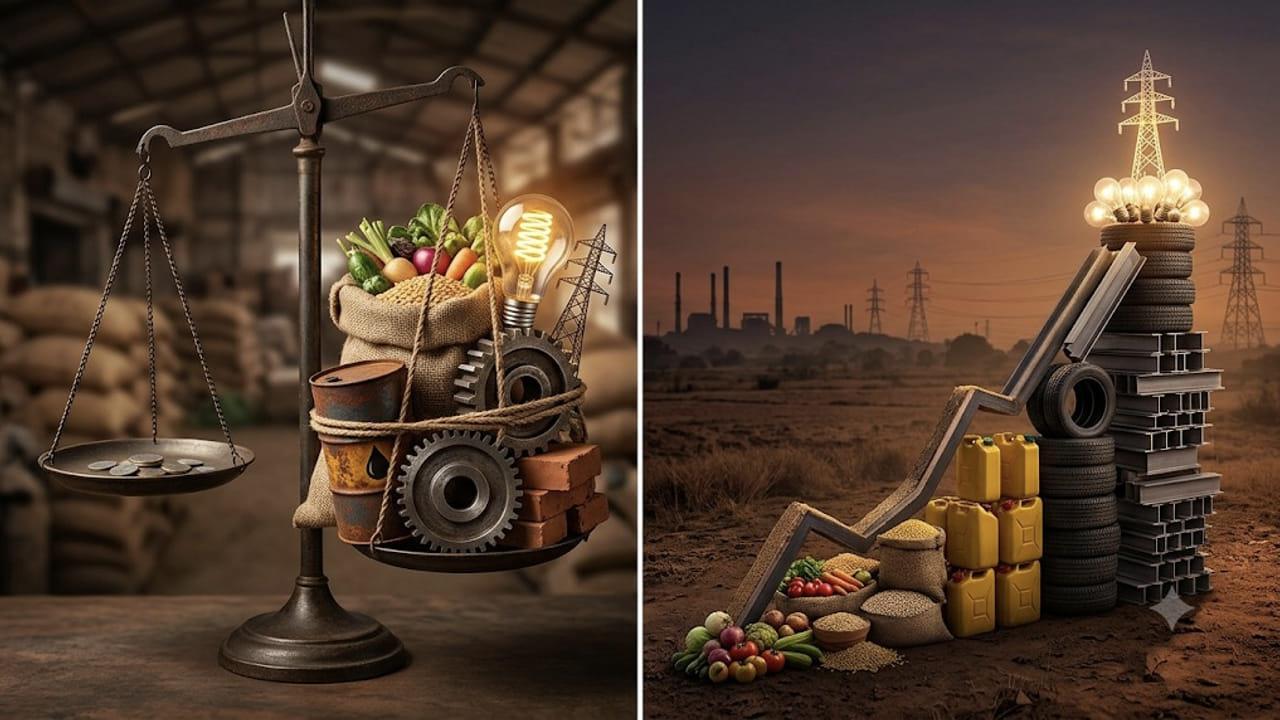
Your Everyday Expenses May Feel The Heat: India's Wholesale Inflation Hits 12.29%


India's wholesale inflation rose to 12.29% in October, its highest level in the revised WPI series, compared with 11.39% in September. Higher fuel, power, mineral and non-food prices drove the increase, while manufacturing inflation eased slightly.
India's wholesale inflation climbed to 12.29 per cent in October 2026, its highest level in the revised Wholesale Price Index (WPI) series, as rising fuel, power and non-food prices pushed up costs across several sectors.
The latest figure marks an increase from 11.39 per cent in September, highlighting the growing pressure on wholesale prices. However, economists believe there could be some relief in November if global crude oil prices remain lower and the Indian rupee continues to strengthen.
The rise in wholesale inflation comes at a time when retail inflation has also increased. Consumer Price Index (CPI) inflation reached 6.09 per cent in October, crossing the Reserve Bank of India's upper tolerance limit for the first time in two years.
But what does the latest WPI data mean, what is driving the increase, and could prices begin to cool in the coming months?
Wholesale inflation measures the change in prices of goods sold in bulk before they reach retailers and consumers. It tracks price movements across categories such as food articles, fuel, electricity, minerals and manufactured products.
A rise in WPI means businesses are paying more for goods, raw materials, energy and other inputs. Depending on how much of these additional costs businesses pass on to customers, consumers may eventually feel the impact through higher prices.
However, wholesale inflation does not automatically translate into an equal increase in retail prices. The extent of the impact depends on demand, production costs, competition and the ability of businesses to absorb higher expenses.
Why did wholesale inflation rise to 12.29% in October?
The biggest contributor to October's increase was the fuel and power category.
Inflation in this group jumped to 32.84 per cent in October, compared with 25.85 per cent in September. Higher prices of mineral oils, crude petroleum, natural gas and electricity contributed to the increase.
Non-food articles also recorded a sharp rise in inflation. Their rate increased to 11.69 per cent in October from 10.28 per cent in the previous month.
Minerals recorded inflation of 12.64 per cent, compared with 9.51 per cent in September.
Food articles saw a smaller increase, with inflation rising to 8.26 per cent from 8.14 per cent.
The overall primary articles category, which includes food articles, non-food articles and minerals, recorded inflation of 9.24 per cent in October, against 8.67 per cent in September.
Manufactured products provided some relief. Inflation in this category eased slightly to 9.54 per cent from 9.76 per cent in September.
The Commerce and Industry Ministry said the increase was also influenced by higher prices of basic metals, chemicals and chemical products, food products, textiles, and rubber and plastic products.
The continuing West Asia crisis has been an important factor behind the rise in wholesale inflation.
The conflict and the resulting disruption around the Strait of Hormuz have affected global energy and fertiliser costs. The waterway is an important route for international oil shipments, making any disruption a concern for countries that depend on imported crude oil, including India.
Higher crude oil prices can increase the cost of fuel, electricity, transportation and industrial production. These additional expenses can also affect the prices of several other goods.
India Ratings and Research Chief Economist Devendra Pant told news agency PTI that October's WPI inflation was the highest in the new series because of the base effect and a broad-based increase in primary articles and fuel and power prices.
He added that the prolonged West Asia crisis continued to push fuel and power inflation higher.
Economists expect some relief if international energy prices continue to decline.
Pant said the appreciation of the Indian currency and weakness in crude oil prices, if sustained through the rest of November, could bring wholesale inflation down to around 11.5 per cent.
Barclays also expects the recent fall in global energy prices to ease wholesale price pressures in the coming months. It noted that the increase in wholesale prices has not translated into an equally sharp rise in retail prices, particularly for core items.
Brickwork Ratings economist Pranjal Ghate said Brent crude had declined by around $20 per barrel by mid-November.
If this fall continues, it could reduce wholesale price pressures after the festive season. Lower input and transportation costs could also help moderate retail inflation over time.
The latest wholesale inflation figures have added to concerns about the overall price situation in the economy.
Retail inflation, measured by the Consumer Price Index, rose to 6.09 per cent in October. This was above the RBI's upper tolerance limit of 6 per cent for the first time in two years.
The development has increased expectations of a possible interest rate hike when the RBI's Monetary Policy Committee meets from December 2 to 4.
Ghate said a further 25-basis-point increase in the repo rate to 5.75 per cent was highly likely, followed by a pause.
A repo rate increase makes borrowing more expensive for banks, which can lead to higher interest rates on loans. This may affect borrowers with home, vehicle and other loans, although the final impact depends on how banks adjust their lending rates.
The October WPI figures underline the pressure that rising energy, raw material and production costs can place on businesses and the wider economy.
Resurgent India Managing Director Jyoti Prakash Gadia said effective supply-side management and a carefully balanced monetary policy would be important to maintain price stability while supporting economic growth.
The government's revised WPI series, with 2022-23 as its base year, was introduced on June 15, 2026.
For now, the direction of global crude oil prices, developments in West Asia and movements in the rupee will remain important factors to watch. If energy prices stay lower, wholesale inflation could ease in November. However, the latest figures show that price pressures remain widespread across several sectors.

Legal Disclaimer:
MENAFN provides the
information “as is” without warranty of any kind. We do not accept any
responsibility or liability for the accuracy, content, images, videos,
licenses, completeness, legality, or reliability of the information
contained in this article. If you have any complaints or copyright issues
related to this article, kindly contact the provider above.


Comments
No comment