


How Girls Could Drive Cricket's Growth In UAE, Brazil, Nigeria And Beyond


One of the greatest fast bowlers in cricket history, Steyn was enjoying a walk in New York when he spotted a makeshift cricket net.
Recommended For You UAE National Day: 3-day Eid Al Etihad break announced for public sectorThe temporary nets had been set up by the ICC during the World Cup to give Americans a basic introduction to the sport.
Seeing two attendants with American accents, Steyn walked into the area and asked if he could try bowling, without revealing his identity.
The unsuspecting attendants were happy to let him have a go and even offered tips on getting his arm position right before releasing the ball.
“Also, you need to bounce the ball once before it reaches the batter,” one of them told Steyn.
The Proteas legend was happy to play along, and the video of him being schooled in the art of bowling quickly spread like wildfire.
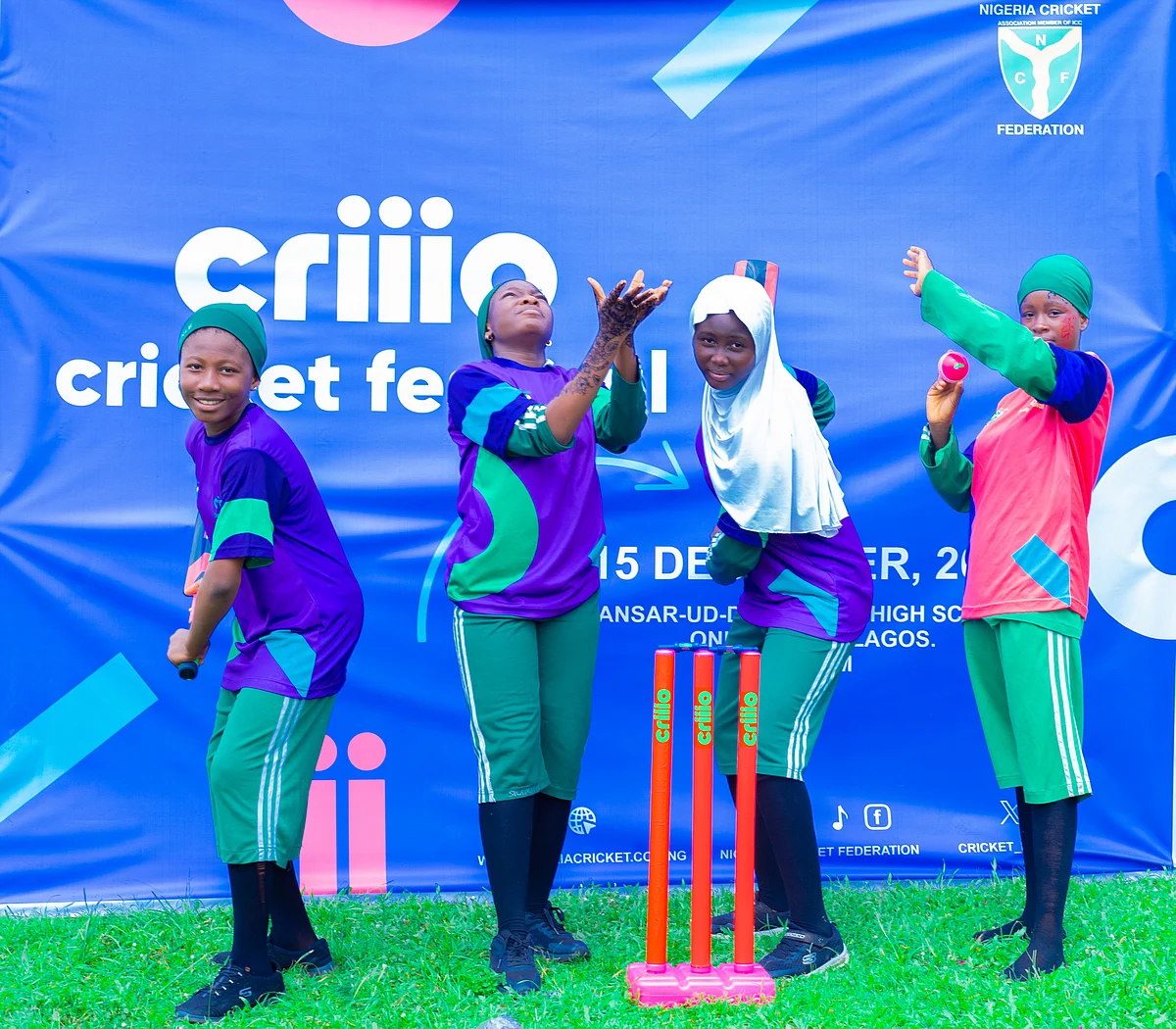
Now it's with the same spirit of innocence and discovery that the ICC is slowly making its way to schools through its development programme in countries such as Rwanda, Nigeria, Indonesia, Italy, China, Samoa, the UAE and even Brazil.
The entry-level ICC programme named criiio, launched globally in 2021, has drawn one million players in countries with little or no history of cricket.
The initiative has already gone beyond the primary objective of introducing the sport to new countries.
Luna Olivera, 14, who joined the criiio programme in 2023, was recently named in Argentina's Under-19 women's team.
Chisom Mary Okpe, another criiio product, is now vying for a place in the Nigerian national team for the 2027 ICC U19 Women's T20 World Cup.
Skipper Christabel Chukwuonye could not hold back the tears when Nigeria, a country where footballers are national icons, overcame Zimbabwe, a traditional cricket-playing nation, in a nerve-racking African qualifying match to seal their U19 World Cup spot.
Okpe could also shed tears of joy if she goes on to make her U19 World Cup debut next year, having only joined the criiio programme in 2025.
The success of the grassroots project in just five years since its launch has pleasantly surprised Will Glenwright, Head of Global Development, International Cricket Council.
“The programme has probably grown faster than we expected, but we're nowhere near where we believe its potential lies. That's what's really exciting,” Glenwright told the Khaleej Times.
“When we see what countries like Indonesia and Nigeria are doing with this programme, it really inspires us.
“Our philosophy behind development programmes is that the ICC builds the tools and provides them free of charge, in local languages, to our members. But our members are the experts in growing the game in their respective countries. We rely on them to deploy those resources in the way that best meets their needs.”
Women's sport
While the programme was launched for both boys and girls, the easiest way to get more people involved in new markets, according to Glenwright, is to project cricket as a women's sport.
“In countries like Brazil, Rwanda, Indonesia and Samoa, we're positioning cricket as a girls' sport. It's harder to break into established sports markets where football, for instance, is predominantly seen as a men's game,” he said.
“Positioning cricket as a girls' sport first allows us to offer a massive market of girls the opportunity to play.
“What we're now seeing, almost as an unintended consequence, is that the critical mass of players created by the programme is beginning to feed into the player pathways of those countries. It's no coincidence that countries like Nigeria and Indonesia are starting to qualify for their first World Cups.”
During the recent Women's Asia Cup in Dubai, Indonesia captain Ni Putu Ayu Nanda Sakarini revealed to the Khaleej Times that the Southeast Asian country now has more than 200,000 registered cricketers.
“The Indonesian example is a good one. I think there were five players in that team who came through the criiio programme and had their first experience of cricket through it. Within a matter of years, they were representing their country on the world stage,” said Glenwright.
“For many of those girls, it was the first time they had left their province, let alone their country, to compete internationally. That's just a fantastic story.”
More female cricketers in UAE
The story of Chaya Mughal is also no less fascinating. In 2010, Mughal, a former domestic cricketer in India, boarded a flight to Dubai, hoping to land a job as a teacher in the UAE.
Mughal did find a job in a Dubai school, but she also went on to captain the UAE women's cricket team, helping a country that once struggled to put together 11 players build a team and turn its fortunes around in the sport.
The UAE senior women's team recently made its third straight Asia Cup appearance, having made its continental debut under Mughal's captaincy in 2022.
Its Under-19 team recently qualified for the 2027 U19 Women's World Cup, underlining the work done by the Emirates Cricket Board (ECB) in association with the ICC in developing the sport at grassroots level.
Now it's Mughal who is driving the project since her retirement. In her role as the Women's Cricket Development Officer, Mughal and her team of coaches visit UAE schools to introduce the sport to young girls, teach them how to hold the bat and get into position to defend or play the perfect shot.
“I've come to understand that building a strong national team isn't just about coaching your best 15 girls. It's also about creating opportunities for hundreds of other girls who want to play cricket in the first place,” Mughal told the Khaleej Times.
“For the growth of the game, it's extremely important to have a strong development structure and bench strength. I've personally witnessed tremendous growth. It's really significant to see how girls are taking up the sport in this country.”
But Mughal admits that the challenge of taking the sport to local Emirati girls in schools is far bigger than teaching a girl from the South Asian community how to bat, bowl and have fun in the field.
“We've also visited schools with Arabic-speaking students and girls of Arab origin, conducting cricket clinics. They enjoy the game as part of a festival or recreational activity, although none has yet shown an interest in taking up hard-ball cricket,” she said.
“I'm hoping the upcoming criiio festivals, involving local schools, will give us at least a couple of girls who are willing and interested in playing cricket.”
The Olympic boost
As cricket gears up for its long-awaited return to the Olympics at LA 2028, Glenwright hopes the world's greatest sporting spectacle will boost the ICC's drive to globalise the sport.
But for the ICC to have a shot at globalising cricket, it must make the game accessible in China, the Olympic powerhouse.
“We've already launched the programme in China, and it's starting to grow there. The real momentum will come from cricket being an Olympic sport. Over the last couple of years, we've seen the Chinese government and provincial authorities start reaching out to us,” Glenwright said.
“Our main objective is to get cricket included in the National Games and the All China Games. Once that happens, it becomes much easier to have conversations with provincial governments about introducing cricket into the school curriculum.”
The ICC has also had the criiio programme and its training material translated into Mandarin.
“We have hotspots where we're working, including Beijing and Guangzhou, as well as a few other provinces and cities. We also have partnerships with two Chinese universities that are training physical education teachers in the programme,” he said.
“We're slowly but surely beginning to establish a foothold in China. It's a fascinating project for us. It's going to be a slow burn, but once we get into the All China Games, watch out!”
Can fans expect any of these countries - Nigeria, Indonesia, Brazil, Samoa, China and Rwanda - to emulate the Afghans? Despite decades of conflict, Afghanistan has become cricket's Cinderella story, producing a string of wonderful young players and making a fairytale run to the 2024 T20 World Cup semifinals.
Matching Afghanistan on the big stage may not be possible in the near future, but Glenwright remains optimistic, especially after Italy made its historic men's T20 World Cup debut this year.
“We're already starting to see progress at the youth World Cups. Look at the new countries qualifying for the men's and women's Under-19 World Cups. In five years, those Under-19 players will graduate into their respective national teams,” he said.
“So over the next 20 years, we won't have done our job if we don't see some of these countries start qualifying for senior men's and women's World Cups, and also reaching the knockout stages of those tournaments.
“That would make the game even more intriguing for spectators. That's absolutely our objective.”
Maybe, 10 years from now, if China hosts the T20 World Cup, Dale Steyn won't be able to replicate his New York bowling stunt in Beijing without being asked for a selfie by the attendant.
ALSO READ- Dhoni's helicopter shot lands in Indonesia: How unlikely countries are embracing cricket 'Smriti, Smriti': One chant, 200 fans in Dubai and a women's cricket revolution Brett Lee: My only regret is not moving to Dubai earlier

Legal Disclaimer:
MENAFN provides the
information “as is” without warranty of any kind. We do not accept any
responsibility or liability for the accuracy, content, images, videos,
licenses, completeness, legality, or reliability of the information
contained in this article. If you have any complaints or copyright issues
related to this article, kindly contact the provider above.


Comments
No comment