


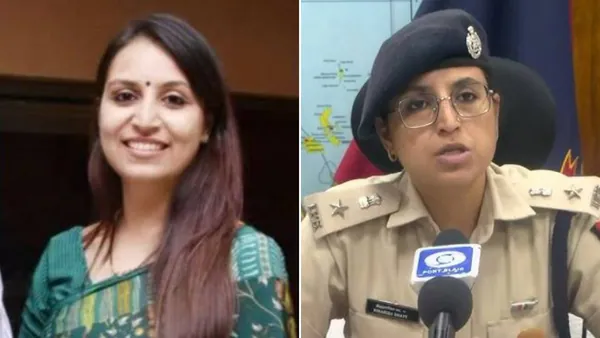
She Quit Her US Job To Become An IPS Officer: How Niharika Bhatt Cracked UPSC On Her First Attempt


However, she decided to leave her job in America, return to India and prepare for the Union Public Service Commission (UPSC) examination. She cleared the examination on her first attempt and went on to become an IPS officer.
Also Read | UPSC topper Kanishak Kataria left ₹1 crore job in South Korea: His journeyToday, Bhatt serves as the Deputy Commissioner of Police (DCP) of Delhi's North District. In an interview with NDTV, she spoke about her decision to return to India, her preparation strategy and the lessons she learnt while preparing for one of the country's most competitive examinations.
She also shared advice for UPSC aspirants, particularly those who may not have access to expensive coaching or study facilities.
Why Niharika Bhatt left her job in AmericaBorn in Moradabad, Uttar Pradesh, Bhatt grew up in Lucknow and Aligarh. She completed her engineering education in Lucknow before moving to the United States for higher studies. She earned an MTech degree in Biochemical Engineering from the University of Michigan and later worked as a researcher in Washington DC.
Despite having a stable career and international work experience, Bhatt felt she wanted to contribute to India. She believed that the civil services would give her an opportunity to work directly with people and help solve problems affecting society.
She eventually decided to leave her job in the US and return to India to prepare for the UPSC examination. She cleared it on her first attempt without taking formal coaching.
Her advice for UPSC aspirants: Focus on one bookOne of Bhatt's biggest suggestions for students preparing for the UPSC examination is to avoid collecting too many books and study materials.
She believes that reading one good book multiple times is more useful than studying several books without developing a proper understanding of the subjects.
According to her, repeated reading helps students understand concepts better and improves their ability to write answers. She also stressed the importance of reading newspapers, following current affairs and building a strong understanding of basic subjects.
Also Read | UPSC CSE Mains Result 2026 out at gov: When will marksheets be availableBhatt's preparation did not involve formal coaching. Her experience highlights how aspirants can build a study routine around reliable books, newspapers and consistent revision.
Her subject of choice – SociologyBhatt also spoke about the challenges she faced while preparing for the examination. Although she had studied engineering, she chose Sociology as her optional subject for the UPSC examination.
She said that understanding humanities subjects initially took some time because of her science background. She also had to learn how to present her knowledge in a way that suited the examination.
Bhatt pointed out that knowing a subject and writing a good answer about it are two different skills. She advised students, particularly those from science backgrounds, to understand the answer-writing style required for humanities subjects and seek guidance from people who have a strong understanding of them.
What she wants women aspirants to knowBhatt also spoke about the opportunities available to students from smaller towns and villages. She believes that access to the internet has made UPSC preparation easier than it was earlier.
Students who cannot afford or access classroom coaching can now use online learning platforms and other digital resources to prepare for the examination. According to her, coming from a village or a small town should not stop anyone from aiming for a career in the civil services.
She also spoke about her experience as a woman in the police force. Recalling her training, Bhatt said she was taught to see herself first as an IPS officer rather than define her professional identity through gender. She said she followed the same approach while working with her team.
Also Read | The Great Indian Kapil Show: Pankaj Tripathi and Vikas Divyakirti share laughs From Rishikesh to becoming DCP in DelhiAfter completing her IPS training in Dehradun, Bhatt was posted as the Station House Officer (SHO) of Rishikesh Kotwali for three months during her probation. This gave her direct experience of handling public complaints, crime investigations and law-and-order responsibilities.
She later served as Additional Deputy Commissioner of Police in Dwarka and Additional DCP-1 in Delhi's North District before taking charge as DCP North.
Speaking about the responsibilities of a DCP, Bhatt said the job involves much more than preventing crime and maintaining law and order. Listening to citizens, understanding their complaints and making efforts to resolve their problems are also important parts of policing.
She added that police officers must remain calm during difficult situations, make clear decisions and lead their teams by example.
For UPSC aspirants, her central message remains simple: consistency, repeated revision and a clear understanding of subjects matter more than collecting study material or relying entirely on coaching.

Legal Disclaimer:
MENAFN provides the
information “as is” without warranty of any kind. We do not accept any
responsibility or liability for the accuracy, content, images, videos,
licenses, completeness, legality, or reliability of the information
contained in this article. If you have any complaints or copyright issues
related to this article, kindly contact the provider above.


Comments
No comment