


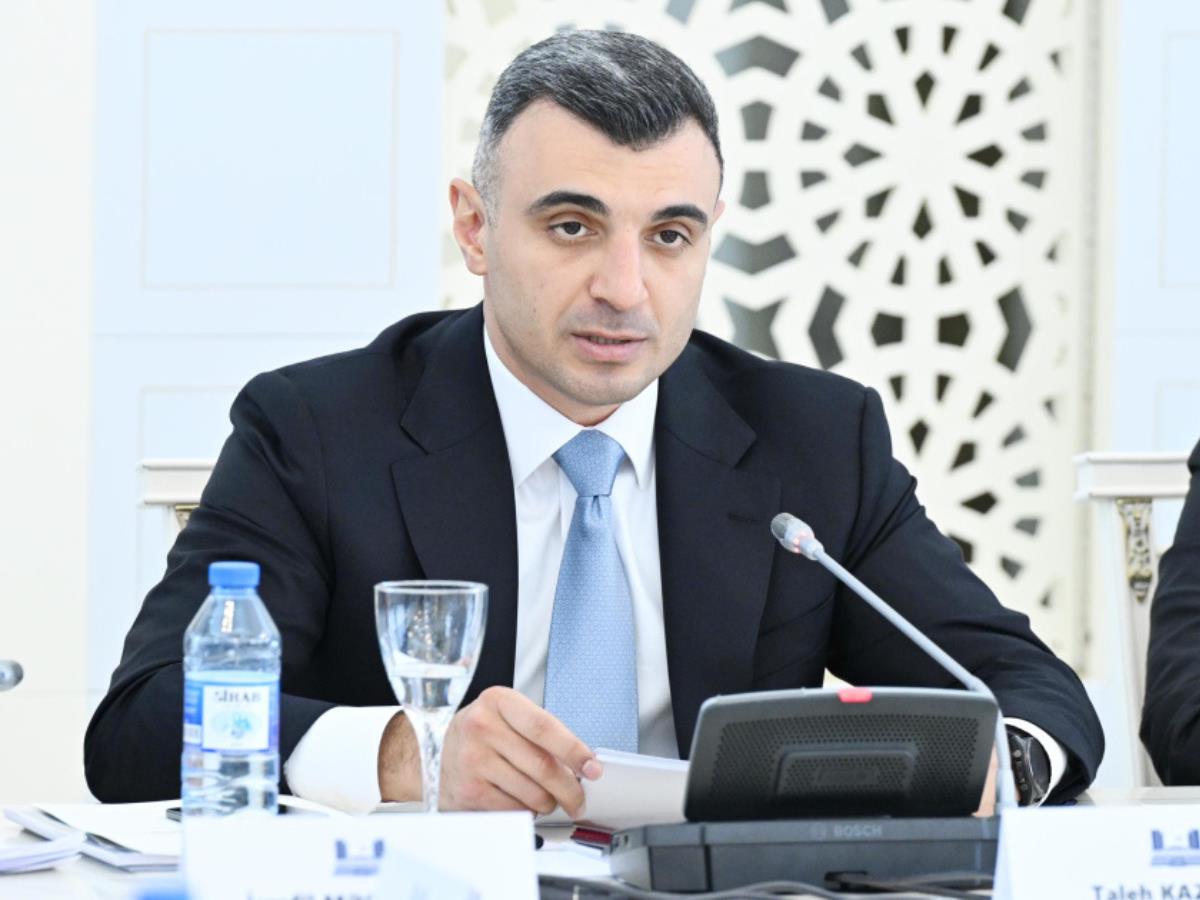
Azerbaijan's Dollarization Rate Falls To Historic Low Of 25.2%, Governor Says


Confidence in Azerbaijan's national currency and banking sector continues to strengthen, with the country's dollarization rate declining by 3.3 percentage points year-on-year to 25.2%, marking a historic low.
Central Bank of Azerbaijan (CBA) Chairman Taleh Kazimov made the remarks during today's plenary session of the Milli Majlis (Parliament), where lawmakers discussed the draft law on the 2027 state budget in its first reading.
He said that despite global uncertainties and geopolitical challenges, Azerbaijan's economy continued to expand in 2026, social welfare improved, and macroeconomic stability was maintained.
According to Kazimov, annual inflation stood at 5.2% as of the end of October 2026, remaining within the Central Bank's target range. Based on the CBA's October forecasts, average annual inflation is expected to reach 5.3% in 2027–2028.
The Central Bank chairman noted that Azerbaijan's economy grew by 1.7% in January–October 2026, while the non-oil and gas sector expanded by 2.9%.
The CBA forecasts that overall GDP growth will reach 2.3% by the end of 2027, while non-oil and gas GDP is projected to increase by 4.3%.
Addressing the country's external sector, Kazimov said Azerbaijan recorded a foreign trade surplus of $10.5 billion in the first nine months of 2026. Meanwhile, the current account balance posted a surplus of $4.7 billion in the first half of the year, equivalent to 12.4% of GDP.
He added that the current account surplus is projected to reach $8.5 billion for the full year 2026 and approximately $5.5 billion by the end of 2027.
Kazimov also highlighted the growth of Azerbaijan's strategic foreign exchange reserves, describing it as an important indicator of the country's financial resilience against external shocks.
According to him, the country's strategic foreign exchange reserves increased by 4.1% in the first 10 months of 2026, reaching $88.6 billion.
These reserves are sufficient to cover 40 months of imports of goods and services, amount to 3.3 times the broad money supply in manat, and exceed direct external public debt by 20 times, he said.
The CBA chairman also emphasized that foreign currency supply significantly exceeds demand in both the cash and non-cash segments of the domestic foreign exchange market.
"Public confidence in the manat, as well as in the banking sector, continues to grow," Kazimov said.
He reiterated that the dollarization rate had declined by 3.3 percentage points year-on-year to 25.2%, its lowest level on record. Compared with the end of 2021, the rate has fallen by 15.4 percentage points, he added.
Kazimov further reported that the Central Bank's own foreign exchange reserves increased by 34%, or $3.9 billion, during the first 10 months of 2026, reaching $15.4 billion.
This represents the highest level in the institution's history, he said.

Legal Disclaimer:
MENAFN provides the
information “as is” without warranty of any kind. We do not accept any
responsibility or liability for the accuracy, content, images, videos,
licenses, completeness, legality, or reliability of the information
contained in this article. If you have any complaints or copyright issues
related to this article, kindly contact the provider above.


Comments
No comment