


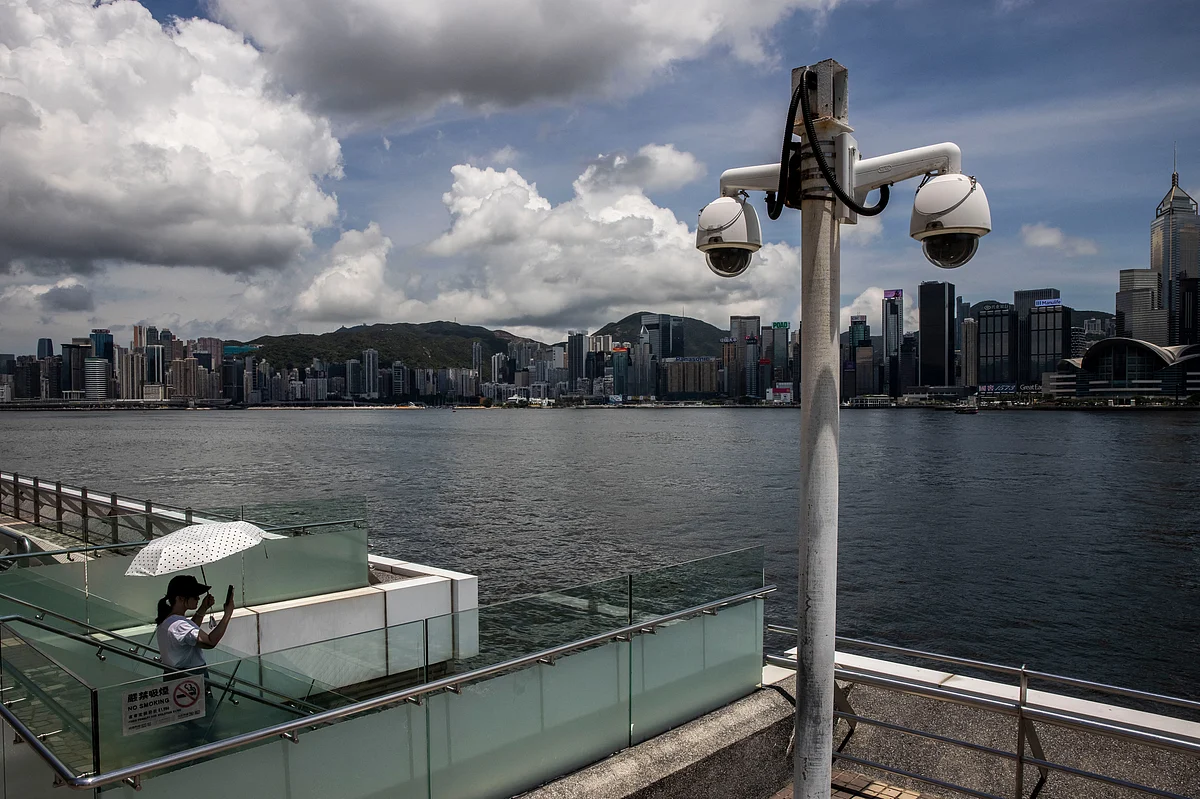
Hong Kong Rolls Out AI Facial Recognition Across CCTV Network


China has tightened control over Hong Kong since huge pro-democracy protests swept the city in 2019, imposing a national security law on the finance hub that critics say has quelled dissent.
Recommended For You UAE National Day: 3-day Eid Al Etihad break announced for public sectorThe new artificial intelligence tools, part of a police operation dubbed SmartView, will be a "safeguard for law-abiding citizens" and boost the capabilities of existing surveillance systems, police commissioner Joe Chow said over the weekend, announcing the Monday rollout.
Stay up to date with the latest news. Follow KT on WhatsApp Channels.
Security chief Chris Tang told lawmakers last year that the AI functions will be used to monitor crowds and read licence plates and "will naturally be applied to people, such as tracking a criminal suspect".
Police have already installed roughly 5,000 closed-circuit television (CCTV) cameras across Hong Kong since SmartView launched in 2024, crediting their use in solving nearly 2,200 cases and more than 2,800 arrests.
Authorities plan to increase the number of cameras to 60,000 by 2028, according to documents submitted to the legislature.
Li, a Hong Kong finance worker in his 40s who declined to give his full name due to safety concerns, told AFP he was worried about the potential misuse of AI-powered surveillance.
"There are no secrets left anywhere; (many tools) have already collected your data and facial images," he said.
Another resident named Saturday Zhou was less concerned, telling AFP that "there are already plenty of these (AI-powered CCTVs) in mainland cities and people have got used to them".
Officials "must be open" about their use of the relevant data in order to maintain transparency, he added.
Commissioner Chow told local media on Sunday that "we understand that many people may be concerned about this" but the new system "won't be abused".
Mainland China already uses AI in its surveillance systems on a massive scale, drawing concern from international rights groups and NGOs.
A report released last year by the Australian Strategic Policy Institute warned the Chinese government's use of AI tools enabled it to "automate censorship, enhance surveillance and pre‐emptively suppress dissent".
Similar technology has also been adopted elsewhere, including in Britain. Critics argue that it grants the government unchecked power to invade privacy.
Concerns have also been raised over false matches leading to wrongful arrests and transparency surrounding the cameras.
In 2024, the European Union banned "the use of 'real-time' remote biometric identification systems in publicly accessible spaces for the purposes of law enforcement", with some exceptions.
ALSO READ- Trump, Xi to discuss AI safety as rogue bots and Nvidia scandal loom over US-China talks US bans use of China's DeepSeek by government agencies

Legal Disclaimer:
MENAFN provides the
information “as is” without warranty of any kind. We do not accept any
responsibility or liability for the accuracy, content, images, videos,
licenses, completeness, legality, or reliability of the information
contained in this article. If you have any complaints or copyright issues
related to this article, kindly contact the provider above.


Comments
No comment