


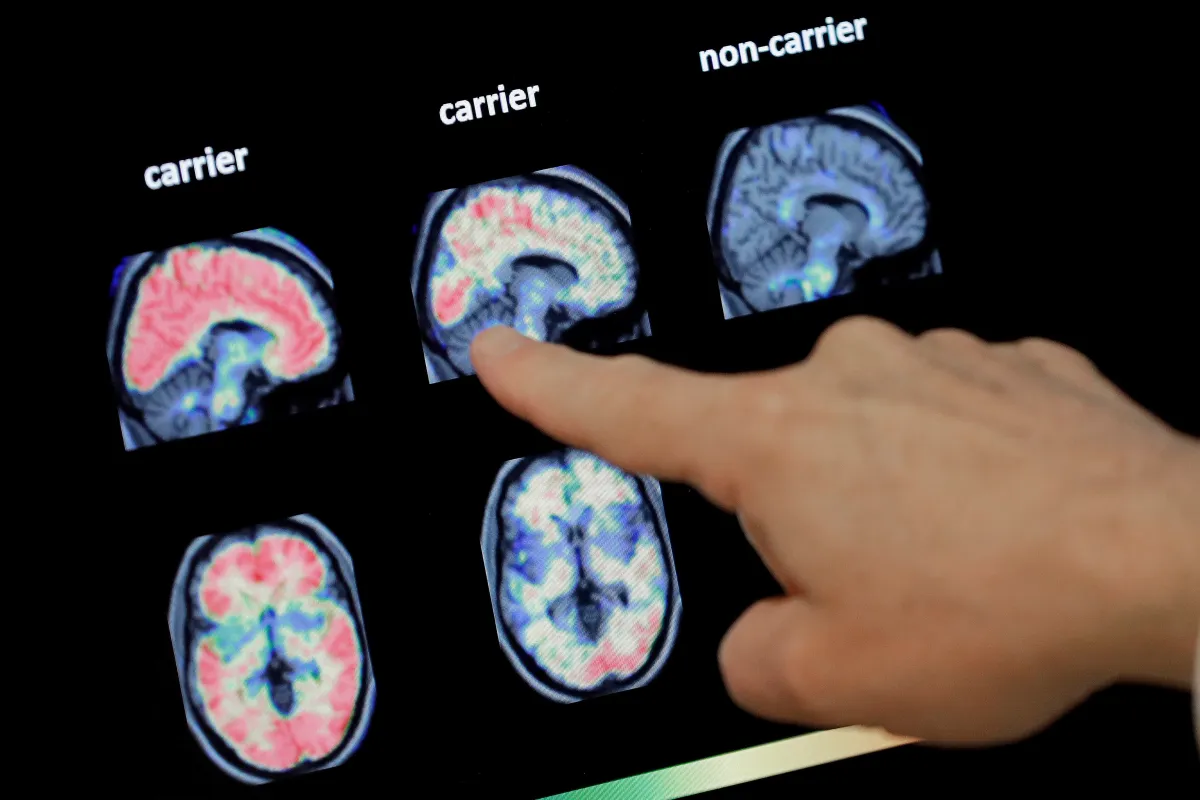
Big Pharma's Race To Stop Alzheimer's Before It Starts


Carole Greig was working as a companion to women living with dementia when she began to experience problems with her own short-term memory.
The 71-year-old former bank employee was herself diagnosed with Alzheimer's disease in 2023: a terrible shock to which she mounted a determined response.
This year she enrolled in a major trial by Swiss drugmaker Roche looking at whether a new treatment can halt the progression of Alzheimer's, the most common form of dementia, which affects tens of millions of people globally and has no known cure.
“It's one of the best decisions I've ever made,” Greig said.“Confusion, anxiety and organisational skills, it's those problems I'm experiencing... Not only does [the trial] keep me abreast of what's happening, I know that I'm being fully monitored and that really reassures me.”
External ContentDespite decades of investigation, Alzheimer's remains one of medicine's great unsolved problems. New drugs have modestly slowed the progression of the condition but proved unable to halt or reverse it.
Now Roche has joined companies including Eli Lilly pushing into a new frontier of research – testing whether treatments can not only stave off cognitive decline but prevent symptoms from ever emerging in the first place.
Shuttle into the brainGreig is one of more than 1,000 patients taking part in a late-stage trial for trontinemab – a treatment designed to clear the amyloid plaques that accumulate in the brains of people with Alzheimer's and trigger processes fatal to nerve cells.
The trial – due to report its first results in 2028 – is aiming to overcome a fundamental issue with the existing generation of amyloid-targeting drugs: getting enough of the molecule into the brain.
Roche's new drug is engineered to more effectively cross a protective layer of cells in the brain called the blood-brain barrier, which prevents harmful substances from entering the central nervous system. Its so-called Brainshuttle technology enables its anti-amyloid antibody to hitch a ride through the barrier by binding it to receptors that transport iron into the brain.
More More New treatments Switzerland's bitter-sweet news for Alzheimer's patientsThis content was published on Feb 27, 2026 Swissmedic was expected to approve two drugs for Alzheimer's disease. But it only approved one. What happened?
Read more: Switzerland's bitter-sweet news for Alzheimer's pat
Legal Disclaimer:
MENAFN provides the
information “as is” without warranty of any kind. We do not accept any
responsibility or liability for the accuracy, content, images, videos,
licenses, completeness, legality, or reliability of the information
contained in this article. If you have any complaints or copyright issues
related to this article, kindly contact the provider above.


Comments
No comment