


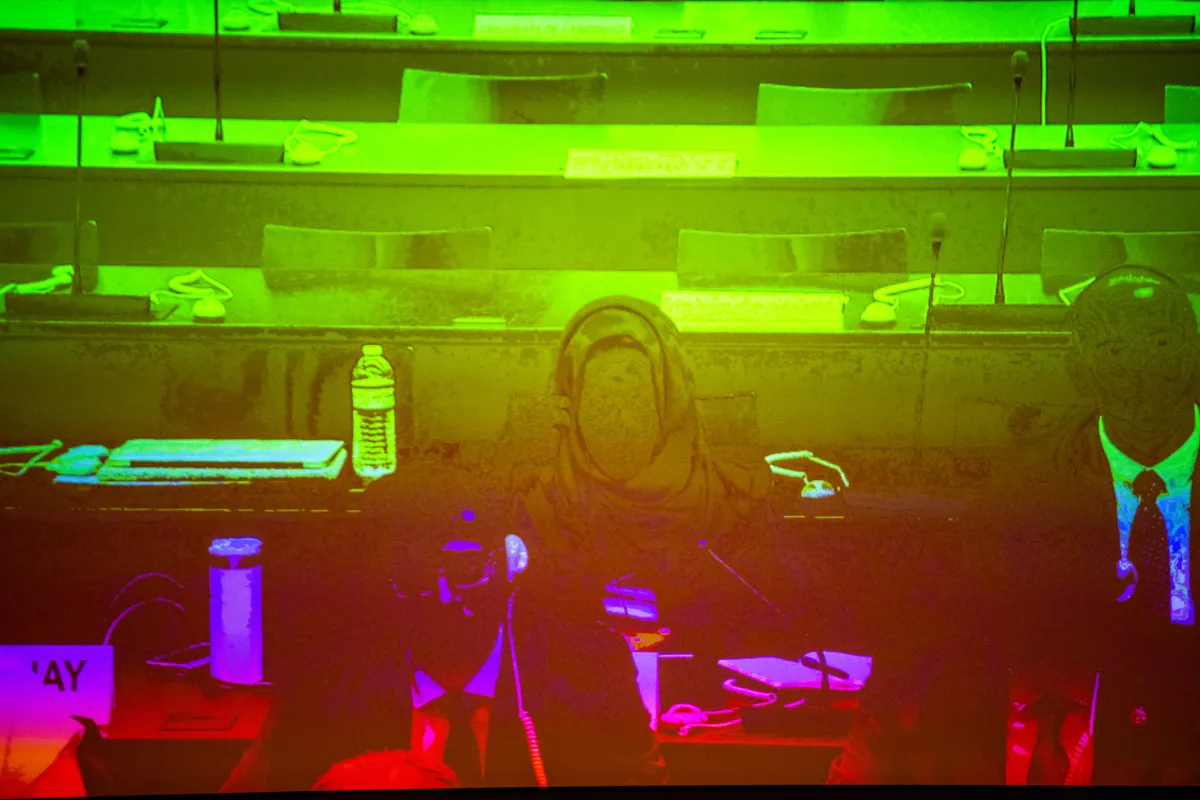
Autonomous Weapons In Modern Conflicts And Warfare


Annegret Mathari has been reporting on International Geneva for more than two decades. For swissinfo she covers the UN and other Geneva-based international organisations. She writes on international diplomatic negotiations, human rights issues, humanitarian aid, armed conflicts, health and the environment.
-
More from this aut
-
Deutsch
de
Der Ruf nach Regulierung autonomer Waffen wird lauter – doch ein Konsens wird schwierig
Read more: Der Ruf nach Regulierung autonomer Waffen wird lauter – doch ein Konsens wird schw
Français
fr
La pression s'accentue pour encadrer l'utilisation des armes autonomes
Read more: La pression s'accentue pour encadrer l'utilisation des armes auto
Italiano
it
Cresce la pressione sugli Stati perché regolamentino le armi autonome
Read more: Cresce la pressione sugli Stati perché regolamentino le armi aut
Español
es
Aumenta la presión sobre los Estados para que regulen las armas autónomas
Read more: Aumenta la presión sobre los Estados para que regulen las armas autó
Português
pt
Armas autônomas pressionam países a negociar regras globais
Read more: Armas autônomas pressionam países a negociar regras gl
日本語
ja
特定通常兵器条約の運用検討会議、「殺人ロボット」めぐる交渉開始が焦点に
Read more: 特定通常兵器条約の運用検討会議、「殺人ロボット」めぐる交渉開始
العربية
ar
”الروبوتات القاتلة“: ضغوط دولية متصاعدة من أجل ضبط استخدامها
Read more:”الروبوتات القاتلة“: ضغوط دولية متصاعدة من أجل ضبط استخ
Русский
ru
Автономное оружие: какие решения должны оставаться за человеком?
Read more: Автономное оружие: какие решения должны оставаться за челов
The use of a Russian autonomous drone controlled entirely by artificial intelligence (AI) that killed civilians was first documented on July 6. The drone accidently killed three people in the Ukrainian city of Zaporizhzhia, prompting immediate condemnation by the UN High Commissioner for Human Rights Volker Türk.
Addressing the UN Human Rights Council in Geneva on September 7, Türk also noted that Ukraine had tested fully autonomous drones.“I join calls for the urgent prohibition of weapons that can kill without human intervention,” Türk said.
Autonomous weapon systems targeting military objectives are not new. They have existed on warships to defend themselves against incoming missiles for decades.
However, rapid advances in sensors, algorithms and AI are dramatically expanding their capabilities, fuelling a global race among governments and companies to develop and deploy ever more sophisticated weapons.
This new generation of autonomous weapons, often called“killer robots”, can now identify and engage targets without human involvement. Such AI-powered weapons with increasing levels of autonomy have already been used not only in Ukraine but also in conflicts in Gaza, southern Lebanon and Sudan.
Yet no international regulations currently govern such weapons, making accountability difficult in case of a breach of international law.
According to experts, however, there have so far been no confirmed cases of fully autonomous weapons deliberately targeting civilians. The Russian drone on July 6 was most probably targeting a gas station, according to interviews of experts conducted by the The New York Times. Once it got close to its original target it chose to veer off course on its own and crashed into a wall.
Calls for regulationThe UN, the International Committee of the Red Cross (ICRC) and NGOs have been calling for years for regulation of autonomous weapons. Their concern is that such systems may not be capable of distinguishing in real time between combatants and people protected under international humanitarian law, such as civilians or wounded soldiers.
“It is difficult to imagine how autonomous weapons could be used against people in real combat situations without creating significant risks of violating international humanitarian law,” Heidi Kandiel, a legal adviser on emerging military technologies at the ICRC, told Swissinfo.
International humanitarian law prohibits attacks on civilian targets as well as indiscriminate and disproportionate attacks. Warring parties in a conflict must minimise civilian casualties wherever possible.
A moral red lineIn a joint statement at the end of August, UN Secretary-General António Guterres and ICRC President Mirjana Spoljaric warned that the rapid development of autonomous weapons could soon cross“a moral red line” by allowing machines to decide whether humans live or die.
Military technology is advancing at record speed, they warned, adding:“Negotiations must begin now to urgently adopt a legally binding instrument regulating autonomous weapon systems, including clear prohibitions and restrictions.”
More More International Geneva Control-All-DeleteThis content was published on Nov 16, 2026 Geneva-based photographer Mark Henley spent two weeks documenting UN talks on autonomous weapons, known as“killer robots”.
Read more: Control-All-D
Legal Disclaimer:
MENAFN provides the
information “as is” without warranty of any kind. We do not accept any
responsibility or liability for the accuracy, content, images, videos,
licenses, completeness, legality, or reliability of the information
contained in this article. If you have any complaints or copyright issues
related to this article, kindly contact the provider above.


Comments
No comment