


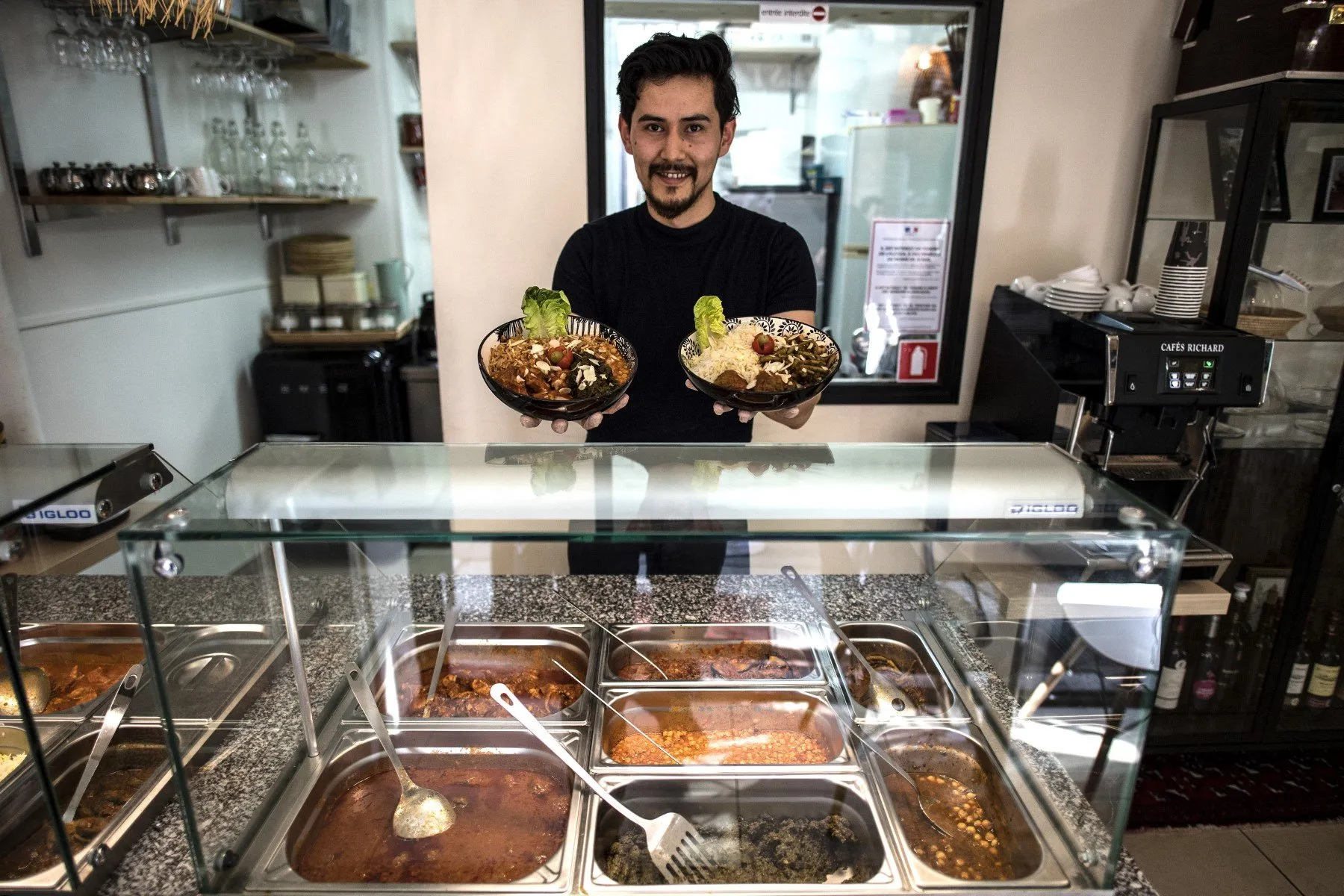
Afghan Cuisine Missing From World's Top 100 Restaurants


No restaurant based in Afghanistan appears in The 50 Best Restaurants 2026, the global ranking announced in Lima, Peru, on November 4. None appears in the top 50 or in the extended 51–100 list released in October.
Afghan restaurateurs abroad who answered questions from Khaama Press say this reflects limited exposure more than the quality of the food. Two sent written responses. One is Shamim Popal, the Afghan-born executive chef and co-owner of Lapis, a Michelin-recognized Afghan restaurant in Washington, D.C. The other is the team behind Afghan Kitchen and Zarak in British Columbia, Canada.
“I think Afghan cuisine is beginning to receive more attention internationally, but there is still so much more of our food and culinary heritage for the world to discover,” Popal said.
The 2026 list was formerly known as The World's 50 Best Restaurants. This year it named Asador Etxebarri, in Atxondo in Spain's Basque Country, as the world's best restaurant. Gaggan in Bangkok placed second and Alchemist in Copenhagen third.
Masque in Mumbai at No. 26, Trèsind Studio in Dubai at No. 28 and Naar in Kasauli, India, at No. 49 were the only top-50 entries from South Asia and the Gulf. No restaurant from Afghanistan, Pakistan, Iran or the Central Asian republics appears in either the top 50 or the 51–100 list.
“Not the quality of the food”Popal and her family fled Afghanistan in the 1980s, after the Soviet invasion, according to a Michelin Guide profile. She had no formal culinary training when the family opened Lapis in Washington's Adams Morgan neighborhood in 2015.
“One of the biggest challenges is visibility and awareness. Afghan cuisine is still relatively unfamiliar to many people internationally compared with other established cuisines,” Popal told Khaama Press.
“Sometimes, the challenge is not the quality of the food but simply that people haven't had the opportunity to experience it.”
Lapis holds a Bib Gourmand in the Michelin Guide. Michelin gives this distinction for good cooking at moderate prices. It is separate from Michelin's stars and from The 50's rankings.
“That recognition means a great deal to us, not just as a restaurant, but as an opportunity to introduce Afghan cuisine to a broader audience,” she said.“Our cuisine is much more than kebabs and rice,” she added in another response.
Recognition in CanadaAfghan Kitchen opened in South Surrey, British Columbia, in 2017. Its sister restaurant, Zarak, followed on Vancouver's Main Street in late 2021. This year, Zarak tied for gold in the Best Middle Eastern category of the 2026 Vancouver Magazine Restaurant Awards. The judges credited it for leading diners into more experimental territory.
“In our opinion, Afghan cuisine is still very underrated internationally,” the team wrote in its response to Khaama Press.“Decades of conflict and instability in Afghanistan have played a major role in limiting its exposure to the rest of the world.”
They linked part of the problem to tourism.“Countries with strong tourism industries naturally attract more food critics, journalists, and attention from organizations such as Michelin and The World's 50 Best Restaurants,” they said.
The team also pointed to dining style. In their view, many Afghan restaurants have focused on“authentic food, generous portions, and family-style hospitality rather than the style of fine dining often associated with international awards.” Such awards, they said, often come with expectations around presentation, service, tasting menus and beverage pairings. Those expectations“don't necessarily define the quality or cultural value of the food itself.”
These are the team's observations about the industry, not formal criteria. The 50 says it uses no fixed checklist for judging restaurants.
The team suggested that Afghan chefs seeking an international audience pay more attention to the whole dining experience. That could mean more refined plating, tasting menus, and drink pairings that need not involve alcohol.“Zero-proof wines, mocktails, traditional teas, and yogurt-based drinks can all complement Afghan food beautifully,” they said.
“We believe the absence of Afghan restaurants from these rankings has more to do with limited exposure, opportunities, and industry connections than the quality of Afghan cuisine,” the team said.
Of the recognition their own restaurants have received, they said:“These achievements mean a great deal to us, especially because they help bring attention to Afghan cuisine.” They added that their views reflect their own experience and not necessarily those of the wider Afghan culinary community.
How the list is decidedRestaurants cannot apply or nominate themselves. According to The 50's voting rules, the list comes from the votes of more than 1,100 chefs, restaurateurs, food writers and well-travelled diners in 28 regions. Each voter must have eaten at the restaurants they choose within the previous 18 months, and Deloitte independently adjudicates the vote.
The published list does not show whether any Afghan restaurant received votes. Khaama Press asked The 50 three questions: whether restaurants in Afghanistan received votes in 2026, whether Afghan restaurants abroad did, and which Academy region covers Afghanistan. No response had been received by the publication deadline.
Khaama Press also contacted five other Afghan restaurants abroad for this story, including The Helmand in Baltimore, Parwana Afghan Kitchen in Adelaide and Ariana II in London. They had not responded by deadline.
A family name on a different listThe Popal family does appear in The 50's rankings, though not for Afghan food. Pascual is a Mexican restaurant on Washington's Capitol Hill. The Afghan-American family's Popal Group opened it in February 2024 in partnership with chefs Isabel Coss and Matt Conroy. In May, Pascual entered North America's 50 Best Restaurants 2026 at No. 42.
That ranking recognizes Pascual's Mexican cooking, not Afghan cuisine.
Popal said rankings have their uses, but also limits.
“I think rankings like The World's 50 Best Restaurants are valuable because they bring attention to restaurants and introduce people to different culinary experiences,” she said.“However, I don't believe any single ranking can measure the success or importance of an entire cuisine.”
She said she hopes Afghan cuisine will one day be celebrated on the same international stage as other great culinary traditions.“We have so much to offer, and I believe our time is coming.”
Shamim Popal's written responses were provided to Khaama Press through Lapis's public relations representative, Georgia Williams of Eleven Eleven PR, who confirmed the attribution. The Afghan Kitchen and Zarak team sent written responses directly to Khaama Press's questions.

Legal Disclaimer:
MENAFN provides the
information “as is” without warranty of any kind. We do not accept any
responsibility or liability for the accuracy, content, images, videos,
licenses, completeness, legality, or reliability of the information
contained in this article. If you have any complaints or copyright issues
related to this article, kindly contact the provider above.


Comments
No comment