


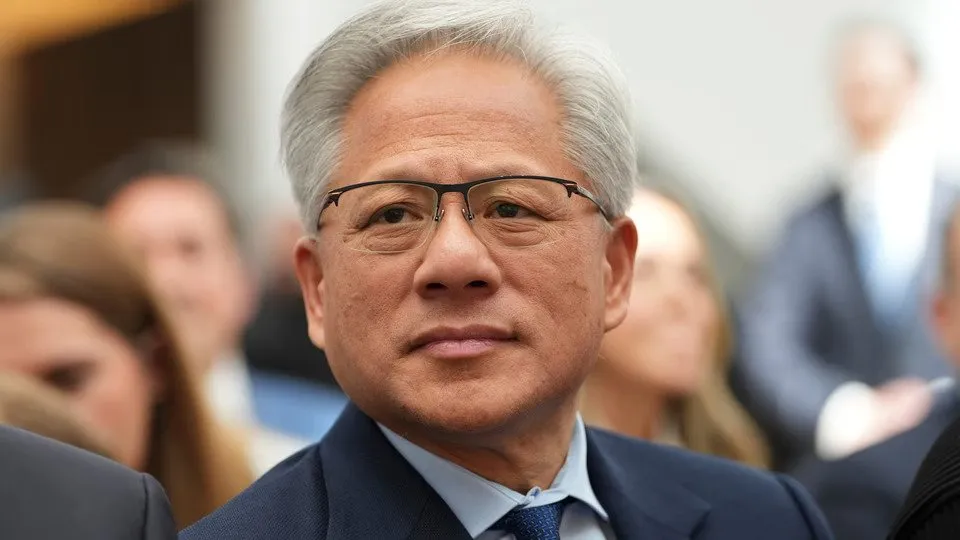
Nvidia Faces US-China Scrutiny As Jensen Huang Scandal .


According to Reuters on November 12, Chinese artificial intelligence companies are seeking to secure Nvidia-powered computing capacity at overseas data centres amid fears that the controversy could prompt Washington to tighten restrictions on remote access to advanced processors. The developments have added urgency to concerns over gaps in US export controls and China's ability to obtain restricted technology.
The controversy centres on reports that Huang was targeted by a suspected Chinese intelligence operation involving Alice Huang, a Chinese businesswoman with links to Singapore-based technology company Megaspeed. Nvidia's board announced an independent investigation on November 8 to examine the allegations.
The company has said it has no reason to believe that national security or its confidential information was compromised. Huang has acknowledged infidelity in a message to employees and apologised to his family and colleagues, but has not been accused of criminal wrongdoing. The intelligence allegations have not been independently established, and China has denied them.
China chip shipments draw fresh scrutiny
The allegations have also raised questions about Nvidia's business relationships and the enforcement of US restrictions on advanced semiconductor exports to China.
On November 10, Reuters reported on allegations published by The Information that Huang's relationship with Alice Huang helped facilitate at least $7.5 billion in Nvidia chip shipments to Chinese companies. The report said a network of businesses linked to her acquired approximately 240,000 Nvidia processors, including H100, H200 and A100 models.
The issue has attracted attention from US lawmakers. On November 11, Democratic Senators Elizabeth Warren and Chris Coons urged the Trump administration to preserve records concerning Nvidia's advanced chip exports to China and the reported intelligence operation.
They also requested a congressional briefing on potential national security risks and questioned whether US authorities had adequately enforced export restrictions and responded to intelligence warnings.
US export controls face a new test
The controversy comes as Washington seeks to maintain its advantage over China in advanced artificial intelligence, with Nvidia's graphics processing units (GPUs) playing a central role in training and operating sophisticated AI models.
US export restrictions are designed to prevent China from obtaining the most powerful processors for commercial and potential military applications. However, Chinese companies can still access some restricted computing technology by renting capacity at overseas data centres.
Reuters reported on November 12 that Chinese technology companies are increasingly exploring these arrangements, while traders and intermediaries in China are stockpiling restricted Nvidia processors amid fears of tougher enforcement.
The report also highlighted concerns about enforcement gaps after procurement records showed that a Chinese university with links to the People's Liberation Army had purchased Nvidia H200 chips despite being on a US export blacklist. US prosecutors have separately charged three people over an alleged scheme to divert Nvidia-powered servers to China. The defendants have not been convicted.
Huang's leadership adds another layer of uncertainty
Beyond export controls, the controversy has renewed questions about Nvidia's corporate governance and dependence on Huang, who has led the company for more than three decades.
Huang has become central to Nvidia's business strategy, government relations and global influence as demand for AI infrastructure has surged. Any prolonged leadership crisis could raise concerns among investors and technology companies that depend on its processors.
Technology industry experts have also warned that Nvidia's reliance on Huang makes succession planning particularly important. However, the company has not announced any leadership change, and its board has expressed confidence in the chief executive.
The investigation's findings could have implications extending beyond Nvidia, particularly as Washington and Beijing compete for control of critical technologies and the infrastructure underpinning the global AI industry.
For now, the controversy has placed Nvidia's China business, US export controls and the security of advanced AI technology under renewed scrutiny, at a time when both countries are seeking to strengthen their positions in the global artificial intelligence race.

Legal Disclaimer:
MENAFN provides the
information “as is” without warranty of any kind. We do not accept any
responsibility or liability for the accuracy, content, images, videos,
licenses, completeness, legality, or reliability of the information
contained in this article. If you have any complaints or copyright issues
related to this article, kindly contact the provider above.


Comments
No comment