


IAF Chief: True Self Reliance Is Crucial For Future War Preparedness


IAF Chief: True Self Reliance is Crucial for Future War Preparedness
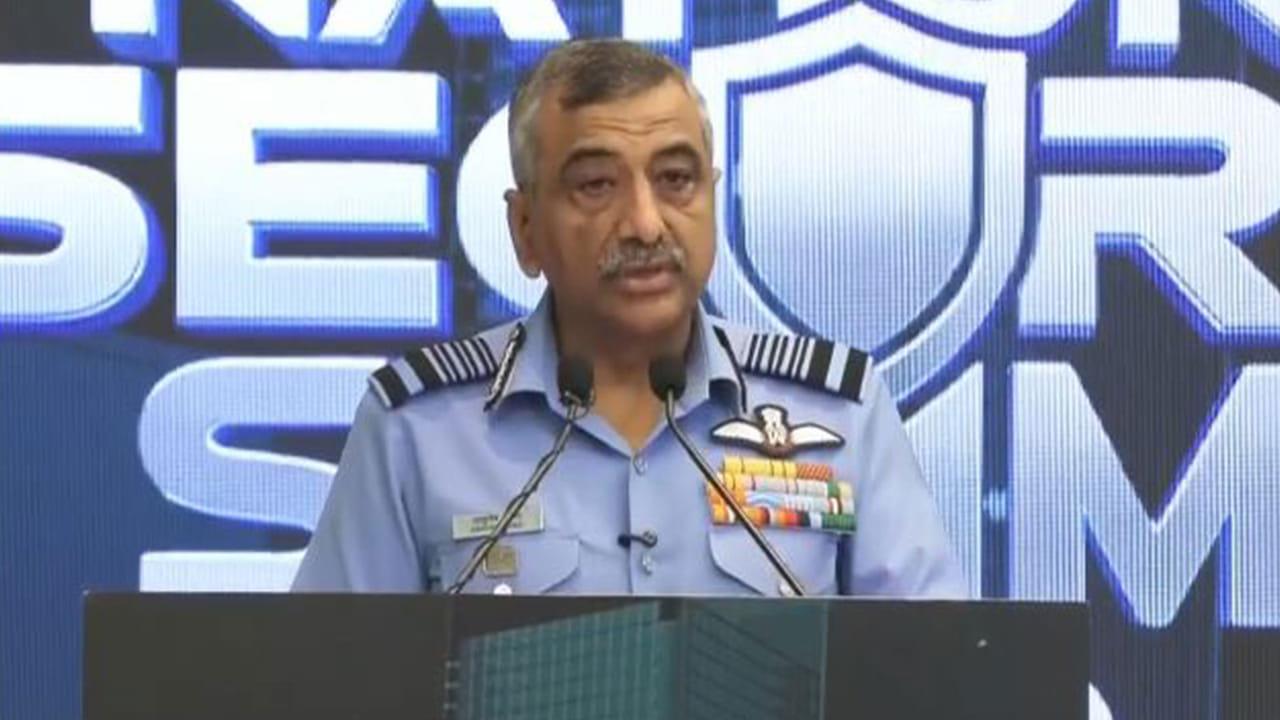
New Delhi [India], November 16 (ANI): Asserting that true self-reliance (Aatmanirbharta) is directly tied to combat readiness rather than mere industrial output, Chief of the Air Staff, Air Chief Marshal Ashutosh Dixit, on Monday declared that India cannot afford to depend on foreign powers for source code, spares, munitions, or engines in a future conflict.
Addressing the ANI National Security Summit 3.0 in New Delhi on the theme "Aatmanirbharta and its place in India's preparedness for future wars", the Air Chief outlined the Indian Air Force's (IAF) strategic doctrine-captured under the VAYU framework for future warfare-and warned that combat readiness will be judged on three critical counts: the ability to sustain operations, surge production for a long war, and rapidly adapt on the battlefield.
"For the Indian Air Force, which relies on network-centric warfare, is the first responder and creates strategic effects through air power, Aatmanirbharta is not just an industrial goal; it is an operational requirement," Air Chief Marshal Dixit said. "In any future conflict, our access to spares, software, munitions and data links cannot depend on decisions taken by others."
Framing Aatmanirbharta as the bedrock of operational combat readiness under the IAF's VAYU vision for future wars, Air Chief Marshal Ashutosh Dixit said that the Indian Air Force's (IAF) guiding mantra for future warfare is Aatmanirbharta and pointed to Operation Sindoor as proof of what seamless tri-service integration and indigenous weapons can achieve.
Highlighting how integrated warfare and homegrown weapon systems translate directly into battlefield dominance, Air Chief Marshal Dixit cited Operation Sindoor as a milestone in joint operations. "Operation Sindoor offered a glimpse of what integrated operations can achieve," he said. "Our IACCS (Integrated Air Command and Control System) and the Army's Akashteer worked together to build one air picture. Indian systems such as Akash and BrahMos performed very nicely... None of this can rest on borrowed capability."
"Aatmanirbharta and its place in India's preparedness for future wars", the Air Chief laid out the exact three-point benchmark by which India's military readiness will be judged-control, sustenance, and speed of adaptation-while urging domestic industry to transition from mere vendors to co-developers. "In the end, preparedness for future wars and Aatmanirbharta are the same pursuit," Air Chief Marshal Dixit said. "Our combat readiness will be judged on three counts: whether we control our systems, whether we can sustain and whether we adapt faster than our adversaries. Aatmanirbharta is central to all three. For us, it is not a slogan; it is the foundation of combat readiness."
Issuing a direct call to India's manufacturing and tech ecosystem, the IAF Chief urged domestic firms to co-create next-generation capabilities: "I urge our industry to build with us, not merely for us, and the innovators to bring us their best ideas. I assure my fellow citizens that the Indian Air Force remains vigilant, ready and resolute."
Earlier in his address, he underscored that for a first-responder force reliant on network-centric warfare, access to spares, software, munitions, and data links cannot depend on foreign decisions during a crisis. Air Chief Marshal Dixit drew stark lessons from ongoing conflicts in West Asia and Ukraine to illustrate how modern warfare tests a military's industrial backbone across three decisive fronts.
On how to prepare for future war, ACM Dixit said, "Now how do we prepare for future war? Future wars are unlikely to begin with a formal declaration. They may open in cyberspace, in the electromagnetic spectrum or in space. The advantage will lie with the side that sees first, decides fastest and acts before the adversary can."
"To remain ever vigilant, the Indian Air Force is preparing along four lines. First is readiness. Every squadron, every radar, every air defence unit must respond at short notice," he said. "Second is production. Long-range precision weapons and mass drones will target our air bases and vital installations. We are building layered air and counter-drone defence and contributing to mission Sudarshan Chakra, the national strategy planned by 2035," he added. "Third is decision superiority. We are moving towards networked, AI-enabled command and control and towards space and near space as operational domains. Our air warriors are trained to fight when communications are degraded and satellite navigation is denied. Fourthly, jointness," he said.
Modern wars consume munitions at rates peacetime planning rarely anticipates. Citing independent estimates by the Centre for Strategic and International Studies (CSIS) on this year's conflicts in West Asia, the Air Chief noted that the United States expended roughly two-thirds of its Patriot air-defence interceptors-taking delivery of only about 172 new missiles in the fiscal year against more than a thousand fired, leaving even the world's largest defence industry facing until the end of 2030 to rebuild stocks.
On the second test, sustain, ACM Dixit said, "Modern wars consume munitions at a rate that peacetime planning rarely imagines. Look at this year's conflicts in West Asia. Independent estimates by CSIS (Centre for Strategic and International Studies) suggest that the US has used roughly two-thirds of its Patriot interceptors. Against more than a thousand fires fired, it took delivery of only about 172 new ones in this fiscal year. So rebuilding this stock would take until the end of 2030, and that is the world's largest defence industry."
Pointing to the Russia–Ukraine war, he highlighted that Russia launched over 700 drones in a single night in July 2025, while Ukraine built at least 4 million drones last year and plans 7 million this year. Because foreign suppliers will prioritise their own crises, ACM Dixit stressed that India's preparedness must rest on domestic production lines that can surge, supply chains running deep into MSME bases, multiple sources for every critical item, and stockpiles sized for a long war rather than a short skirmish.
Calling "Adapt" the third crucial test, he noted that when radio-controlled drones were jammed in Ukraine, both sides pivoted to unjammable fibre-optic cable-guided FPV drones, which now comprise a third to half of drones in some Russian units. "Ukrainian and NATO experts estimate that drone technology there must be upgraded roughly every eight weeks," he said. "You cannot adapt at that speed if your source code sits in another country, and you cannot do it with procurement cycles measured in years."
Recalling the aftermath of the May 1998 Pokhran-II nuclear tests, the Air Chief cited the Tejas Light Combat Aircraft's fly-by-wire Flight Control System as proof of what indigenous resolve can achieve when foreign support is abruptly cut off by sanctions. "Tejas is designed to be unstable. Without its fly-by-wire system, it simply cannot fly," he said, noting that scientists at the Aeronautical Development Agency (ADA), Aeronautical Development Establishment (ADE), and National Aerospace Laboratories (NAL) defied predictions of a two-to-three-year delay by completing India's own control laws in time for the aircraft's maiden flight in January 2001. "The lesson is clear: a capability that someone else can switch off in a crisis is not a capability we truly own. Aatmanirbharta does not stop at manufacturing in India. It means control over the architecture, source code, algorithms, and the data," he said.
Candidly acknowledging that critical bottlenecks remain, Air Chief Marshal Dixit pointed out that both the Tejas Mark 1A and the HTT-40 basic trainer have faced delays waiting on imported engines-declaring that "the engine, the seeker, the radar, and the chip are now the real frontier of our self-reliance."
Highlighting the scale of India's defence manufacturing surge during the 2025–26 financial year, the Air Chief detailed landmark production figures and ongoing fleet inductions. India's defence story in FY 2025-26 has been one of scale, self-reliance and speed. For the first time, defence production crossed ₹1.78 lakh crore - up 15.5% over last year and more than double what it was five years ago. And it's not just for home use. Exports touched an all-time high of ₹38,424 crore, with Indian systems now flying, sailing and serving in over 80 countries. Behind that surge is industry. The private sector's share in standalone defence production hit a historic high of ∼24%, showing how Make-in-India has moved from slogan to shopfloor.
The skies are changing too. The fleet is getting its biggest boost yet with the largest-ever order for 180 Tejas fighters, while 12 additional Su-30MKIs are being built at Nashik. Adding teeth to it, the indigenous Astra missile has completed firing trials on Tejas Mark 1A. For the next generation of flyers, September saw the delivery of the indigenous HTT-40 basic trainers, named 'Ankur', and in June, the first private-sector Made-in-India C-295, built by TASL, took its maiden flight. Closer to the ground, rotary power is being renewed. 66 Light Combat Helicopters (LCH) have been contracted for high-altitude, high-duty operations, while new indigenous light helicopters and variants are lined up to replace the ageing Chetak and Cheetah fleets. (ANI)

Legal Disclaimer:
MENAFN provides the
information “as is” without warranty of any kind. We do not accept any
responsibility or liability for the accuracy, content, images, videos,
licenses, completeness, legality, or reliability of the information
contained in this article. If you have any complaints or copyright issues
related to this article, kindly contact the provider above.


Comments
No comment