


Eurovision Asia: A Diverse And Spectacular Showcase Of Asian Pop


Eleven countries competed – from Bangladesh and Bhutan to Vietnam and host country Thailand. Notably absent this first year were most of the continent's most populous nations: China, India, Japan, Pakistan and Indonesia.
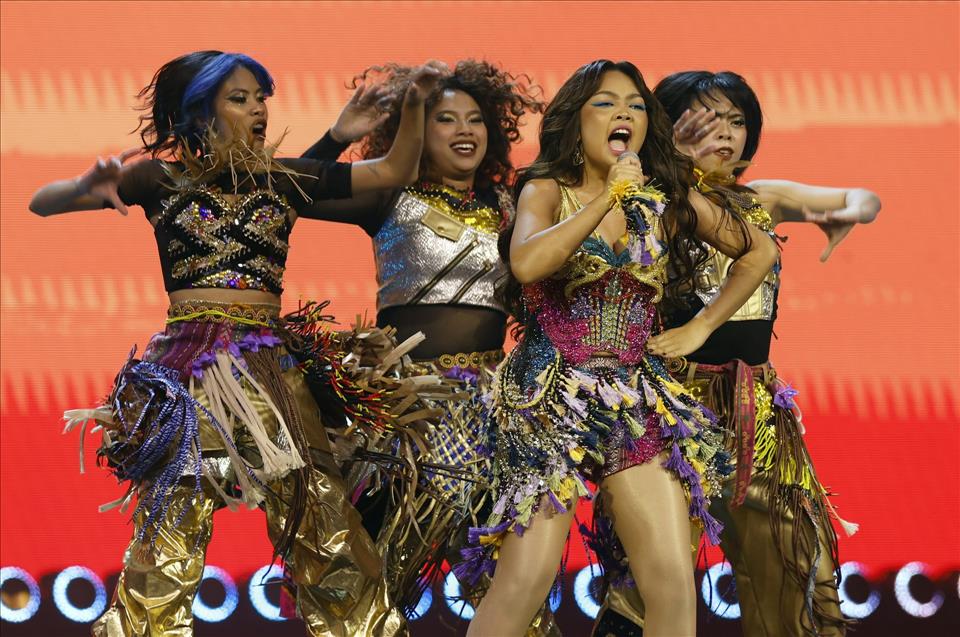
The format was familiar: three-minute songs performed with no more than six people permitted on stage. But there was a distinct regional inflection in the staging, costuming and language choices.
Regional flavourMany of the artists wove in elements of traditional sound and traditional dress, and artists expressed gratitude to the audience with the traditional Thai gesture wai (hands together).
While the original Eurovision is hosted in a combination of English and French, Eurovision Asia was delivered in English only. But most artists performed either in their own language (36%) or a combination of that language with English (54%). Only South Korea's song was performed entirely in English.
By comparison, Eurovision 2026 featured 43% of songs entirely in English, 38% in languages other than English, and 19% multilingual.
Musically, it was a diverse offering. The delicate lotus leaves of Vietnam's Tóc Tiên and her back-up dancers broke into a high-energy opening number, Em Tiên. Malaysia's Aina Abdul finished the show with a pitch-perfect power ballad, Bluest Sky.
In between, audiences were treated to Cambodian and Bhutanese ballads, Bengali a capella, South Korean K-pop and, perhaps most surprisingly, Nepali rock.
Girls to the frontBut it was the Philippines' Carmelle – the youngest contestant, at 19 – who won the night with Sobra-Sobra. The focus of the empowering pop song in English and Tagalog was about Filipino women's right to be who they want to be.
“It's about how unapologetic, independent and strong Filipinas are. It describes me – not just me, but of course all the Filipinas,” Carmelle told The Guardian.
Carmelle received 211 points, winning both the jury and the public vote, encompassing viewers from 183 countries and territories.
With her victory, the Philippines has won the right to host Eurovision Asia in 2027. In the meantime, Carmelle will also perform at the 2027 Eurovision Song Contest in Bulgaria.
Spectacle and snagsEurovision is known for its spectacle, and Eurovision Asia delivered, albeit on a more modest budget. Stage production made the most of stunning visual projections, smoke and flares.
Eurovision is also known for its non-political stance, with political or ideological messages prohibited.
But it has been more forgiving toward humanitarian statements. And at Eurovision Asia, Nepal's Pratik Himal Rai used the end of his set to call for support for his country as it recovers from the August flood disaster.
The show was not without its hitches. Laos' representative, Thinla, couldn't hear her music due to an issue with her earpiece, so footage of her technical rehearsal was shown at the end of the performances to ensure fair judgement of her act.
Thai artists Mang x Daou experienced wardrobe malfunctions during their ballad Aroma, though this didn't affect their chances in the voting – Thailand came in second place, with 169 points.
Why not Asiavision?If Europe has Eurovision, why can't Asia have Asiavision?
For one, the name“Asiavision” is already taken: it's the broadcasting network of the Asia-Pacific Broadcasting Union (ABU), which has its own song contests and festivals.
But mostly, it's about branding. Although the name Eurovision has become synonymous with the song contest, it actually refers to the European Broadcasting Union's (EBU) pan-European telecommunications network.
The Eurovision Song Contest was created in 1956 to promote the network and attract audiences across borders. (No, it was not created to unite a war-torn Europe.)
The purpose of Eurovision Asia is specifically to expand the Eurovision brand and format into the region. This is a project the EBU has been attempting for more than two decades. It plans to continue the expansion of the brand through other continental editions.
The future of Eurovision AsiaStaging the inaugural competition is one thing, but securing the longevity of the franchise in Asia is another matter.
Buy-in from economic powerhouses Japan, China and India may be the key to its success. Negotiations were underway with China and Japan to participate this year, and organisers are optimistic that they and several others will join in 2027.
The broad geographical scope of“Asia” also has the potential to draw in participants from the Middle East.
But broader participation presents its own challenges.
The original Eurovision is heavily associated with LGBTQIA+ acceptance and pride, which may not be well-received by certain broadcasters and their audiences within Asia.
We saw this play out in the inaugural Eurovision Asia contest: Malaysian broadcaster TV3 cut drag performer Vice Ganda, the Phillipines' jury spokesperson, from its broadcast.
There was also speculation about whether Islamophobia played a role in Malaysia's Aina Abdul's results; despite being a favourite to win going into the contest, she finished in fourth place.
Soft power and popLike the OG Eurovision, Eurovision Asia offers great potential for soft power politics.
It also has the potential to be a powerful global platform for Asian pop. The inaugural competition was a diverse showcase for the unique voices and cultures of its participants, beyond the dominant trends of J- and K-pop. Hopefully we will get a chance to see more in Manila next year.


Legal Disclaimer:
MENAFN provides the
information “as is” without warranty of any kind. We do not accept any
responsibility or liability for the accuracy, content, images, videos,
licenses, completeness, legality, or reliability of the information
contained in this article. If you have any complaints or copyright issues
related to this article, kindly contact the provider above.


Comments
No comment