


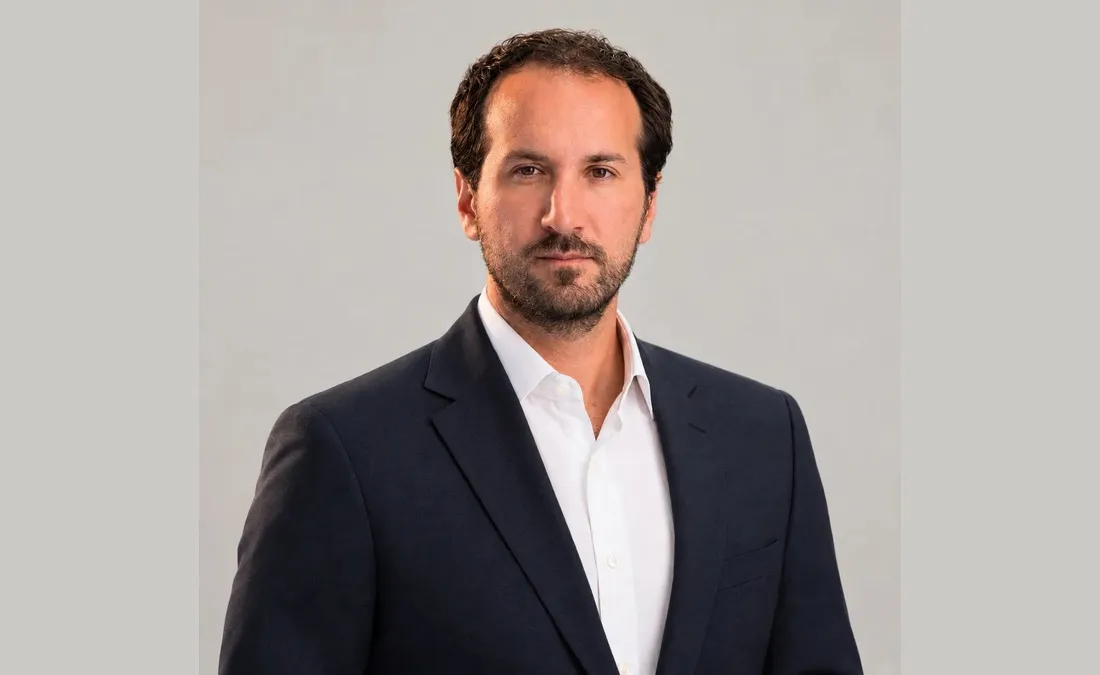
The Future Of Digital Healthcare In MENA: Daleela CEO On AI, Accessibility And Patient-Centred Care


(MENAFN- Mid-East Info) Yousef ElSammaa, Co-Founder and CEO of Daleela, discusses how artificial intelligence, digital transformation and integrated healthcare solutions are reshaping patient experiences across the GCC and wider MENA region.
Borderless Finance. AI-Native.
Your digital companion for smarter everyday choices. Built for how you live, earn, and grow. Move money at your pace with AI-powered finance, all in one tap.
Join the waiting list. Earn As digital transformation continues to reshape the healthcare landscape across the Middle East and North Africa, healthtech companies are exploring new approaches to improving accessibility, affordability and continuity of care. From artificial intelligence and telemedicine to more personalised healthcare services, emerging technologies are creating opportunities to address longstanding challenges in the region. However, while digital healthcare has made medical consultations more convenient, significant gaps remain in ensuring that patients receive coordinated treatment, appropriate follow-up and access to trusted medical professionals. For Yousef ElSammaa, Co-Founder and CEO of Daleela, the future of healthcare lies not simply in providing digital consultations but in creating a more connected, patient-centred experience that addresses individual health concerns over time. Launched in 2024, Daleela is a women's healthcare platform with more than 430,000 registered users. The platform focuses on providing coordinated medical support for concerns including skin, hair, weight, menstrual health and recurring infections, with doctors remaining responsible for medical decisions while AI supports the delivery of care. In this exclusive interview with Mid East Information, ElSammaa discusses the evolution of digital healthcare in MENA, the growing role of AI, the importance of patient trust and collaboration, and the trends expected to shape the industry in 2027 and beyond. Q1. How is digital transformation reshaping healthcare delivery and accessibility across the GCC and wider MENA region? The first wave was mostly about convenience. Booking online, video calls, getting a prescription without leaving home. That helped a lot of people, but it didn't really change how care works. It is still one visit at a time, and the next doctor you see usually knows nothing about the last one. What I find more interesting is what is starting now. Saudi and other countries in the Gulf are investing seriously in digital health, and the question is moving from“can I see a doctor online?” to“does someone actually know my case and follow it?” That second question is the one we care about at Daleela. Q2. What are the most significant barriers preventing patients from accessing timely, affordable, and quality healthcare services in the region? People usually start with cost and distance, and both are real. In Egypt most patients pay for every visit out of their own pocket, and a good specialist is not easy to reach if you live outside the big cities. But the barrier we see most is that people don't know where to start. A woman with irregular periods, weight gain and acne can end up seeing three different doctors. Each one treats a single symptom and nobody puts it together. She pays three times and still has no answer. Then there are the topics many women are not comfortable raising in a clinic at all. So a lot of them just wait, sometimes for years. Q3. How can digital health platforms help bridge gaps between patients, healthcare providers, and essential medical services? I think the main job is to keep everything in one place. Her history, her results, what she was prescribed, what worked and what didn't. Once that exists, the doctor is not starting from zero and she is not repeating her story to someone new every time. On Daleela a woman tells us what she is feeling. One doctor takes responsibility for her case and brings in a gynecologist, a dermatologist or a nutritionist when it's needed. She doesn't have to work out which specialist to see. She can also go back to her doctor with questions during her treatment, which in my experience is where care usually breaks down. Q4. What role can artificial intelligence and emerging technologies play in improving patient experiences and supporting more personalized healthcare services? I believe AI will change how care is delivered, though maybe not the way people imagine. I don't think patients want to be treated by a chatbot, and we don't do that. On Daleela the medical decisions are made by doctors. Where AI helps is in everything around the doctor. It takes the history properly, organizes the case and puts the full picture in front of the doctor before they reply. Since we rebuilt our service this way, one doctor can handle about seven times more cases than before. For the patient, that means a faster answer from someone who has seen her whole story, at a price she can afford. To me that is what personalized care means in practice. Q5. How are changing patient expectations influencing the development and adoption of digital healthcare solutions? People compare healthcare to everything else on their phone. They order food and send money in seconds, so waiting days for an appointment and then sitting in a waiting room feels unreasonable to them. The bigger change, I think, is that patients arrive informed. They have read, searched and asked ChatGPT before they talk to us. They don't want a five minute visit and a prescription. They want someone to explain what is going on and stay with them until it is sorted. One of our subscribers told us recently that she would rather ask a certified doctor than ChatGPT or Google whenever a question comes up, and that she values the privacy and not being judged. I hear some version of that a lot. Q6. What are the biggest challenges healthcare technology startups face when addressing issues such as data privacy, regulatory compliance, and patient trust? Trust is the hardest, and it takes the longest. In women's health people share things they may not have told anyone. We were lucky that Daleela started as a community women already trusted before we offered any medical service, and we work hard not to lose that. The companies we partner with only ever get anonymous insights, never patient data. We are also going through an independent security and privacy assessment at the moment, because as we grow I want that checked by someone other than us. Regulation is the other one. Telemedicine rules are different in every country and in some places they are still taking shape, so going from Egypt to Saudi is much closer to starting again than to copy and paste. That is slow and expensive for a startup. Still, I would take clear rules over no rules. Q7. How important is collaboration between healthtech startups, healthcare providers, and government institutions in improving access to healthcare? Very important, and I have seen it from both sides. Before Daleela I ran Falak Startups, a government-backed accelerator in Egypt, and I saw how much faster things move when government and startups actually talk to each other. In healthcare a startup cannot do it alone. We need providers for lab tests, physical examinations and anything that can't be handled online. We need regulators to set clear rules for telemedicine, and we have been part of that discussion in Egypt. And as we set up in Saudi, we are looking at how to work with existing clinics instead of competing with them. Startups can move quickly and try new things, but the patients are already inside the system, so you have to work with it. Q8. What inspired you to co-found Daleela, and what specific healthcare challenges are you aiming to address through the platform? Daleela started with my co-founder Nour Emam. She was sharing women's health content on social media and it grew to more than three million followers with no paid marketing. What got my attention was the messages. Women would read a post and write back,“this sounds like me, what do I do now?” They had the information but nowhere to go with it. I had spent years working with startups, and that kind of trust before a product even exists is rare. So Nour, our CTO Ahmad Abou Hashem and I built a healthcare service around it. We launched the app in 2024, and today more than 430,000 women are registered. They come to us for skin, hair, weight, menstrual health and recurring infections. These issues are often connected, but they are almost never treated that way, and that is the problem we are trying to solve. Q9. Looking ahead to 2027 and beyond, what emerging digital health trends or technologies do you believe will have the greatest impact on healthcare accessibility and patient care in MENA? AI, mostly working in the background. I don't expect it to replace doctors. I expect it to give every doctor a complete view of the patient and take the admin work off them. That is what makes good care affordable for many more people, and in our region affordability is a big part of the access problem. I also think we will move slowly from paying per visit to care that continues over a period of time, with follow-up and results you can measure. Hormonal and chronic conditions need months, not one appointment. And I hope we see more products built here, in Arabic, around how people in this region actually live and talk about their health, and fewer that are translated from somewhere else. For Daleela, 2027 is about Saudi and the Gulf, where many of our users already are. Q10. What advice would you offer to entrepreneurs seeking to develop technology-driven solutions that address healthcare challenges and create a meaningful impact on patients' lives? Spend time with patients before you build anything. We learned more from reading the messages our community sent us than from any market report. Be patient. Healthcare moves slower than other sectors, for good reasons, and you can't rush trust. You can't grow a health company the way you grow a consumer app. Keep doctors at the center. Technology should make them better and faster. It shouldn't try to remove them. And work on your costs early. When we rebuilt our model around AI, it cut the cost of delivering care by more than half, and that is the only reason we can keep our prices within reach. In this region, if most people can't afford what you built, you haven't solved much.
Legal Disclaimer:
MENAFN provides the
information “as is” without warranty of any kind. We do not accept any
responsibility or liability for the accuracy, content, images, videos,
licenses, completeness, legality, or reliability of the information
contained in this article. If you have any complaints or copyright issues
related to this article, kindly contact the provider above.


Comments
No comment