


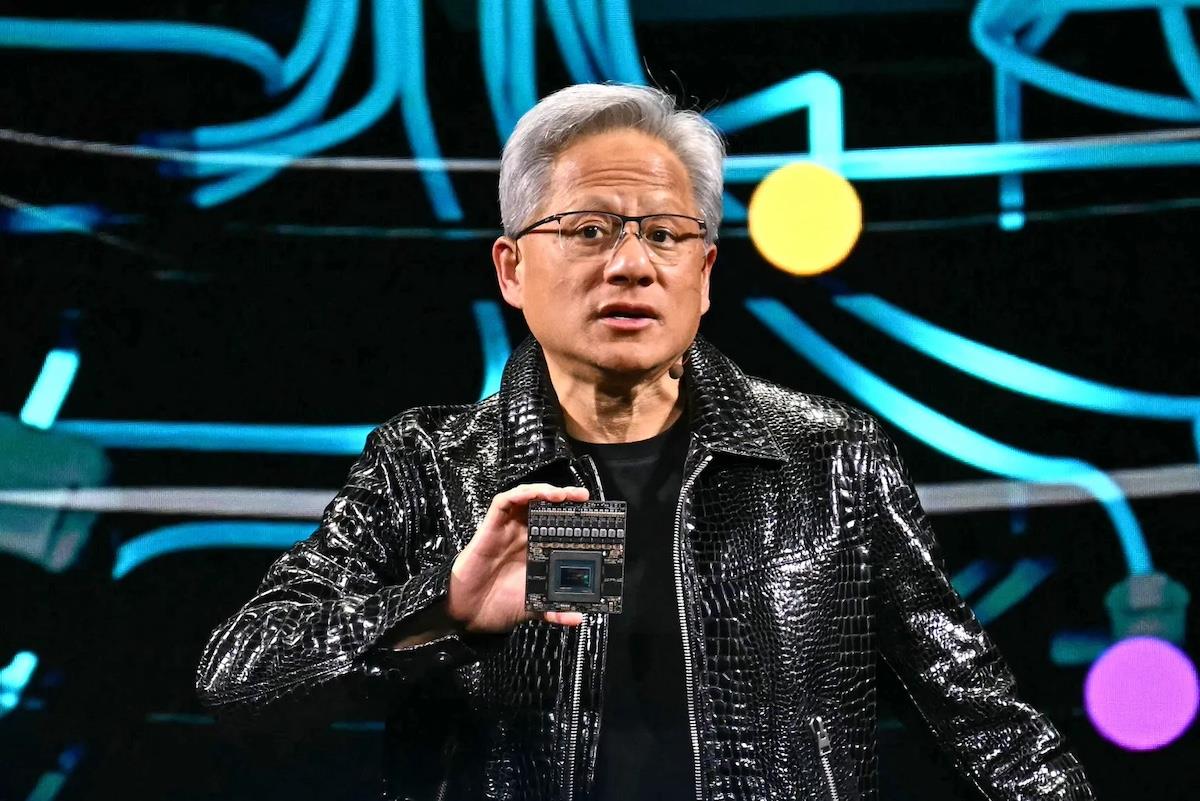
Toward A New Global AI Chip Order


The reason is simple: Nvidia is not an ordinary company. Its graphics processing units and associated networking, software and systems have become the scarce infrastructure of artificial intelligence.
They power the data centers used by technology companies, governments, research institutions and military organizations. A disruption at Nvidia therefore affects not only shareholders and customers, but the distribution of technological power among the United States, China, Europe and East Asia.
Supply chain becomes security systemThe most immediate implication is that advanced-chip trade will be treated less as commerce and more as strategic infrastructure.
The AI supply chain is already extraordinarily concentrated: US firms dominate leading-edge chip design and AI software; Taiwan produces much of the world's most advanced logic; South Korea supplies memory and advanced packaging; Japan provides critical equipment, materials and precision manufacturing; and Singapore serves as a major logistics, financing and data-center hub.
This interdependence has long created efficiency, but it also creates vulnerability. The Huang affair gives governments a reason to ask harder questions about who ultimately receives advanced chips, who finances their purchase, who operates the resulting computing clusters, and who has access to technical and commercial information.
For Taiwan, the episode reinforces its position as both an indispensable manufacturing center and a potential flashpoint. Taipei will face continued pressure to align with US export controls while preserving the commercial relationships that sustain its semiconductor industry.
Latest stories Chinese tip in Aceh meth bust makes a case for three-way policing Vietnam's real trade test lies beyond Trump's tariffs Ethereum's ERC-8415 tests tokenization's ownership gapFor South Korea and Japan, the likely result is closer coordination with Washington on equipment, materials, re-exports and end-user verification. For China, the effect will probably be a further acceleration of efforts to develop domestic alternatives to U.S. AI hardware.
Export controls will tightenThe scandal may strengthen advocates of more expansive export controls in Washington. Existing US rules already restrict China's access to Nvidia's most advanced AI accelerators, but the episode provides a vivid argument for closing perceived gaps involving intermediaries, cloud access, re-exports and complex corporate structures.
Expect tighter end-use and end-user verification, more aggressive enforcement against diversion, and closer scrutiny of buyers in Singapore, Hong Kong, the Middle East and Southeast Asia.
Regulators may focus not only on the chips themselves but on the systems around them: high-bandwidth memory, optical and copper networking, interconnects, servers, cooling infrastructure and access to cloud-based AI capacity.
This does not mean a complete decoupling of the global semiconductor economy. Such an outcome would be economically ruinous and technically difficult.
But it does mean the emergence of a“trusted trade” model: one governed by jurisdiction, identity and perceived strategic risk rather than price alone.
China's dual responseChina will likely respond in two complementary ways.
First, it will reject the espionage allegations and portray US restrictions as evidence of technological containment. Second, it will intensify its drive for self-reliance in AI chips, advanced packaging, memory, semiconductor equipment and industrial software.
China's challenge is that substitution is easier to announce than to achieve. Leading-edge manufacturing, chip-design software, advanced lithography, high-end memory and reliable AI accelerator supply chains remain difficult to replicate at scale.
China may therefore pursue a dual strategy: accelerate domestic alternatives while continuing to seek advanced foreign hardware through lawful channels and, where enforcement permits, less visible intermediaries.
The episode may also encourage Chinese regulators to retaliate selectively. But retaliation carries costs. Restricting Nvidia and other US suppliers would raise the price and delay of AI development inside China, even as it strengthens the political case for indigenous alternatives.
Europe's uncomfortable positionEurope is not the central actor in this affair, but it has substantial exposure.
European companies depend on US AI chips, Asian fabrication and packaging, and global data-center infrastructure. At the same time, Europe wants to preserve access to Chinese markets and avoid becoming wholly dependent on American security decisions.
The likely European response will be a compromise: stronger alignment with US controls on re-exports and diversion, alongside renewed investment in sovereign AI and semiconductor capacity.
Europe may tighten screening of Chinese investment, cloud providers and technology partnerships, particularly where advanced AI capabilities could have military applications.
But it will remain caught between industrial competitiveness, which favors open markets, and security policy, which favors restrictions on sensitive technology.
New era of scrutinyThe deepest consequence of Huang's downfall may be a change in how governments view corporate leadership itself.
Sign up for one of our free newsletters-
The Daily Report
Start your day right with Asia Times' top stories
AT Weekly Report
A weekly roundup of Asia Times' most-read stories
National security is no longer confined to classified laboratories, defense contractors or export licenses. It now extends to executives' personal relationships, foreign business contacts, travel patterns, investment networks and access to commercially sensitive information.
This does not mean that every foreign relationship is suspicious, nor that allegations should be treated as proof. Nvidia's board has explicitly said it has no reason to believe that national security or company secrets were compromised, even as it investigates.
But the episode will make boards, investors and governments more cautious. Companies at the center of AI infrastructure will face pressure to strengthen counterintelligence, personnel security, compliance and due-diligence systems.
Huang has reportedly agreed to appear before Congress, and lawmakers are likely to use the hearings to examine Nvidia's China exposure, compliance controls and relationships with overseas customers. That scrutiny will extend beyond one company.
It will shape expectations for every firm operating at the frontier of AI, semiconductors, cloud computing and advanced manufacturing.
The strategic outcomeHuang's resignation is therefore a catalyst rather than the underlying cause. The underlying cause is the recognition that advanced computing now determines economic competitiveness, military capability and geopolitical influence.
The world's largest technology trade flows will continue, but they will move through a more guarded, fragmented and politically managed system. The AI revolution has made semiconductors the world's most consequential export – and its most contested one.
Sign up here to comment on Asia Times stories OrThank you for registering!
-
Share on X (Opens in new window)
Share on LinkedIn (Opens in new window)
LinkedI
Share on Facebook (Opens in new window)
Faceboo
Share on WhatsApp (Opens in new window)
WhatsAp
Share on Reddit (Opens in new window)
Reddi
Email a link to a friend (Opens in new window)
Emai
Print (Opens in new window)
Prin

Legal Disclaimer:
MENAFN provides the
information “as is” without warranty of any kind. We do not accept any
responsibility or liability for the accuracy, content, images, videos,
licenses, completeness, legality, or reliability of the information
contained in this article. If you have any complaints or copyright issues
related to this article, kindly contact the provider above.


Comments
No comment