


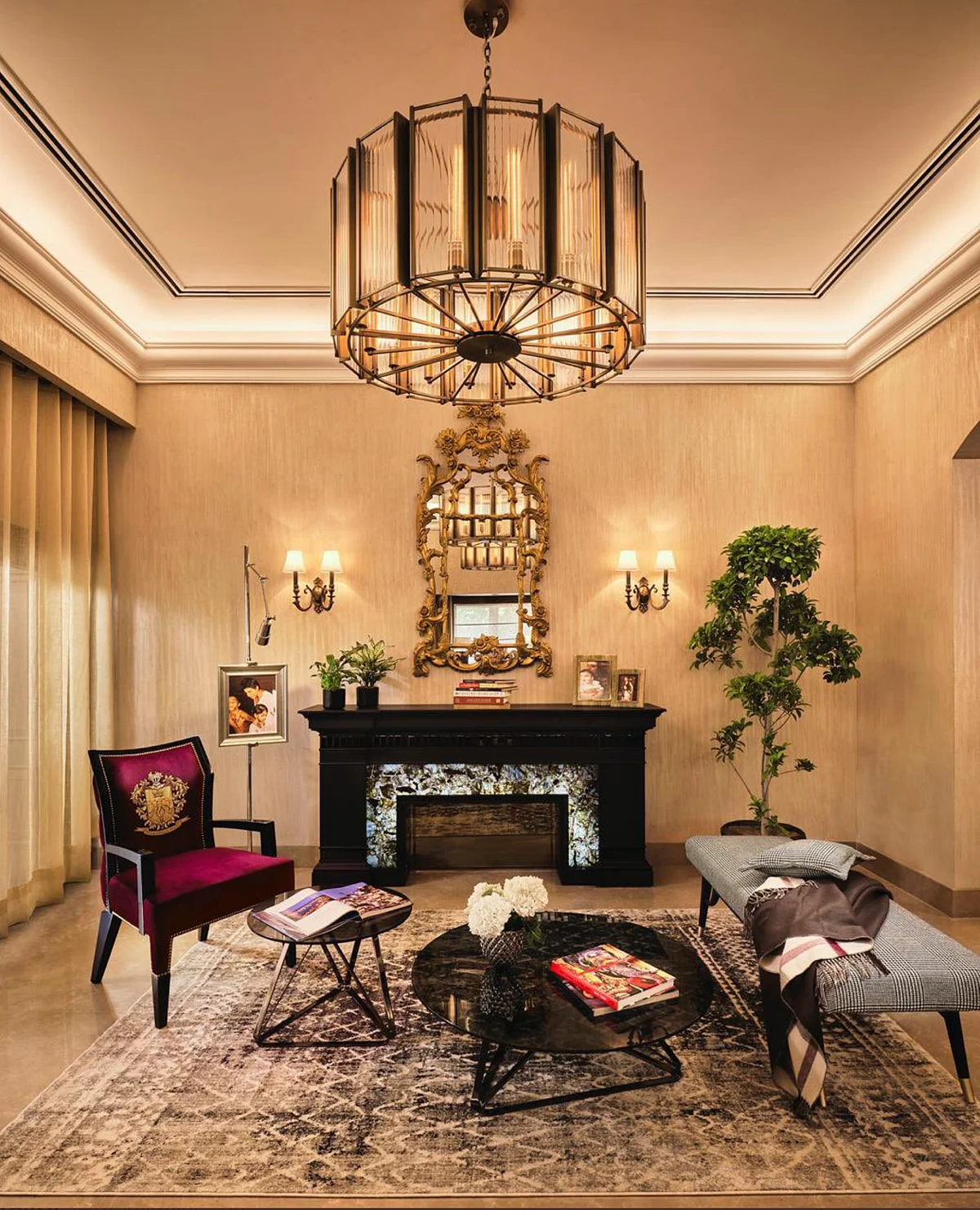
Screenshots, Pinterest Boards And AI: How Social Media Now Drives UAE Home Design


Joe Tabet, founder of architecture firm JT+Partners, said social media's influence on consumer taste is very strong, given the amount of time people spend on these platforms.“That's where the first appetite will start,” he said.
Recommended For You UAE National Day: 3-day Eid Al Etihad break announced for public sector UAE National Day: 3-day Eid Al Etihad break announced for public sectorAzhar Sajan, founder of Casa Milano and director of Danube Hospitality, said Instagram, Pinterest and TikTok have become“digital design discovery platforms”.
Stay up to date with the latest news. Follow KT on WhatsApp Channels.
He added that customers now arrive with curated references, screenshots and videos showing what they have in mind. Some use AI-powered tools to recreate their existing spaces and visualise options before looking for specific materials and finishes.
“Tech and social media have changed the starting point of the showroom conversation,” he said.
Abdallah Massaad, CEO of RAK Ceramics, said tiles and sanitaryware typically account for 5 to 10 per cent of a project's construction cost, depending on what is selected. He said average spending is increasing year on year.
Tabet said the GCC and the UAE have been heavily influenced by design over the past 20 years, with projects launched alongside interior design photography. He said spending on décor and furniture remains high and continues to increase.
The comments were made on the sidelines of Downtown Design 2026 at Dubai Design District, where RAK Ceramics Group's Kludi brand showcased bathroom collections developed with Tabet.
According to Mordor Intelligence, the UAE interior design market was valued at $1.77 billion in 2025 and is estimated to grow from $1.94 billion in 2026 to $3.11 billion by 2031, at a compound annual growth rate (CAGR) of 9.83 per cent. This growth is being driven by robust demand arising from record-setting residential property transactions, liberalised foreign ownership regulations and an extensive hospitality pipeline spanning luxury resorts, branded residences and mixed-use mega-projects.
The report added that Dubai remains the undisputed nucleus of activity, with its elevated average fit-out spending, often exceeding Dh9,000 ($2,451.77) per square metre in premium villas, continuing to attract global design houses and specialist contractors.
The trends buyers are asking forSajan said demand is strong for contemporary minimalism, warm neutral palettes, natural stone-inspired surfaces, larger-format tiles and understated metallic finishes. Larger tiles are popular because they reduce grout lines and give spaces a more seamless look, while brushed metallics, matte surfaces and subtle textures are also gaining ground.
Bathrooms are increasingly seen as lifestyle spaces rather than purely functional ones, he said, describing them as a form of“me time”. Interest is also rising in water-saving sanitaryware, smart toilets, touchless fittings and energy-efficient products.
Sajan said social media has accelerated the visibility of these trends but is not the only influence. The UAE is an internationally exposed market, shaped by global travel, luxury hospitality and architectural developments.
Spending: More selective, and still rising
Sajan said social media is changing the scale and direction of spending, as well as how consumers perceive value. Homeowners are becoming more selective, he said, investing in a distinctive fitting, surface or design feature while making more considered choices elsewhere. Easier product comparisons have also left buyers better informed.
He said social media has democratised design by giving a wider audience access to international ideas and materials. However, he cautioned that online content often shows interiors in their most curated form, with controlled lighting and styling.
An appealing image still has to be translated into a functional space, taking into account dimensions, material suitability, installation and maintenance, he said.“Good design should be aspirational without being disconnected from reality,” he said.
Trend or passing fad?Sajan said the company judges trends by showroom enquiries, repeated product preferences and eventual purchases rather than online engagement alone. Preferences driven mainly by visual novelty tend to have a shorter lifecycle, he said, while those tied to changing lifestyles, comfort and functionality are more likely to last. He cited the shift towards wellness-oriented bathrooms as an example.
Massaad said social media is only part of the picture for manufacturers. Sanitaryware takes eight to 12 months to reach the market, so products must balance fashion with usability. Tabet said design has increasingly taken precedence over functionality in the category over the past decade.
ALSO READ- Beyond sustainability: How regenerative buildings could change the future of UAE real estate Diwali 2026: 5 luxury festive decor trends transforming UAE homes Casa Milano responds to evolving consumer demand with new wellness lounge in Dubai

Legal Disclaimer:
MENAFN provides the
information “as is” without warranty of any kind. We do not accept any
responsibility or liability for the accuracy, content, images, videos,
licenses, completeness, legality, or reliability of the information
contained in this article. If you have any complaints or copyright issues
related to this article, kindly contact the provider above.


Comments
No comment