


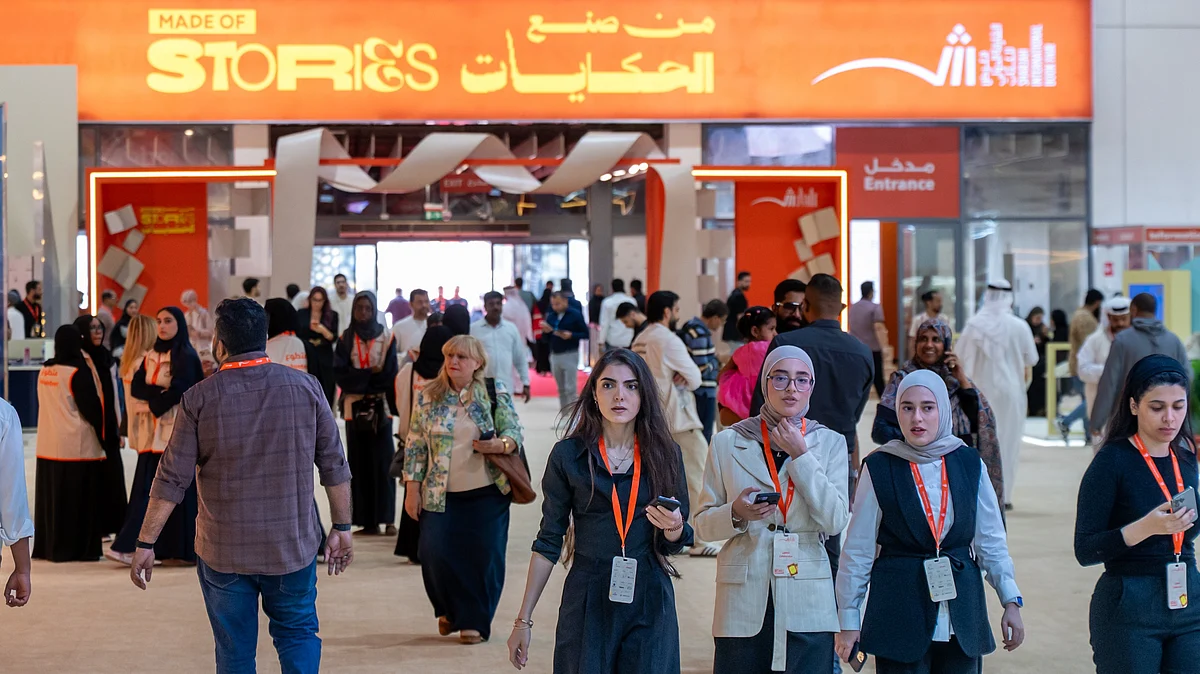
Literature Lets Us See The World Through Others' Eyes: Moroccan Author At Sharjah Book Fair


Speaking to Khaleej Times during the Sharjah International Book Fair 2026, Sebbata said one of literature's greatest strengths is its ability to reshape perspectives, particularly among younger generations.
Recommended For You UAE National Day: 3-day Eid Al Etihad break announced for public sector"The most beautiful aspect of literature is its ability to offer us an opportunity to reshape the way we see the world and, consequently, define our place within it," he said.
Through his novels, Sebbata explores memory, history and truth, encouraging readers to look beyond simple explanations and develop their own understanding of the world.
"My message to younger generations is that the reality we live in can be questioned and challenged," he said, adding imagination allows people to envision different possibilities for life and the youth must see the world as something they must not accept without question.
Stay up to date with the latest news. Follow KT on WhatsApp Channels. Finding hope through stories
At a time when uncertainty can make people feel increasingly divided, Sebbata believes literature can help readers recognise what connects them.
Books allow people to experience the lives of others, even when they are separated by different cultures, countries or historical periods. "When we read about their dreams, fears and disappointments, we discover just how much we have in common with them," he said.
For Sebbata, this ability to cross boundaries is one of literature's most important contributions to society. He also believes stories can help challenge prejudice by introducing readers to characters whose backgrounds and choices may be very different from their own.
Rather than presenting people as simply good or bad, meaningful literature explores their motivations, struggles and contradictions.
"Whenever a powerful literary work helps us understand a character who is different from us, it contributes to expanding our capacity to understand others," he said.
How personal experiences shape his writingSebbata's own journey has played an important role in shaping his work. Growing up in Morocco, later moving to France and working across literature, translation and academia have all influenced the themes he explores.
His novels, including The Zero Hour, File 42 and In the Labyrinths of Professor F.N., examine the relationship between truth and fiction, and how historical events can shape individual lives. The Zero Hour won the 2018 Morocco Book Award, while File 42 was shortlisted for the 2021 International Prize for Arabic Fiction.
His writing also reflects on the relationship between Moroccans and the wider world, exploring how personal memories connect with collective history.
The responsibility of wordsBeyond writing novels, Sebbata's experience as a literary translator has changed the way he approaches language. He explained that even a single word can influence how readers understand or emotionally connect with a sentence.
"When translating a literary work, I realise that the choice of a single word can alter the rhythm of a sentence, its meaning or its emotional impact," he said.
This awareness has made him more careful with language and more conscious of the cultural and historical meanings words can carry.
However, Sebbata does not believe writers should be expected to deliver moral lessons through every story. Instead, he sees artistic honesty and respect for readers as their most important responsibilities.
"A writer's primary responsibility lies in their artistic and intellectual integrity, followed by their respect for the reader's intelligence," he said.
For younger readers, his message is that literature can help them become more open to different perspectives, even when they do not agree with them.
By learning to understand why fictional characters make certain choices, readers can develop the patience to approach real people with greater understanding.
It is this willingness to look beyond first impressions, Sebbata believes, that makes literature especially valuable in an increasingly complex world.
ALSO READ- Sharjah Book Fair 2026: Meet woman who leads 163-year-old family publishing house 'Nobody will read your poetry': How publisher pushed Emirati author into writing novels 'I wasn't trying to be brave': UAE women on loss and healing at Emirates LitFest

Legal Disclaimer:
MENAFN provides the
information “as is” without warranty of any kind. We do not accept any
responsibility or liability for the accuracy, content, images, videos,
licenses, completeness, legality, or reliability of the information
contained in this article. If you have any complaints or copyright issues
related to this article, kindly contact the provider above.


Comments
No comment