


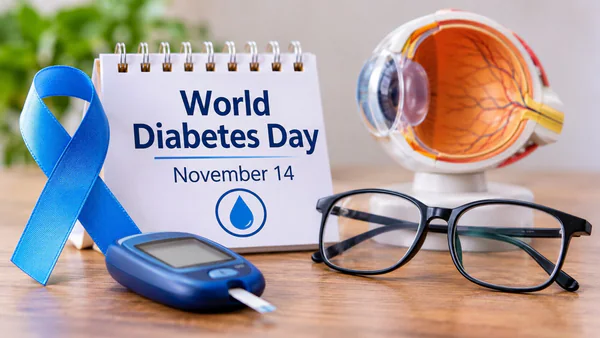
World Diabetes Day 2026: The One Health Check People With Diabetes Should Not Overlook


On World Diabetes Day, observed on 14 November, doctors are highlighting the need for people living with diabetes to undergo regular eye examinations. The concern is that diabetes-related eye problems can develop without causing noticeable changes in vision during their early stages.
This means a person could be seeing clearly, reading normally and carrying on with everyday activities while damage is already developing inside their eyes.
According to the International Diabetes Federation (IDF), more than 101 million adults aged 20 to 79 are living with diabetes in India. The number is expected to increase to 156.7 million by 2050, making early detection and long-term care increasingly important.
Also Read | How diabetes quietly impacts women's mental health, doctors explainOne of the major eye-related complications associated with diabetes is diabetic retinopathy. It develops when consistently high blood sugar levels damage the small blood vessels that supply the retina, the light-sensitive layer at the back of the eye.
Over time, these blood vessels can become weak and start leaking blood or fluid. As the condition progresses, abnormal blood vessels may also grow inside the retina. This can lead to bleeding, scar tissue formation and, in severe cases, retinal detachment.
If the condition is not detected and treated in time, it can cause permanent vision loss.
Another complication is diabetic macular oedema. It occurs when fluid builds up in the macula, the central part of the retina responsible for sharp and detailed vision. This can make simple activities such as reading, recognising faces and driving difficult.
Diabetes can also increase the risk of developing cataracts at a younger age and certain types of glaucoma.
The biggest concern is that diabetic retinopathy may not affect eyesight immediately. By the time a person notices blurred vision or other changes, the condition may already have progressed.
When should people with diabetes get their eyes checked?Eye examinations should be a regular part of diabetes care, even when there are no problems with eyesight.
Also Read | Noida woman says PVR staff treated her diabetes kit like a 'prohibited item'Indian consensus guidelines developed by the All India Ophthalmological Society (AIOS) and the Vitreo-Retinal Society of India (VRSI) recommend different screening schedules depending on the type of diabetes.
- For Type 1 diabetes: The first comprehensive, dilated eye examination is recommended within five years of diagnosis, followed by regular annual screening.
- For Type 2 diabetes: The first comprehensive eye examination is recommended at the time of diagnosis, followed by annual screening.
People who have already been diagnosed with diabetic retinopathy may need more frequent examinations, depending on how serious the condition is.
During an eye examination, specialists check the retina for signs of damage. They may also recommend retinal photography or an optical coherence tomography (OCT) scan to get a closer look at the affected areas.
The important point is that people should not wait for blurred vision or discomfort before booking an appointment with an eye specialist.
Can diabetic eye damage be prevented?Not every case of diabetic eye disease can be prevented. However, keeping diabetes under control and getting regular eye examinations can reduce the risk of serious complications.
Doctors recommend that people living with diabetes:
- Keep blood sugar levels within the range advised by their doctor.
- Monitor blood pressure and cholesterol.
- Take prescribed medicines regularly.
- Follow a balanced diet and stay physically active.
- Avoid smoking.
- Attend scheduled eye examinations, even when their vision seems normal.
People should also watch out for warning signs such as blurred vision, dark spots, floating shapes, difficulty focusing and distorted images. Sudden flashes of light, a sudden increase in floaters or a dark shadow across the field of vision need urgent medical attention.
What happens if diabetic retinopathy is detected?Treatment depends on how much damage has occurred and how advanced the condition is.
People with early-stage diabetic retinopathy may only need regular monitoring and better control of their blood sugar, blood pressure and cholesterol.
In more advanced cases, doctors may recommend anti-VEGF injections, which are given directly into the eye to control abnormal blood vessel growth and reduce fluid leakage. Laser treatment is another option for certain retinal complications.
In severe cases involving bleeding inside the eye or retinal detachment, surgery called vitrectomy may be required.
Also Read | Diabetes, caregivers and being mindful of food strugglesThe treatment is decided after examining the patient's condition. Early detection gives doctors a better opportunity to manage the disease before serious vision loss occurs.

Legal Disclaimer:
MENAFN provides the
information “as is” without warranty of any kind. We do not accept any
responsibility or liability for the accuracy, content, images, videos,
licenses, completeness, legality, or reliability of the information
contained in this article. If you have any complaints or copyright issues
related to this article, kindly contact the provider above.


Comments
No comment