


Mou Signed Between Arab Book Award And Abdul Hameed Shoman Cultural Forum In Jordan


Amman: The Arab Book Award has signed a Memorandum of Understanding (MoU) with the Abdul Hameed Shoman Cultural Forum in Jordan to strengthen cooperation in scientific, intellectual, and cultural fields, expand the exchange of expertise and publications, and organize specialized events and seminars.
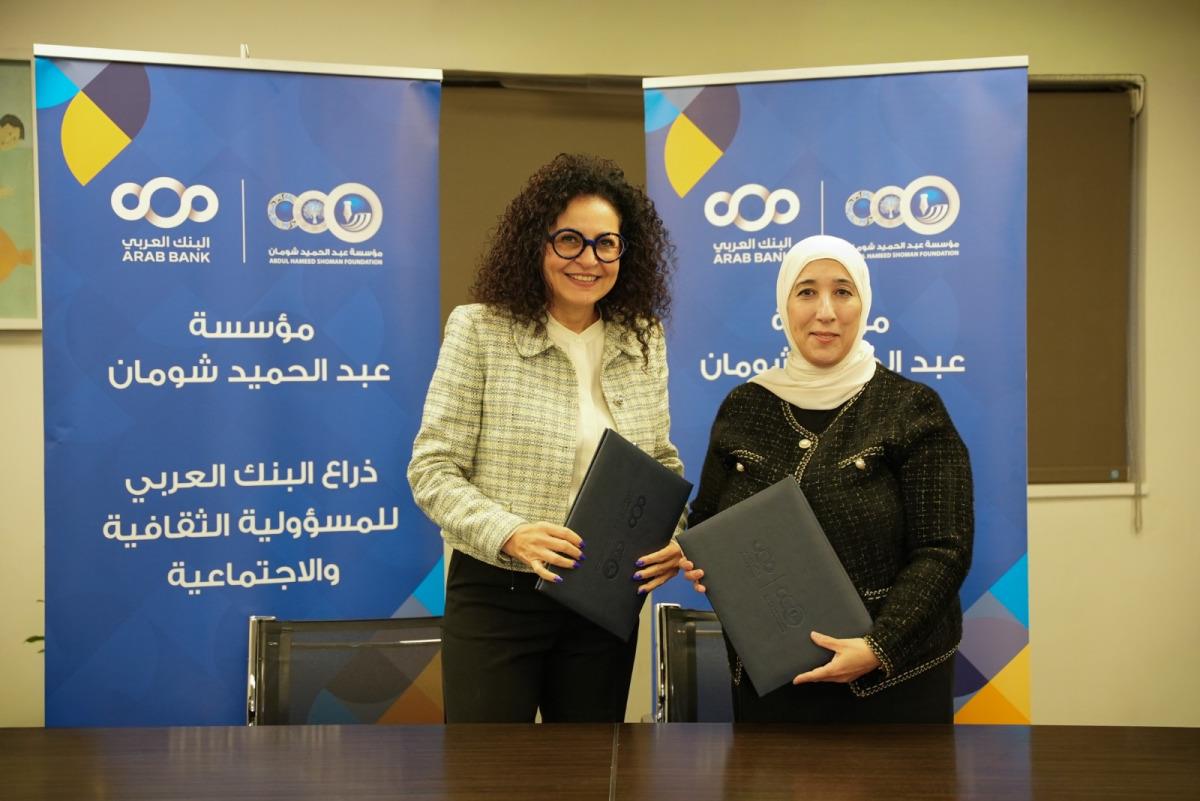
The agreement was signed on behalf of the Award by Dr. Imtinan Al Smadi, Representative of the Award acting on behalf of the Executive Director of the Arab Book Award Dr. Naji Al Sharif, and on behalf of the Abdul Hameed Shoman Cultural Forum by Valentina Qussisiya, Chief Executive Officer of the Forum.
The MoU aims to enhance communication and mutual cultural exchange between the two institutions through joint scientific and cultural events, specialized seminars and academic forums, publication exchanges, and coordination on topics of shared interest-contributing to knowledge production, intellectual output, and the broader presence of the Arabic book.
As part of this collaboration, a panel discussion titled "Honoring Awareness to Advance the Arabic Book" was held, spotlighting the relationship between authors and their societies, as well as the role of literary and intellectual output in shaping public awareness, advancing culture, and strengthening its presence in public life.
Speakers included Dr. Imtinan Al Smadi, faculty member at the University of Jordan and representative of the Arab Book Award; Dr. Ramzi Mounir Baalbaki, Margaret Weyerhaeuser Jewett Chair of Arabic at the American University of Beirut; and Dr. Amer Abu Muharib, Jordanian critic and academic. The session was moderated by Nizar Al Humoud, Director of the Abdul Hameed Shoman Public Library.
Panelists emphasized that authors play a pivotal role in building societal awareness, shaping cultural taste, and expanding horizons of knowledge and critical thinking-noting that writing is not merely a creative act or intellectual output, but an intellectual and moral responsibility tied to humanity, society, and their transformations.
The discussion also explored the experience of award-winning authors and what literary prizes represent in terms of recognizing the intellectual and aesthetic value of creative work, while opening broader channels for engagement with readers and cultural institutions.
Speakers further examined criteria for excellence, the relationship between a creative work's intrinsic value and institutional recognition, and the capacity of awards to uncover distinctive works and amplify voices offering genuine contributions to the cultural landscape.
Dr. Imtinan Al Smadi affirmed that advancing the Arabic book depends on quality authorship, rigorous methodology, linguistic integrity, and a book's ability to reach and resonate with readers. She noted that recognition restores an author's sense of societal appreciation for their efforts and gives their work resonance beyond their personal sphere.
She added that celebrating books creates renewed opportunities to reach readers and opens wider prospects for translation and circulation beyond their initial environment, bolstering interest from publishers, translators, and academic institutions.
For his part, Dr. Ramzi Mounir Baalbaki-a laureate of the Arab Book Award in the Achievement category-underscored the importance of distinguishing between general compilations (mu'allafat) and structured scholarly works (musannafat).
He explained that true scholarly composition rests on awareness, insight, and prior planning, reflected in a book's structure, introduction, and core messages. He expressed regret over the proliferation of works lacking methodology and planning, noting that certain academic promotion requirements have driven higher publishing volumes without always yielding added intellectual value.
Meanwhile, Dr. Amer Abu Muharib-a laureate of the Arab Book Award's fourth edition in the Linguistic and Literary Studies category-reviewed his experience with the award through his book, Treasuries of the Forgotten: Subaltern Literature in Literary Heritage - Genres, Rhetoric, and the Archive (Khaza'in Al Mansiyyin). He affirmed that the award represents an honor for the Arabic book and restores standing to knowledge and scholarly research.
He explained that the book examines narrative and poetic patterns that have received insufficient attention in Arabic literary criticism-including tales of wise fools ('uqala' al-majanin), anecdotes of simpletons, rogues (shuttars), and party-crashers (tufayliyyin), alongside the poetry of slave-girls (jawari), singing-girls (qiyan), and witty Black poets (al-sud al-zurafa')-noting that the study seeks to restore critical recognition to these texts and open new avenues for reading them.
Dr. Abu Muharib added that the work integrates multiple critical methodologies, ranging from archival theory to subaltern studies, grounded in the importance of interdisciplinarity in reading texts and exploring their dimensions. He emphasized that cultural awards go beyond honoring individual authors; they celebrate cognitive, critical, and creative discovery while giving distinguished works a wider platform.

Legal Disclaimer:
MENAFN provides the
information “as is” without warranty of any kind. We do not accept any
responsibility or liability for the accuracy, content, images, videos,
licenses, completeness, legality, or reliability of the information
contained in this article. If you have any complaints or copyright issues
related to this article, kindly contact the provider above.


Comments
No comment