


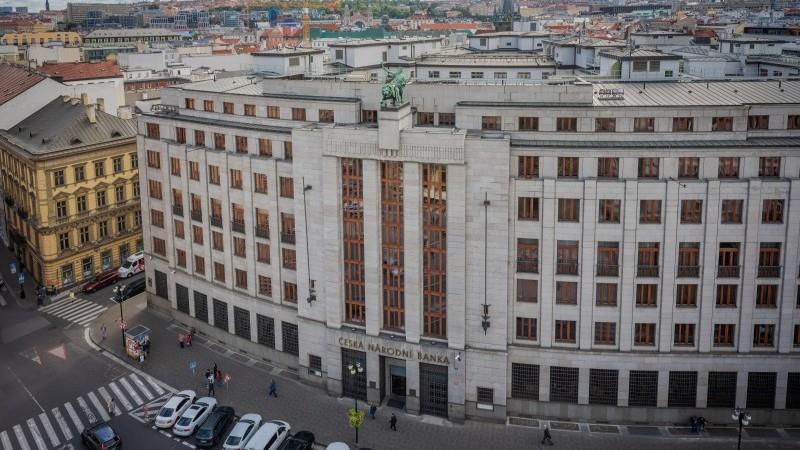
CNB Minutes: Neither Hikes Nor Cuts In The Pipeline


The Czech National Bank increased the policy rate by 25bp to 4% in a split vote on 5 November, with Governor Ales Michl and board members Jan Kubicek, Jan Prochazka and Jakub Seidler voting for a hike. Meanwhile, Deputy Governors Eva Zamrazilova and Jan Frait, along with board member Karina Kubelkova, favoured interest rate stability. We assess the current situation and the risks to the outlook as complex and see relevant justification for both options, depending on whether your concerns are more on the side of second-round inflationary effects or on the side of disappointing economic activity and the consequences for consumption.
The Bank Board assessed overall risks as pro-inflationary. There was an agreement that the secondary impacts of the energy shock have not been significantly reflected in domestic inflation so far. However, as the Hormuz conflict becomes more protracted, the likelihood of tangible second-round effects increases. Jakub Seidler noted that global energy prices have been elevated for too long, so it would be difficult to avoid a pass-through to other segments of consumer prices. Deputy Governor Zamrazilova emphasised that much depends on further developments in the Middle Eastern conflict. Should tensions ease in the near future, a rate hike at the November meeting would not be necessary. The key question is whether the conflict will eventually pass or become the new normal, with the latter implying persistently high energy costs.
Deputy Governor Frait stated that energy prices remaining at these levels for such an extended period could have a negative impact on demand and economic activity, mainly by reducing the real incomes of households and companies. The current negative supply shock has hit the Czech economy from a favourable starting position, but the factors that helped keep inflation close to the target this year are about to fade. The increase in longer-term rates contributes to the restrictive stance of monetary policy, and implies some softening in domestic lending activity. The board members agreed that this is a key factor reducing the need for further tightening for the time being.
To rise or not to rise?However, as Jan Kubicek noted, core inflation is not slowing down as previously assumed and is even slightly increasing. This represents a fundamental concern, especially in combination with the disappointing real growth performance. That said, producer prices have embarked on an upward trend and may put further pressure on the core rate. Jakub Seidler and Karina Kubelkova emphasised that the renewed price increases in the energy and food segment are usually the key drivers when it comes to inflation expectations, and the first signs of an increase are already visible. And we all know that unanchored inflation expectations are one of the things that keep central bankers awake at night.
Producer prices will drive consumer prices Source: CZSO, ING, Macrobond">
En gros, among the main reasons for a rate hike in November were: i) persistent core inflation, ii) still robust wage dynamics and iii) second-round effects expected to bite soon. Among the main reasons for staying on hold and evaluating were: i) secondary inflationary impacts are so far limited, ii) long-term rates deliver restriction, iii) disappointing economic activity.
We see the arguments in both directions as valid, which made the November decision relatively complex and was reflected in the close vote. Time will tell whether the second-round effects that we believe are just kicking in will prove significant without weighing too heavily on economic activity. Or whether the deteriorating real purchasing power and dwindling real wage growth could lead to weaker household consumption, which would in turn put downward pressure on inflation. Both effects are certainly interconnected, which only underscores the beauty of macroeconomics, and the formidable power of prices to clear the market.
Punchy inflation across price segmentsWhen it comes to our inflation forecast, we definitely see pro-inflationary pressures when looking ahead. We expect annual producer price growth to peak at around 7% in industry early next year and at around 12% in agriculture mid-next year. At the same time, the annual pace of import prices already quickened to above 8% in September. Those are not low growth rates, and all are going to feed into consumer prices sooner or later. At the same time, the koruna continues to weaken against the dollar, making imports pricier. With all that on board, we see the yearly average of inflation picking up from 2.1% this year to 3.2% next, reaching a peak of just below 4% in February.
Inflation to hover above the target for longer Source: CNB, ING, Macrobond">The most pronounced uncertainty lies with January's gain in regulated prices. We have already collected information from distributors and factor in a 3.5% increase in electricity prices, a 6.5% increase in natural gas prices, an 8% increase in heating prices and a 6% rise in water charges. Nonetheless, not all distributors will apply the same increase and not all households will be affected equally. Based on our best estimate, we expect a 3% monthly increase in regulated prices in January, resulting in a 3.8% year-on-year gain. However, should global oil and European natural gas prices remain elevated, we expect further increases throughout the year, lifting average regulated price growth to 4.5% next year. This figure is still somewhat below the CNB's 5.6% forecast, which seems to be at the upper bound of what we currently deem plausible.
Regulated and food prices turn pro-inflationary Source: CNB, ING, Macrobond">
Food prices are set to shift from an anti-inflationary position this year to an inflationary one, averaging just below 3% next year, but peaking at around 4%. That said, we sense quite some upward risks here, especially should energy prices stay elevated for longer, which would propel fertiliser prices and transport costs.
Neither hikes nor cuts in the pipelineWhen it comes to core inflation, two opposing forces are set for a duel: second-round effects, coupled with rising import prices, against a softening housing market and crumbling real purchasing power. Timing is of the essence. We expect the former to strike first, but the latter to respond without much hesitation. For now, we see the forces as roughly balanced, keeping average core inflation just below 3% next year.
Consumption could slow tangibly along with real wages Source: CZSO, ING, Macrobond">So yes, upbeat inflation across price segments warrants restrictive monetary policy. Meanwhile, weakening economic activity warrants a lot of caution when it comes to any future rate hikes. The thing is, we see real GDP growth averaging just 1.7% this year and lifting off only gradually to 2.1% next year. Meanwhile, we see household consumption slowing tangibly to 1.8% next year from 2.5% this year. Indeed, we are likely positioned at the lower end of the forecast range, yet we take the view that a slowdown in real wage growth will eventually take its toll. Therefore, we see neither further hikes nor cuts when looking way ahead, with the 4% policy rate settling in as the new normal.
The 4% rate makes itself at home Source: CNB, ING, Macrobond">It would be a different story, however, should we see another round of escalation in the current conflicts, pushing Brent crude back towards US$120/bbl. In that case, the path to a 4.5% CNB base rate is pretty straightforward, if it pleases. If this were to happen, the EUR/CZK would likely lend a helping hand to mitigate the imported inflationary pressures from the eurozone, as the European Central Bank seems constrained in this respect, not least by elevated French bond yields. In contrast, should we slip into an episode of stagnant growth in Europe for whatever reason, our hypothesis of a 4% nominal interest rate becoming the new normal would start to look a little shakier, at least temporarily.

Legal Disclaimer:
MENAFN provides the
information “as is” without warranty of any kind. We do not accept any
responsibility or liability for the accuracy, content, images, videos,
licenses, completeness, legality, or reliability of the information
contained in this article. If you have any complaints or copyright issues
related to this article, kindly contact the provider above.


Comments
No comment